The Hurricane Prep Checklist Everyone Forgets
Hurricane season runs June 1 through November 30, and if you live in Palm Beach Gardens, Jupiter, or anywhere along the Treasure Coast, you've got a routine: stock water, check your generator, trim trees, test your shutters. By mid-May, most homeowners feel prepared.
But there's one item that almost nobody puts on their hurricane prep list: their windows.
We're not talking about boarding them up -- that's a given when a storm approaches. We're talking about cleaning, inspecting, and protecting your windows before storm season starts and restoring them after storms pass through. It's the difference between windows that last 20+ years and windows that fail prematurely due to preventable damage.
Why Windows Matter More Than You Think
Windows are your home's interface between inside and outside. In South Florida, they endure UV radiation, salt-laden air, mineral-rich irrigation spray, humidity, and occasional hurricane-force conditions. That's an enormous amount of stress on glass, frames, seals, and hardware.
When windows aren't maintained properly, small problems become expensive ones:
- Failed seals lead to foggy double-pane windows ($200-500+ per window to replace)
- Corroded tracks and hardware prevent proper operation and compromise storm protection
- Mineral deposits etch into glass permanently if left for months
- Degraded caulking allows water intrusion during storms, potentially causing interior damage
Pre-Hurricane Season: The Spring Window Checkup
The best time to clean and inspect your windows is April or May -- before the first tropical systems develop and while you're already in home-maintenance mode. Here's what a thorough pre-season window service covers:
Deep Glass Cleaning
Over the winter and spring months, your windows accumulate a film of pollen, mineral deposits from irrigation overspray, salt air residue (especially if you're east of I-95), and general environmental grime. This film is more than cosmetic -- it traps moisture against the glass and can accelerate seal degradation.
Professional window cleaning removes this buildup completely, including hard water stains that regular window spray can't touch. We use purified water and professional-grade tools that leave glass spotless without residue.
Seal and Caulking Inspection
This is where window cleaning becomes genuinely protective, not just cosmetic. While cleaning each window, a trained technician can identify:
- Cracked or shrinking caulking around window frames
- Gaps between frames and stucco where water could penetrate
- Deteriorating rubber gaskets on sliding windows and doors
- Signs of previous water intrusion (staining, bubbling paint, soft drywall)
Track and Hardware Cleaning
Sliding windows and doors accumulate debris in their tracks -- dirt, insect nests, hardened grime, and small stones. Dirty tracks prevent windows from closing and locking fully, which is a real problem when storm shutters aren't rated for the entire opening.
Cleaning tracks and lubricating hardware ensures every window operates smoothly and seals properly. This also matters for security year-round, not just during storms.
Screen Assessment
Window screens take a beating in Florida -- UV degrades the mesh material over time, and even moderate wind events can stretch or tear compromised screens. A pre-season inspection identifies screens that need replacement before storm season, when you'll want screens removed and stored anyway.
Pro tip: Remove and store your window screens during active hurricane season (roughly August through October when storm activity peaks). Screens become projectiles in high winds and can damage the very windows they're attached to.What Hurricanes and Tropical Storms Do to Your Windows
Even if a storm doesn't make direct landfall in Palm Beach County, the effects on your windows can be significant. Here's what happens during and after tropical weather:
Salt Spray Deposition
Tropical storms and hurricanes push ocean water inland as spray. This salt-laden moisture coats everything -- including your windows. Salt spray is corrosive. Left on glass, frames, and hardware, it accelerates degradation of seals, corrodes aluminum frames, and can permanently etch glass.
The kicker: you can't always see salt spray deposits. The residue is often invisible until it's caused damage. Post-storm cleaning removes it before corrosion begins.
Mineral and Debris Film
Storms kick up an enormous amount of particulate matter -- soil, sand, organic debris, and mineral-heavy rainwater. This lands on your windows as a grimy film that's often much harder to remove than normal dirt.
If you've ever tried to clean your windows after a tropical storm with a garden hose and paper towels, you know the result: streaks, scratches from embedded grit, and frustration. The debris film contains abrasive particles that need to be properly dissolved and removed, not wiped across the glass.
Water Intrusion Evidence
After a storm passes, your windows may show signs of water intrusion that wasn't visible before:
- Moisture or fog between double-pane glass -- seal failure
- Water stains on interior window sills -- caulking failure or frame damage
- Difficulty opening or closing windows -- frame warping from water absorption
- New drafts or whistling sounds -- seal compromise
Post-Storm Cleaning: Why Timing Matters
After a significant storm event, the instinct is to focus on the big stuff -- tree removal, roof inspection, flooding. Windows fall way down the priority list. But there's a narrow window (no pun intended) where prompt cleaning makes a significant difference:
The 48-72 Hour Rule
Salt spray should be removed within 48-72 hours of a storm for best results. After that, it begins bonding with glass and metal surfaces at a molecular level. Deposits that rinse off easily at 48 hours may require chemical treatment or abrasive removal at two weeks.We've seen aluminum window frames with visible pitting from salt deposits left for just a few weeks after a hurricane. The damage was preventable with timely cleaning.
Hard Water Stain Prevention
Storm rainwater in South Florida is often mineral-heavy, especially when it picks up debris and soil. When this water evaporates on glass, it leaves mineral deposits -- the same type of hard water stains you see from sprinkler overspray, but concentrated across the entire window surface.
Fresh hard water deposits clean off easily. Deposits that sit through several weeks of additional rain and sun cycles can etch into the glass permanently. At that point, you're looking at professional glass restoration or replacement.
The Full-Season Window Care Calendar
Here's the schedule we recommend for Palm Beach County homeowners:
April-May: Pre-Season Service
- Full professional window cleaning (interior and exterior)
- Seal and caulking inspection
- Track cleaning and hardware lubrication
- Screen inspection and repair
- Hard water stain removal from irrigation overspray
June-November: Storm Season Monitoring
- Post-storm cleaning within 48-72 hours of any significant weather event
- Quick visual inspection of seals after storms
- Remove and store screens during peak season (August-October)
December: Post-Season Service
- Full professional window cleaning
- Comprehensive seal reassessment
- Screen reinstallation
- Address any damage identified during storm season
DIY vs. Professional Window Cleaning
Basic window maintenance -- wiping down frames, keeping tracks clear, spraying glass with household cleaner -- is perfectly fine between professional services. But several aspects of window care genuinely benefit from professional equipment and expertise:
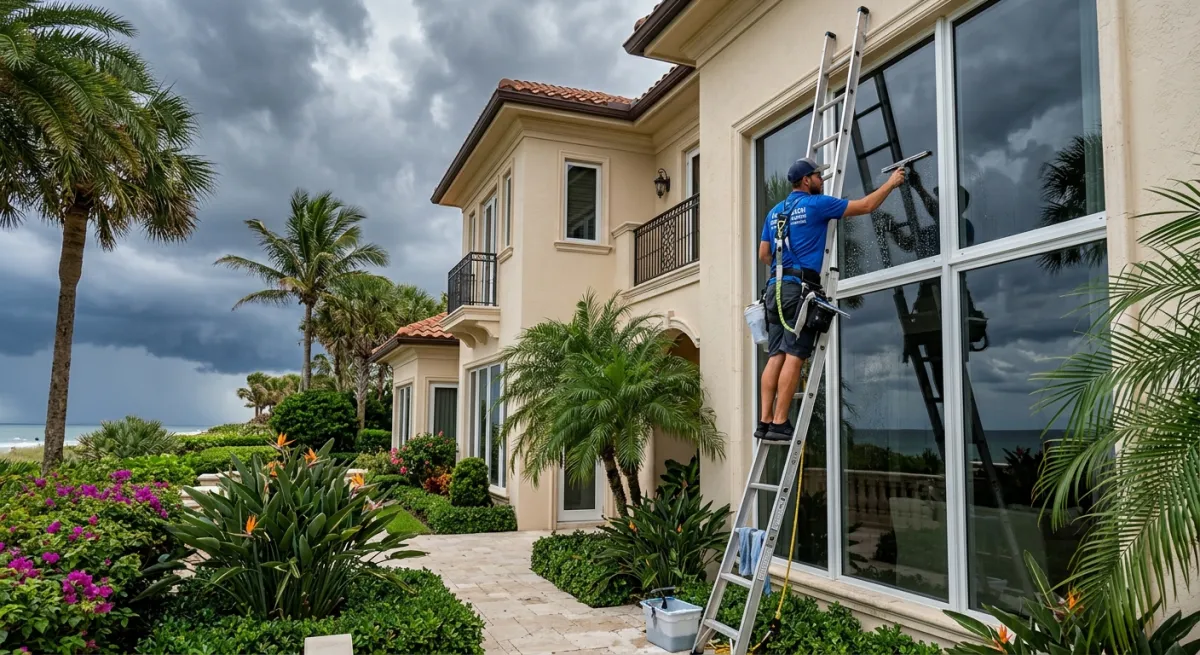
Hard water stain removal requires specialized compounds and techniques. Household products won't touch established mineral deposits, and using the wrong abrasive can scratch glass permanently. High and hard-to-reach windows are dangerous to clean from ladders, especially on two-story homes. Professional teams use water-fed pole systems that clean upper-story windows safely from the ground. Seal and caulking assessment takes trained eyes. A professional who cleans hundreds of windows per month recognizes early signs of failure that homeowners typically miss until the damage is advanced. Post-storm salt removal needs to be thorough -- every surface, every frame, every track. Missing spots means ongoing corrosion in areas you can't see.Protecting Your Investment
Quality impact windows in South Florida cost $800-1,500+ per window installed. A home with 15-20 windows represents a $12,000-30,000 investment. Regular professional cleaning and inspection extends the lifespan of that investment significantly -- and it costs a fraction of a single window replacement.
Beyond the financial math, clean windows simply make your home look and feel better. Natural light flows in without a haze of grime, views are crisp and clear, and you have the peace of mind that your windows are ready for whatever the season throws at them.
Get a free quote from Crouching Tiger Exterior Cleaning for pre-season or post-storm window cleaning. We serve Palm Beach Gardens, Jupiter, West Palm Beach, and all of Palm Beach County -- and we understand what Florida weather does to your home.