Why South Florida Pollen Season Hits Different
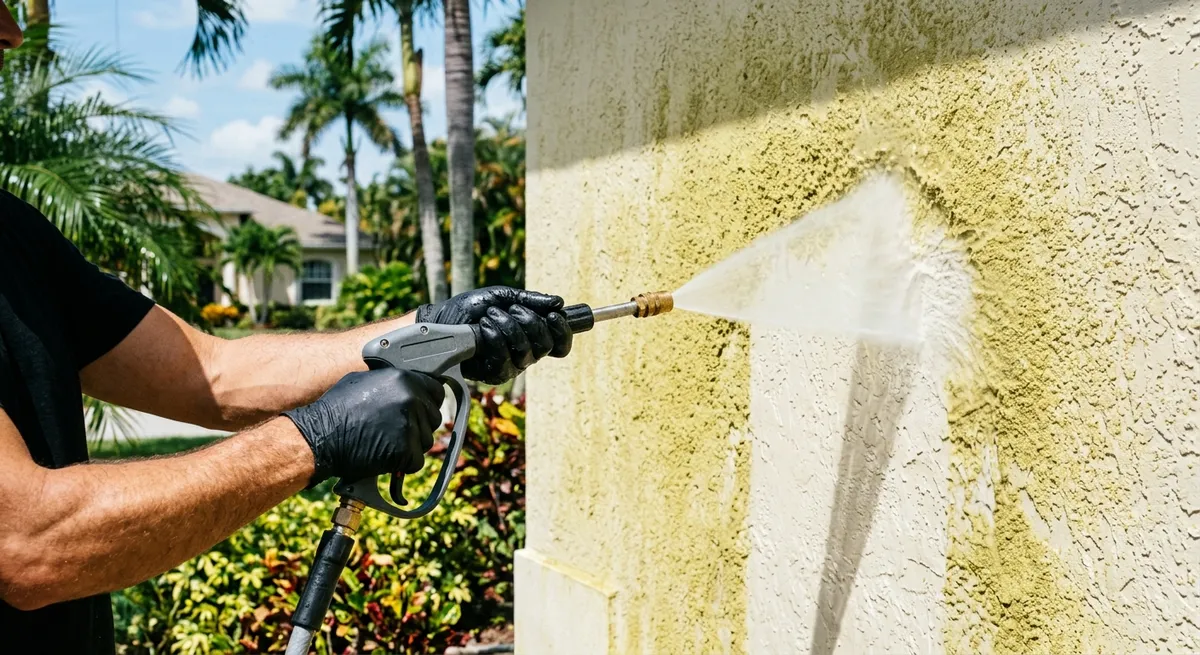
If you've lived in Palm Beach County for at least one spring, you know the drill. Seemingly overnight, every outdoor surface gets coated in a fine yellow-green film. Your car, your patio furniture, your driveway, your pool deck—nothing escapes.
South Florida's pollen season is unique because our growing season never truly stops. While the rest of the country deals with a single spring burst, we get overlapping waves of oak, pine, and palm pollen from late February through mid-April. Add our constant humidity into the mix, and that pollen doesn't just sit on surfaces—it sticks, cakes, and becomes a breeding ground for problems.
Where Pollen Accumulates Most
Not all surfaces collect pollen equally. Here's where we see the worst buildup on Palm Beach homes:
Roof tiles and shingles catch pollen in every groove and overlap. Because roofs stay damp from morning dew and afternoon humidity, pollen bonds quickly to the surface. Gutters and downspouts act like pollen traps. As rain washes pollen off your roof, it collects in gutters and forms a thick paste that clogs downspouts. Window screens and glass accumulate layers of pollen that reduce natural light and look terrible from both inside and out. Paver patios and pool decks develop a slippery film that becomes a genuine safety hazard when wet. Lanai enclosures collect pollen on every screen panel, reducing airflow and making your outdoor living space feel grimy. Driveways and walkways show every grain of pollen, especially on lighter-colored concrete.Why Pollen Is More Than a Cosmetic Problem
Most homeowners treat pollen like a minor annoyance—something that'll wash away with the next rain. That's not quite how it works in South Florida.
Pollen Feeds Mold and Algae
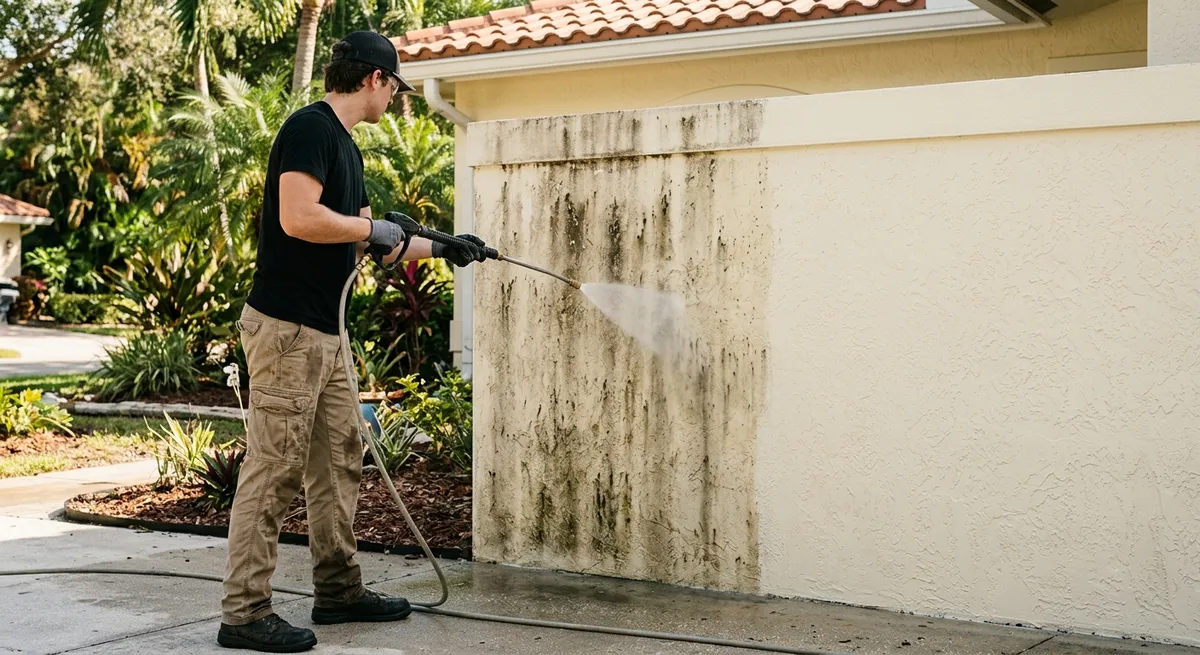
Pollen is organic matter. When it sits on damp surfaces, it becomes food for mold, mildew, and algae. That yellow pollen coating today becomes black algae streaks in a few weeks. You're essentially fertilizing the organisms that damage your exterior surfaces.
It Stains Porous Materials
On concrete, pavers, and natural stone, pollen particles settle into pores. If left through several rain cycles, the organic pigments can leave lasting discoloration that won't come off with a garden hose.
Allergy Concerns Near Your Home
Thick pollen accumulation around windows, doors, and screen enclosures means more pollen gets tracked or blown inside. For allergy sufferers, a clean exterior measurably reduces indoor pollen levels.
It Accelerates Gutter Clogs
Pollen paste mixed with other debris creates a cement-like blockage in gutters. This is especially problematic heading into our rainy season, when you need gutters working at full capacity.
DIY vs. Professional Pollen Removal
What a Garden Hose Can (and Can't) Do
A garden hose will knock loose pollen off flat, smooth surfaces like vinyl siding or glass. It won't effectively clean:
- Textured concrete or pavers (pollen embeds in the texture)
- Roof tiles (you shouldn't be on your roof with a garden hose)
- Screen enclosures (water alone doesn't remove the sticky film)
- Stained surfaces where pollen has already bonded
Why Professional Cleaning Works Better
For roofs and house walls: Soft washing uses low-pressure application of biodegradable cleaning solutions that dissolve pollen and kill any mold or algae that's already started growing. This is the only safe method for tile roofs and painted stucco. For driveways, patios, and pool decks: Professional pressure washing with surface cleaners removes embedded pollen from textured surfaces evenly and completely—no streaks, no missed spots. For windows and screens: Professional window cleaning removes the pollen film and the mineral deposits underneath, giving you genuinely clean glass and screens.The Best Time to Schedule Spring Pollen Cleanup
In Palm Beach County, the sweet spot is late March through mid-April. Here's why:
- Peak pollen has fallen, so you're not cleaning only to get re-coated the next day
- You're ahead of the May rainy season, which turns pollen residue into mold
- Scheduling is easier than the summer rush when everyone needs post-storm cleanup
- Your property looks its best heading into the season when you're actually using outdoor spaces
A Complete Spring Cleaning Plan
For maximum benefit, we recommend addressing your entire exterior in one visit:
1. Soft wash the roof and house walls 2. Pressure wash the driveway, walkways, and patio 3. Clean all windows and screen enclosures 4. Flush gutters and downspouts 5. Inspect for any damage or areas needing repair
This comprehensive approach ensures you're not just moving pollen from one surface to another, and it lets us identify any maintenance issues before rainy season begins.
Ready for a Pollen-Free Property?
At Crouching Tiger Exterior Cleaning, spring pollen cleanup is one of our most popular services. We bring commercial-grade equipment and cleaning solutions that remove pollen completely—not just push it around.
Get your instant quote and start the season with a property that looks and feels clean.