The Dominant Surface in South Florida
Walk through any neighborhood in Palm Beach Gardens, Jupiter, or West Palm Beach and you'll notice a pattern: nearly every home has stucco exterior walls. Stucco is the default building finish in South Florida, and for good reason—it handles our climate well, provides insulation, and gives homes that classic Florida look.
But stucco also has a weakness: it shows everything.
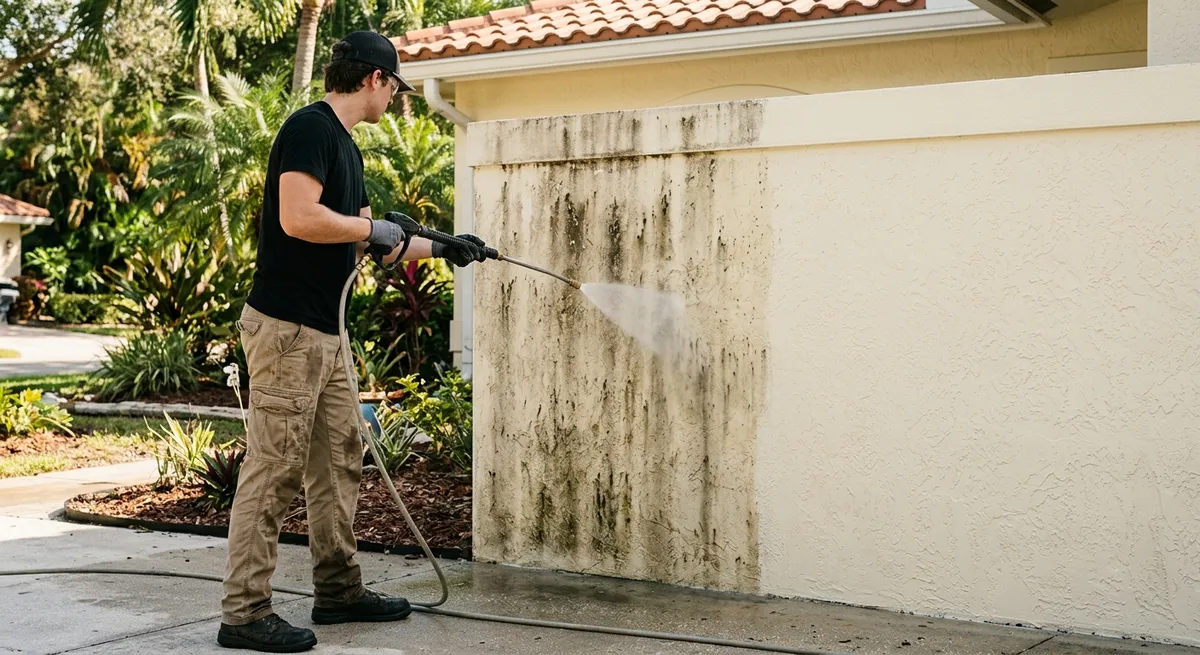
Every mold streak, algae patch, dirt splash, and water stain is visible on stucco's textured surface. In Florida's humid, rain-soaked environment, a clean stucco wall can go from pristine to streaked and stained in a surprisingly short time.
Knowing how to clean and maintain it properly matters more than most people realize.
Why Stucco Gets So Dirty in Florida
Mold and Mildew Streaks
Florida's humidity creates perfect mold growing conditions. Dark streaks running vertically down stucco walls—typically below windows, under eaves, and on north-facing walls—are mold colonies feeding on moisture and airborne organic particles that embed in stucco's texture.Green Algae Growth
Algae patches appear on walls that receive less direct sunlight: north-facing walls, areas shaded by trees, and lower sections behind dense landscaping. The green discoloration can be subtle at first but spreads quickly in warm, humid months.Dirt and Dust Accumulation
Stucco's textured surface traps airborne dust, construction debris, and road grit. Rain doesn't wash this away—it actually drives the particles deeper into the texture, creating a gradually darkening appearance.Irrigation Staining
Sprinkler overspray deposits minerals and iron on lower wall sections. This creates orange rust stains (from well water iron) and white mineral deposits that stand out starkly against painted stucco.Rain Splash-Back
When rain hits the ground near your foundation, it splashes dirt, mulch, and debris onto the lower 1-2 feet of your walls. Over months, this creates a dark "tide line" along the base of your home.Why You Should Never Pressure Wash Stucco
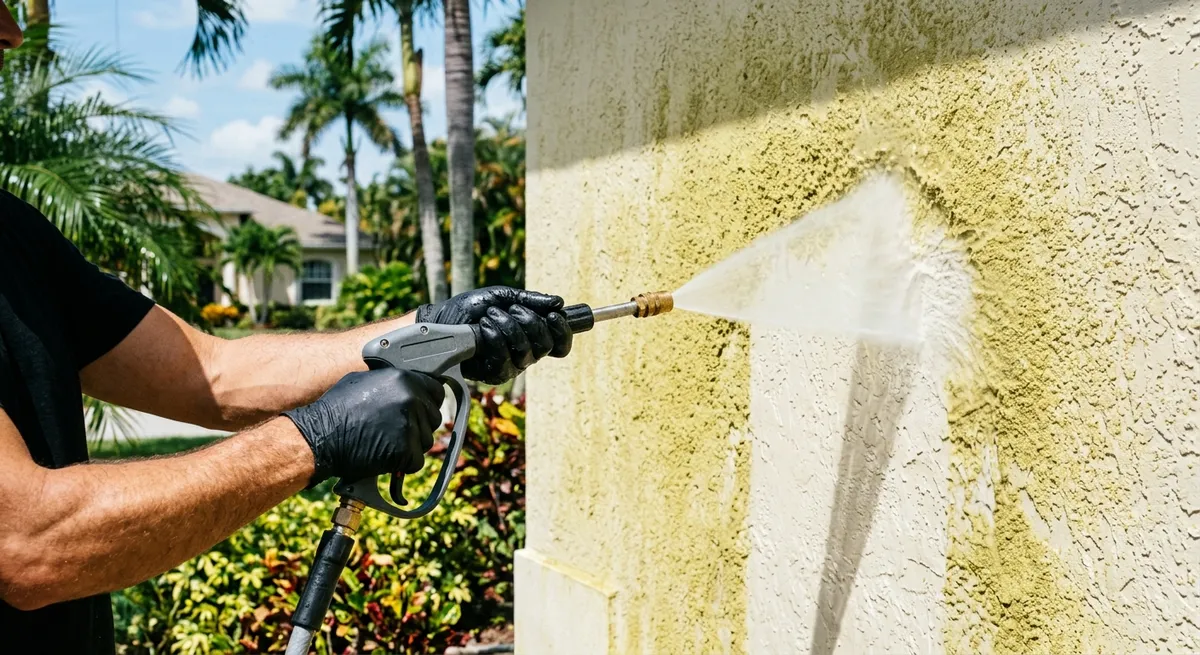
This is the most important takeaway from this guide: high-pressure washing damages stucco.
Stucco is a cementitious material, but its surface is relatively soft compared to concrete. High-pressure water can:
It erodes the surface finish, stripping away the textured top coat and leaving smooth, damaged patches that look worse than the dirt did.
It forces water behind the stucco. Since stucco is a thin layer applied over a substrate, high-pressure water can penetrate through cracks, weep holes, and around window frames, getting into wall cavities where it causes hidden moisture damage.
It accelerates paint failure by lifting edges and breaking adhesion. What looks fine during cleaning starts peeling weeks later.
It creates uneven cleaning. The wand-against-wall technique that works on concrete leaves visible clean/dirty lines on stucco that are difficult to blend.
And if you get too close or linger too long in one spot, you'll leave permanent etching marks.
The Right Way: Soft Washing Stucco
Professional stucco cleaning uses soft washing—a low-pressure method that relies on cleaning chemistry rather than water force.
How It Works
First, a biodegradable cleaning solution goes onto the entire wall surface using low-pressure sprayers. This solution kills mold, mildew, and algae while loosening dirt and staining.
Then we let it dwell for 10-15 minutes. During that time, it penetrates stucco's textured surface and reaches organisms embedded in the pores.
Next comes a gentle rinse, using pressure no stronger than a garden hose. The cleaning solution already did the work; water force is just for removal.
Finally, we detail problem areas. Window frames, under eaves, and foundation lines get additional attention where buildup is heaviest.
Why Soft Washing Works Better
Beyond being safer for your stucco, soft washing actually produces better and longer-lasting results:
- Chemical treatment kills organisms in stucco pores where pressure washing can't reach
- Results last 1-2 years versus weeks for pressure-washing-only approaches
- No surface damage means no accelerated re-soiling on roughened areas
- Even coverage without the striping and lines from wand cleaning
Stucco Maintenance Tips Between Cleanings
Keep Vegetation Trimmed Back
Plants, bushes, and trees growing directly against your walls create shade and trap moisture. Those are mold's two favorite conditions. Maintain at least 12 inches of clearance between landscaping and stucco walls.Fix Irrigation Overspray
Adjust sprinkler heads so they're not hitting your walls. This prevents both rust staining (from iron in well water) and mineral deposit buildup.Address Cracks Promptly
Stucco cracks—even small ones—allow water to penetrate behind the surface. In Florida's heavy rain environment, even hairline cracks can lead to moisture intrusion over time. Fill cracks with elastomeric caulk before they become pathways for water damage.Check Caulking Around Windows
The caulk seal between window frames and stucco degrades over time. Failed caulk allows water behind the stucco and creates the dark staining patterns you often see below windows. Re-caulk as needed.Rinse After Storms
If a major storm deposits debris on your walls, a gentle rinse with a garden hose prevents staining from setting in. This is particularly helpful after storms that bring muddy water or heavy pollen.How Often Should You Clean Your Stucco?
Every 1-2 years for most Palm Beach County homes. Factors that push toward annual cleaning:- North-facing walls or heavy shade
- Proximity to water (Intracoastal, canals)
- Light-colored paint (shows staining faster)
- Properties with irrigation overspray issues
- Homes in areas with heavy tree coverage
What Does Stucco Cleaning Cost?
For a typical Palm Beach County home, professional stucco soft washing runs $250-600 depending on home size and number of stories. Two-story homes cost more due to the equipment and reach required.
This is significantly less than repainting, which costs $5,000-15,000 for exterior walls. In many cases, homeowners who think they need to repaint actually just need a thorough cleaning—the paint underneath is still in good condition once the biological growth is removed.
Restore Your Home's Appearance
House washing is one of our core services. We soft wash stucco homes throughout Palm Beach Gardens, Jupiter, West Palm Beach, and surrounding communities using methods that deliver dramatic results without risking your walls. You might be surprised what your stucco actually looks like under all that buildup. Get a free quote and find out.