The "I'll Get to It Next Season" Trap
If you moved to South Florida from somewhere up north, you probably brought a few habits with you. One of the most common: the idea that exterior cleaning is a spring thing. You know the routine — winter ends, you break out the garden hose, knock the grime off the siding, and call it good until next year.
That doesn't fly down here.
In Palm Beach Gardens, Jupiter, and the rest of Palm Beach County, your home's exterior is under constant assault from humidity, heat, organic growth, and weather events that don't follow a neat seasonal pattern. Waiting for "the right time" to clean means you're always behind. There is no off-season for the stuff that's eating your home.
Let me walk you through why year-round attention isn't overkill — it's the bare minimum.
South Florida's Real Four Seasons
We don't have winter, spring, summer, and fall. Not in any meaningful way, at least. What we have are four very different threat cycles that each bring their own set of problems for your home's exterior.
Wet Season (June – October)
This is the big one. Afternoon thunderstorms roll in almost daily, dumping rain and then leaving everything soaking in 90-degree heat. It's basically a mold and mildew incubator.
What happens to your home:- Algae and mold growth accelerates dramatically on roofs, walls, and walkways
- Standing water on pavers and concrete promotes staining
- Organic debris from storms clogs gutters and collects on surfaces
- High humidity means nothing ever fully dries out, which feeds more growth
- Screen enclosures get coated in a film of mildew within weeks
Dry Season (November – May)
You'd think dry season would give your home a break. It does — slightly. But the lack of rain introduces its own problems.
What happens to your home:- Dust and pollen accumulate on every surface without rain to wash them away
- Irrigation overspray leaves mineral deposits and hard water stains on walls and windows
- Fertilizer from lawn treatments stains driveways and sidewalks
- Lower humidity can cause existing algae to dry out and bake onto surfaces, making it harder to remove later
Hurricane Season (June – November)
Yes, this overlaps with wet season, and yes, it deserves its own category. Even if a hurricane doesn't make direct landfall near Palm Beach County, tropical storms and their remnants bring unique challenges.
What happens to your home:- Wind-driven rain pushes dirt and debris into crevices you'd never think to clean
- Fallen leaves, branches, and vegetation pile up against walls and fences
- Storm surge or heavy flooding leaves mud and mineral deposits on lower surfaces
- Flying debris can scratch and damage exterior coatings, exposing surfaces to faster degradation
- Post-storm standing water is a breeding ground for mold
Snowbird Season (November – April)
This one isn't about weather — it's about people. Palm Beach County's population swells by thousands during snowbird season, and that has indirect effects on your home.
Why it matters:- If you're a snowbird yourself, your home sits unattended for months — and nobody's catching problems early
- HOA enforcement often ramps up during peak season (more eyes on your property)
- If you're thinking about selling, this is when buyer activity peaks — and first impressions matter
- Entertaining guests? A clean exterior sets the tone
What Happens When You Skip a Year
"It's just a little dirt" is something we hear a lot. And honestly, after a month or two, that might be true. But here's what a full 12+ months of neglect looks like on a typical South Florida home:
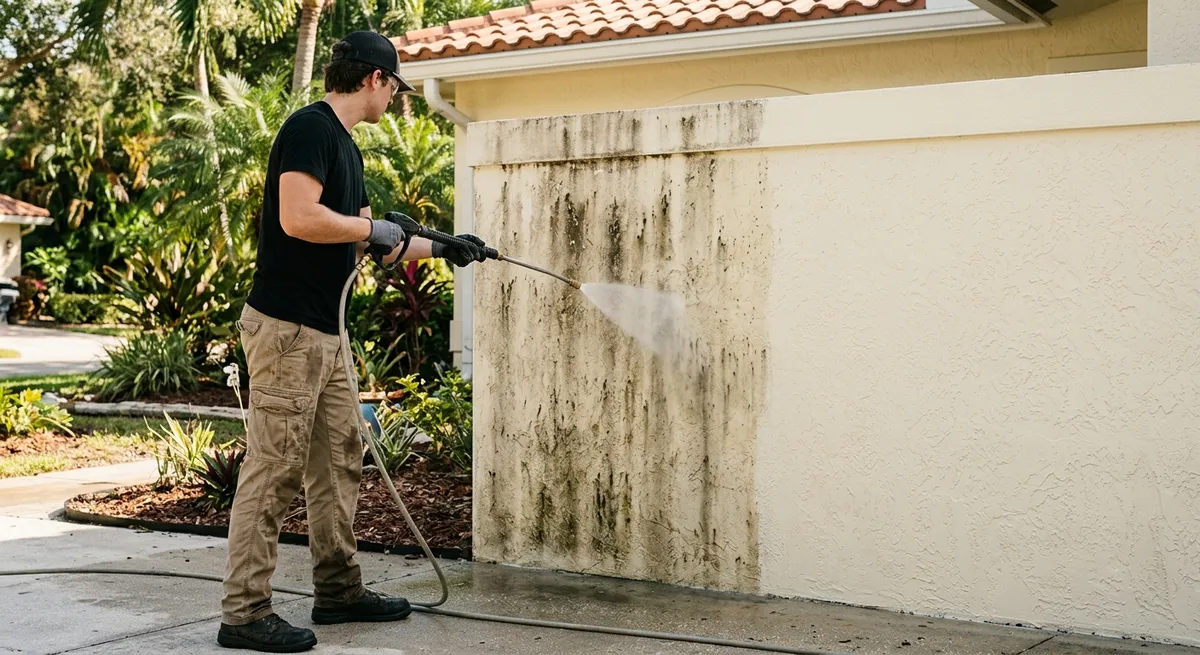
Roof: Black streaks from Gloeocapsa Magma algae spread across most of the surface. The algae feeds on your shingles' limestone filler, breaking down the protective granules. You're literally losing roof lifespan every month you wait. Exterior walls: Green and black mold colonies establish themselves, especially on north-facing walls and areas near landscaping. The longer they stay, the deeper they penetrate the paint and stucco. What started as surface-level growth becomes a staining problem that may require repainting. Driveway and pavers: Algae makes surfaces slippery and dangerous. Oil stains bake in permanently. Joint sand washes out of pavers, leading to shifting and weed growth. Efflorescence (white mineral deposits) gets worse. Screen enclosures: Mildew coats the screens, reducing airflow and visibility. The pool cage frame develops dark streaks. Everything inside the enclosure — furniture, the pool deck — gets dirtier faster because the screens aren't filtering properly. Gutters: Clogged with debris, causing water to overflow and run down your fascia and walls. This creates concentrated staining and can lead to water intrusion.After 12 months of neglect in South Florida, you're not just cleaning — you're doing damage control. And the cost of remediation is always higher than the cost of maintenance.
A Year-Round Maintenance Schedule That Works
Here's the schedule we recommend for most Palm Beach County homeowners. It's not complicated, and it doesn't require monthly service calls. But it does require intentional timing.
January – February: Pollen Prep
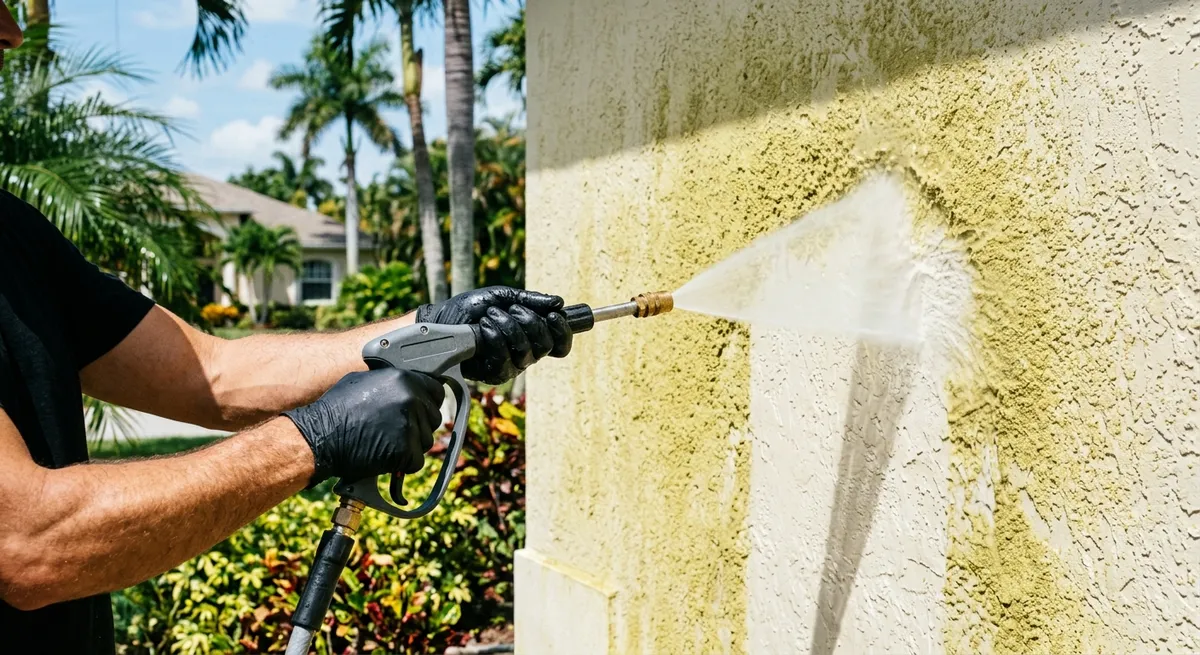
- Schedule a full house wash (soft wash) to remove any mold or mildew that built up during the fall
- Clean screen enclosures before pollen season hits
- Inspect and clean gutters after winter storms
March – April: Pollen Season Response
- Rinse exterior surfaces to remove pollen buildup (especially if anyone in the household has allergies)
- Clean windows and window frames
- Spot-treat any areas showing early algae growth
May – June: Pre-Wet Season
- This is your most important cleaning window. Get a comprehensive exterior cleaning done before the summer rains start
- Pressure wash driveways, sidewalks, and patios
- Clean and reseal pavers if needed (sealing before wet season gives maximum protection)
- Roof soft wash if it's been more than 12-18 months
July – September: Monitor and Maintain
- Inspect surfaces monthly for rapid growth (wet season will test your patience)
- Keep gutters clear of debris from summer storms
- Spot-treat any problem areas rather than letting them spread
- Clean up promptly after any tropical weather events
October – November: Post-Hurricane / Pre-Season
- Full post-wet-season cleaning to reset everything
- Address any damage or staining from summer storms
- Prepare the property for snowbird season or holiday guests
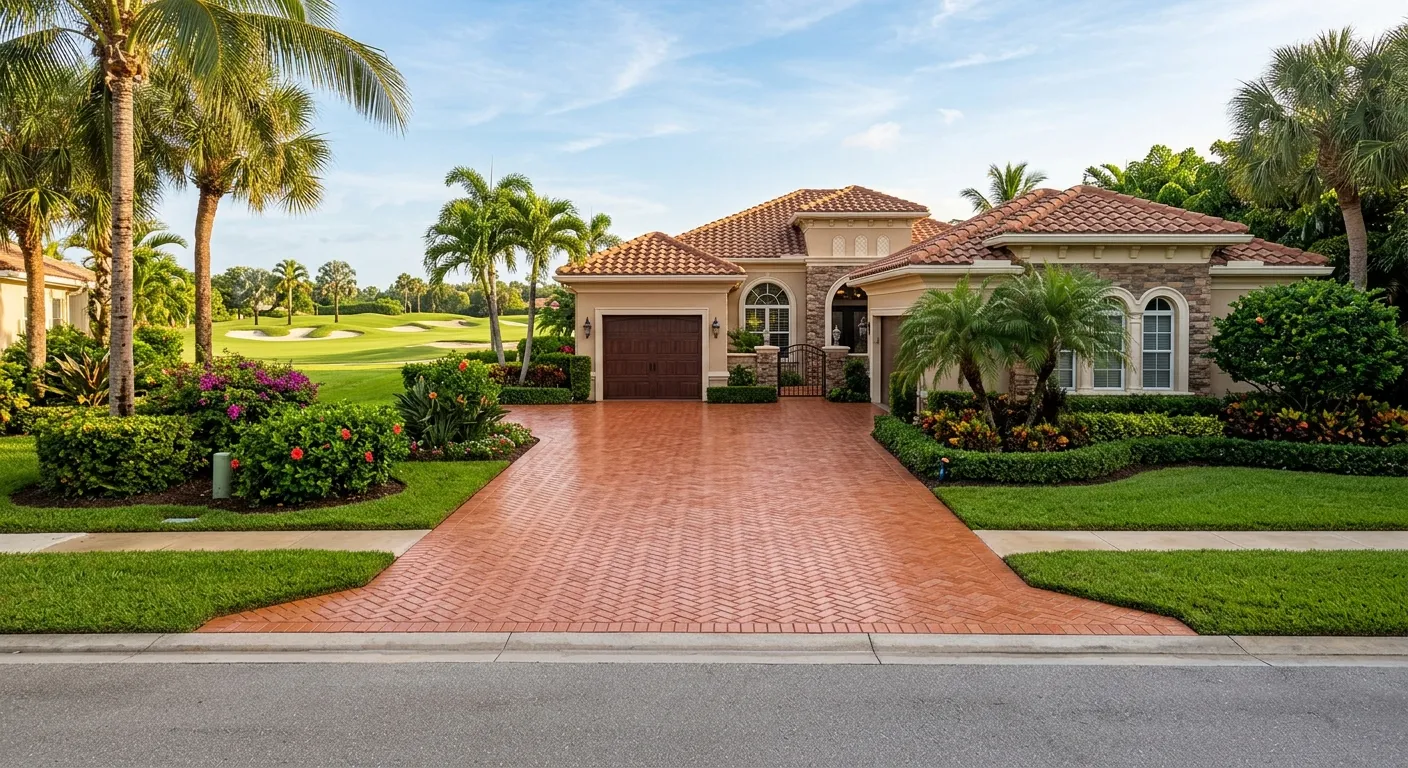
- This is when your home should look its absolute best
December: Enjoy It
- If you've followed this schedule, December is coast mode
- Light maintenance only — rinse pollen and dust as needed
Why "It'll Wait Until Spring" Doesn't Work Here
Up north, there's a logic to spring cleaning. Everything freezes in winter, nothing grows, and spring is genuinely the time when things start getting dirty again. It makes sense to wait.
In South Florida, things never stop growing. There is no dormant period for mold, algae, and mildew. The "I'll deal with it in the spring" mindset means you're giving biological growth an extra 4-6 months to establish, spread, and damage your surfaces.
Every month you wait:
- Growth gets harder (and more expensive) to remove
- Surface damage accumulates
- Your curb appeal suffers
- You're one step closer to needing repairs instead of just cleaning
Let's Build Your Year-Round Plan
Every property in Palm Beach County is a little different. Your roof material, landscaping, sun exposure, and proximity to water all affect what you need and when you need it. We'll assess your property and recommend a maintenance schedule that keeps it protected without overdoing it.
Get your free quote and let's set up a plan that works for your home and your budget. Year-round protection doesn't have to be complicated — it just has to be consistent.