Summer in South Florida: An Algae Factory
If you've lived in Palm Beach Gardens or anywhere in South Florida for more than one summer, you already know the drill. You get your house cleaned, it looks amazing for a few weeks, and then -- seemingly overnight -- green streaks and dark stains start creeping back across your stucco, concrete, and roof tiles.
It's not your imagination. Algae and mold really do grow faster here in summer, and there's solid science behind why. Understanding what's happening on your exterior surfaces is the first step toward actually controlling it.
The Science: Why Summer Is Peak Growth Season
Three things drive algae and mold growth on exterior surfaces: heat, moisture, and organic nutrients. South Florida summers deliver all three in extreme quantities, day after day, for months.
Temperature
Most species of algae that colonize homes thrive between 80-95 degrees Fahrenheit. From June through September, daytime temperatures in Palm Beach County regularly hit the low 90s, and nighttime lows rarely drop below 75. Your exterior surfaces stay warm around the clock -- that's a 24-hour growth window.
Compare that to winter, when nighttime temps drop into the 50s and 60s. Growth slows dramatically when surfaces cool down at night. In summer, they never really get that break.
Humidity and Moisture
South Florida's summer humidity routinely sits between 70-90%. Add in daily afternoon thunderstorms -- which dump rain almost every day from June through October -- and your exterior surfaces are basically never fully dry.
Algae and mold need moisture to grow. When surfaces stay damp for extended periods, colonies can double in size in as little as 24-48 hours under ideal conditions. That's not an exaggeration. It's exponential growth, and summer in Palm Beach County provides the ideal conditions.
Organic Nutrients
Your roof, stucco, and concrete aren't just surfaces -- they're food sources. Asphalt shingles contain limestone filler that algae feed on directly. Stucco and concrete are porous and trap organic matter like pollen, dust, and leaf debris. Pool deck surfaces collect a film of organic material from landscaping and irrigation.
In summer, trees and plants are in full growth mode, producing more pollen, shedding more debris, and contributing more organic material to your exterior surfaces. More food means faster growth.
Meet the Culprits: What's Actually Growing on Your Home
Gloeocapsa Magma (Black Streaks)
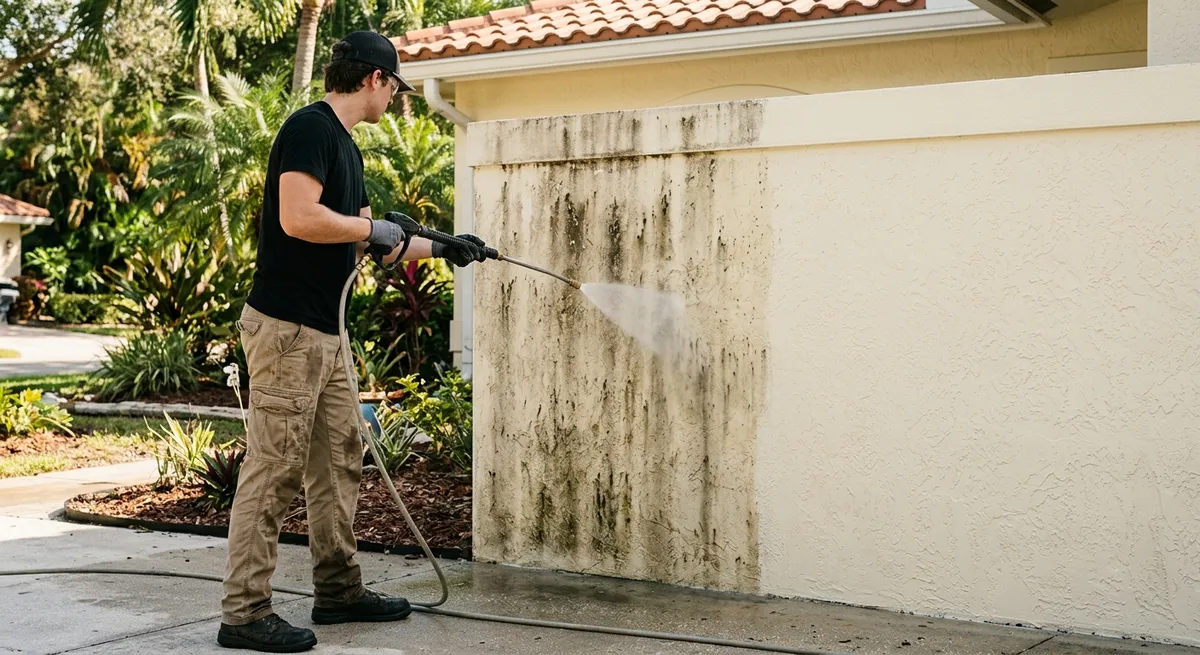
Those ugly dark streaks running down your roof and stucco walls? That's Gloeocapsa Magma -- a species of cyanobacteria (blue-green algae) that's incredibly common in warm, humid climates.
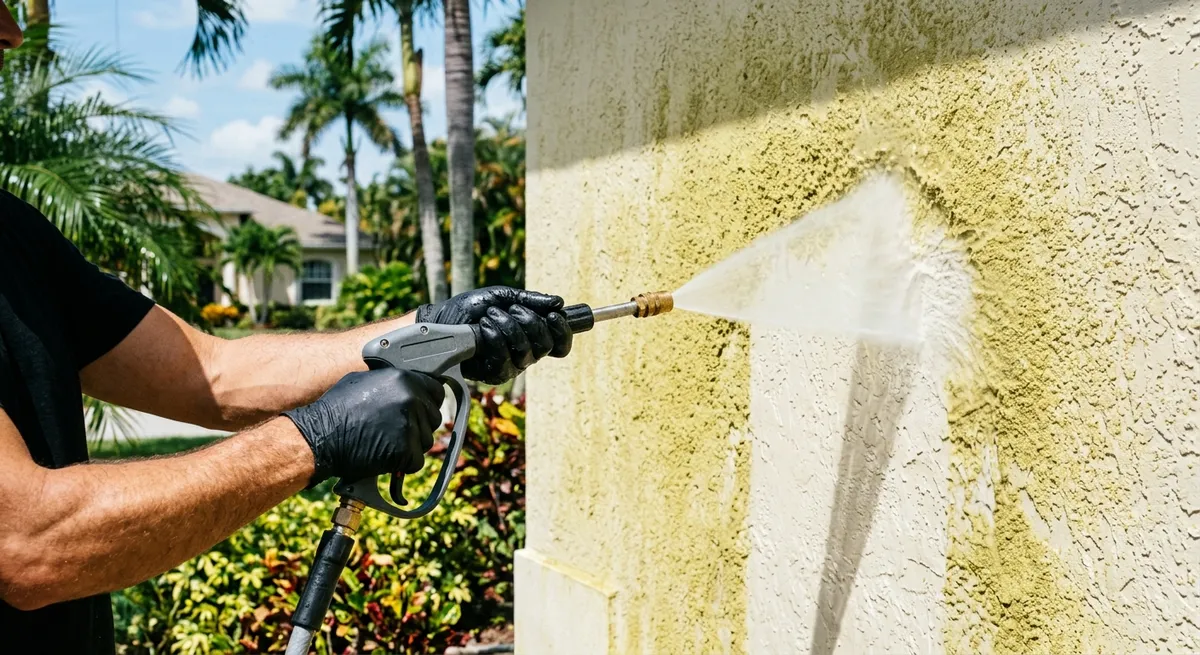
Gloeocapsa Magma produces a dark pigmented sheath to protect itself from UV radiation. That sheath is what causes the black or dark brown streaking. The organism itself is actually feeding on the calcium carbonate in your roofing material and stucco, slowly breaking down the surface over time.
Here's the thing most people don't realize: by the time you see black streaks, the colony has been established for months. The visible discoloration only appears after the population reaches a certain density. Early intervention -- before streaks are fully visible -- is far easier and more effective than waiting until your entire north-facing wall looks like it's been painted gray.
Green Algae
The bright green film you see on shaded concrete, north-facing walls, and around pool equipment is typically chlorophyta -- common green algae. It's less destructive than Gloeocapsa Magma but grows even faster in the right conditions.
Green algae loves anywhere that stays shaded and damp. In summer, with frequent rain and high humidity, it can cover a concrete walkway in a matter of weeks. Beyond looking terrible, it creates a serious slip hazard when wet -- especially on pool decks and entry walkways.
Mold and Mildew
Black mold (often Aspergillus or Stachybotrys species) and white or gray mildew thrive in the same warm, humid conditions that algae love. They tend to colonize areas where organic matter accumulates -- under eaves, around window frames, on outdoor furniture, and in textured stucco.
Mold is more than a cosmetic problem. Some species can cause respiratory issues, especially for people with allergies or asthma. If you notice dark spotting around windows or under your soffits, that's worth addressing promptly.
Which Surfaces Are Most Vulnerable?
Not every part of your home gets hit equally. Certain surfaces and orientations are algae magnets:
North-Facing Walls and Surfaces
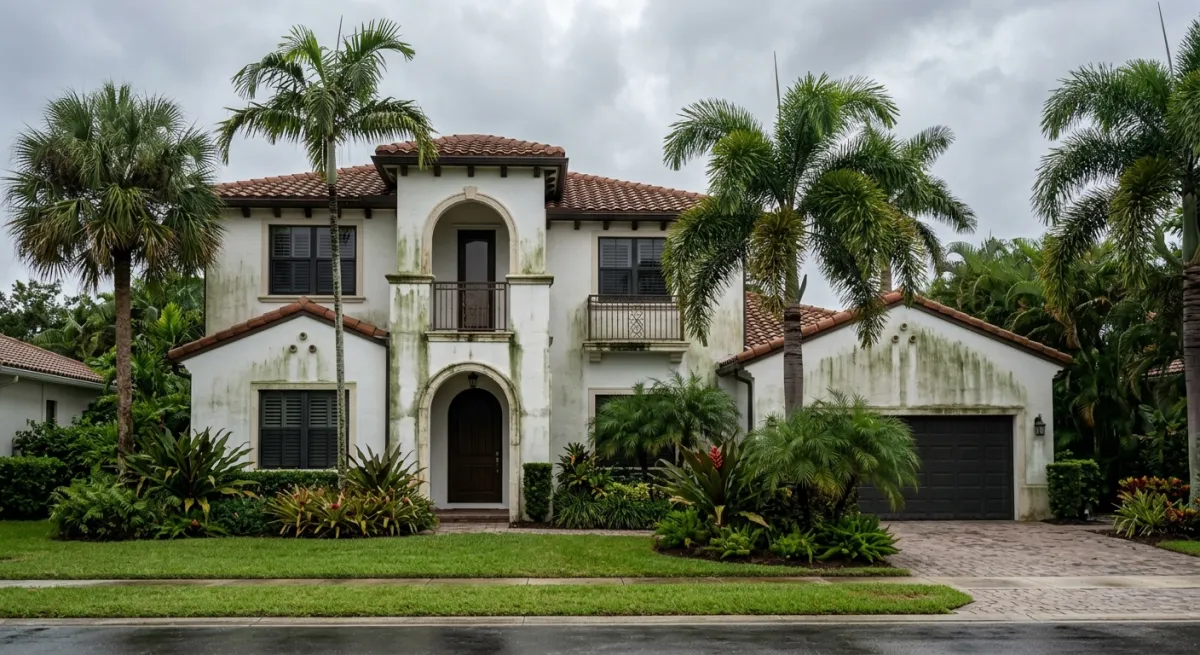
North-facing surfaces receive the least direct sunlight throughout the day. Less sun means surfaces stay damp longer after rain, and UV exposure -- which naturally inhibits algae growth -- is minimized. If you look at homes throughout Jupiter, Palm Beach Gardens, and West Palm Beach, the north side is almost always the dirtiest.
Shaded Concrete and Pavers
Driveways, walkways, and patios that sit under tree canopy are sitting ducks. The shade keeps surfaces damp, and falling leaves and debris provide a steady food supply. Homes in PBG neighborhoods with mature oak and mahogany trees tend to see the fastest buildup.
Tile and Flat Roofs
Tile roofs -- barrel tile, flat tile, and concrete tile -- are extremely common in Palm Beach County. Their textured surfaces trap moisture and organic material in every crevice. Flat roof sections are even worse because water pools instead of running off.
Textured Stucco
Stucco is the dominant exterior finish in South Florida, and its rough texture is basically a welcome mat for algae. Every bump and groove holds moisture and organic material. Smooth-finished stucco fares somewhat better, but in our climate, nothing stays clean forever.
Pool Screen Enclosures
Patio screens collect a surprising amount of organic film, pollen, and mold. Because they're partially sheltered from rain wash-off but fully exposed to humidity, screen enclosures can go from clean to visibly dirty in just a few weeks during summer.
Prevention Strategies That Actually Work
You can't stop South Florida summers from being hot and humid. But you can slow algae growth and protect your property:
1. Improve Drainage and Airflow
Standing water is algae's best friend. Make sure your gutters are clean and directing water away from walls. Trim landscaping back from exterior walls -- at least 12 inches of clearance -- to allow airflow and reduce shade.
If you have areas where water pools on concrete or pavers after rain, address the grading. Even minor low spots can keep surfaces damp long enough to accelerate growth.
2. Manage Tree Coverage
We're not saying cut down your trees -- shade is valuable in South Florida's heat. But strategic trimming to allow more dappled light and air circulation on your roof and walls can meaningfully slow algae growth. Pay special attention to branches that overhang your roof or rest against exterior walls.
Regularly remove fallen leaves, seed pods, and organic debris from your roof, gutters, and flat surfaces. This removes the food supply that algae and mold depend on.
3. Keep Irrigation Off Exterior Walls
Misaligned sprinkler heads that spray directly on stucco walls or fences are a surprisingly common cause of accelerated algae growth. Walk your irrigation zones and make sure every head is pointed where it should be -- at landscaping, not your house.
Mineral-rich irrigation water (which is common in Palm Beach County due to our limestone aquifer) leaves deposits that actually feed algae growth. Double reason to keep sprinklers aimed correctly.
4. Schedule Regular Professional Cleaning
This is the most effective prevention strategy, hands down. Professional soft washing doesn't just remove existing algae -- the cleaning solutions we use kill algae, mold, and bacteria at the root level and leave a residual that inhibits regrowth.
For most homes in Palm Beach Gardens, Jupiter, and surrounding areas, we recommend:
- Roofs: Every 2-3 years (soft wash only -- never pressure wash a roof)
- Exterior walls/stucco: Every 12-18 months
- Driveways and walkways: Every 6-12 months
- Pool enclosures: Every 6-12 months
5. Consider Preventive Treatments
After a professional soft wash, some homeowners opt for preventive antimicrobial treatments that extend the time between cleanings. These treatments create an environment on the surface that's hostile to algae colonization. They don't last forever, but they can buy you an extra 6-12 months of clean surfaces.
When to Call a Professional
Some situations call for professional intervention rather than waiting for your next scheduled cleaning:
- Black streaks spreading rapidly on your roof or walls -- this indicates an established colony that's growing fast
- Green algae on walkways or pool decks -- this is a safety hazard, not just cosmetic
- Visible mold around windows or under eaves -- mold can indicate moisture intrusion issues that need professional assessment
- Staining that doesn't respond to garden hose rinsing -- once algae is established, water alone won't remove it
- Preparing to sell your home -- curb appeal directly impacts sale price, and buyers notice dirty exteriors immediately
Why Soft Washing Beats Pressure Washing for Algae
A common misconception is that you need high pressure to blast algae off surfaces. In reality, pressure alone doesn't kill algae -- it just removes the visible layer while leaving living organisms behind. Those organisms regrow rapidly, often returning within weeks.
Soft washing uses specialized biodegradable cleaning solutions at low pressure. The chemicals kill algae, mold, and bacteria from the root up. That's why soft-washed surfaces stay cleaner for months or years, while pressure-washed surfaces seem to get dirty again almost immediately.
For delicate surfaces like stucco, painted walls, tile roofs, and screen enclosures, soft washing is also dramatically safer. High pressure can crack stucco, strip paint, break tiles, and tear screens. Soft washing cleans thoroughly without any risk of surface damage.
The Bottom Line
South Florida summers are an algae growth factory -- there's no way around it. Heat, humidity, daily rain, and organic debris create conditions where algae populations can explode in a matter of weeks. But understanding the problem is half the battle.
Strategic prevention -- good drainage, smart landscaping, proper irrigation, and regular professional cleaning -- keeps your home looking great year-round, even through the worst of summer.
Get your free quote from Crouching Tiger Exterior Cleaning and take control of algae growth before summer takes control of your home's appearance. We serve Palm Beach Gardens, Jupiter, West Palm Beach, and communities throughout Palm Beach County.