The Letter No Florida Homeowner Wants to Get
You check the mail on a Tuesday afternoon and there it is — a letter from your insurance company. Your policy is being non-renewed. Or maybe it's a notice that your premium is increasing by 40%. Or a demand that you complete specific repairs within 30 days or lose coverage.
If you're a homeowner in Palm Beach County, this scenario isn't hypothetical. It's happening to thousands of homeowners every year. Florida's home insurance market is in genuine crisis, and the ripple effects are hitting people who never expected it — including homeowners with well-maintained properties whose roofs just look bad.
Here's what most people don't realize: the exterior appearance of your home, particularly your roof, directly influences your insurance status in ways that can cost you thousands of dollars annually or leave you scrambling for coverage.
Florida's Home Insurance Crisis: Quick Context
Before we get into the cleaning angle, let's acknowledge the bigger picture. Florida's home insurance market has been deteriorating for years:
- Multiple major insurers have left the state entirely (Farmers, AIG, and others)
- Premiums have increased 40-60% on average over the past few years for many Palm Beach County homeowners
- Citizens Property Insurance (the state's insurer of last resort) has seen enrollment surge as private options disappear
- Policy non-renewals have become routine, even for homeowners with no claims history
- Fraud, litigation, and hurricane exposure have made Florida the most expensive and difficult state for home insurance
Your home's exterior condition is one of the easiest things for them to evaluate.
How Insurers Inspect Your Property (Without You Knowing)
Here's something that surprises many homeowners: your insurance company may inspect your property without notifying you, scheduling an appointment, or setting foot on your land.
Drone Inspections
Many insurers now contract with companies that fly drone surveys over residential neighborhoods. These drones capture high-resolution images of your roof and property from above. The images are analyzed — increasingly by AI — for signs of damage, deterioration, or deferred maintenance.
What the drones see:
- Roof condition — missing tiles, cracked shingles, visible wear
- Dark staining on the roof — algae, mold, and lichen growth
- Debris accumulation — branches, leaves, standing water
- Structural issues — sagging, damaged flashing, deteriorated valleys
- Pool, lanai, and property condition (secondary factors)
Drive-By Inspections
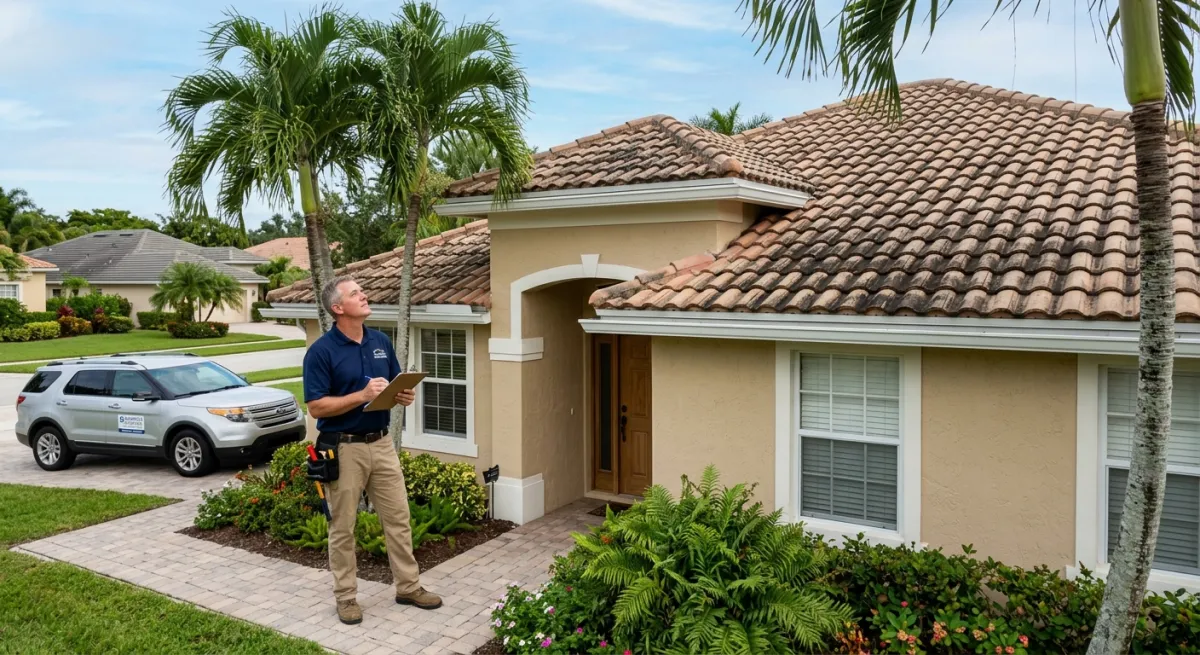
For lower-tech assessments, insurers send inspectors on drive-by evaluations. They photograph your property from the street, noting visible exterior condition. They're looking at:
- Roof appearance from ground level
- Exterior wall condition — peeling paint, visible mold, damaged stucco
- Yard maintenance — overgrown landscaping, dead trees, property condition indicators
- General maintenance signals — a home that looks well-maintained is lower risk in their models
The 4-Point Inspection
When you apply for new coverage or renew in many cases, insurers require a 4-point inspection. This is a more formal assessment covering:
1. Roof — age, material, condition, estimated remaining life 2. Electrical — panel type, wiring condition, capacity 3. Plumbing — pipe material, water heater age, visible condition 4. HVAC — system age, type, condition
The roof section is where exterior cleanliness matters enormously. An inspector evaluating your roof condition sees stains and growth — and it's not always clear to them (or to the insurance company reviewing the report) whether those dark streaks are harmless algae or indicators of actual deterioration.
Roof Condition: The #1 Factor
Your roof is far and away the most important exterior factor in your insurance status. Here's why, and how appearance connects to coverage decisions.
How Algae Makes Your Roof Look Older Than It Is
The most common growth on South Florida roofs is Gloeocapsa magma — a cyanobacterium that creates those characteristic dark streaks and patches. On light-colored tile or shingle roofs, it's visually dramatic. A roof that's structurally sound with 15+ years of life remaining can look like it needs replacement when covered in algae stains.
Here's the problem: insurance inspectors and underwriters are making assessments based partly on visual appearance. A roof that looks heavily damaged or deteriorated gets flagged — even if the underlying material is perfectly fine.
We've personally seen homeowners receive non-renewal notices citing "roof condition" when the actual issue was cosmetic algae growth on an otherwise healthy roof. After professional cleaning, the same roof that was flagged as a problem looks brand new.
When Algae IS Causing Real Damage
It's important to be honest here: algae, moss, and lichen aren't always just cosmetic. On certain roofing materials, organic growth can cause actual deterioration:
- Asphalt shingles: Algae feeds on the limestone filler in shingles, gradually degrading them. Over years, heavy algae growth can measurably shorten shingle lifespan.
- Tile roofs: Algae itself doesn't damage tile, but moss and lichen growth between tiles can lift tiles, hold moisture against the underlayment, and compromise the waterproof integrity.
- Flat roof coatings: Organic growth can degrade elastomeric and silicone roof coatings, reducing their effectiveness and lifespan.
Real Stories From Palm Beach County
We don't share customer names, but these situations are representative of what we see regularly:
The roof that wasn't old enough: A homeowner in Palm Beach Gardens had a barrel tile roof installed 8 years prior — well within its expected 30+ year lifespan. Their insurer sent a non-renewal notice citing "roof nearing end of useful life" based on a drone inspection. The roof was covered in algae staining. After professional soft washing, the homeowner got a new inspection showing the roof in excellent condition. Their policy was renewed. The premium that doubled: A Jupiter homeowner's premium jumped from $3,800 to $7,200 at renewal. The insurer cited "deferred maintenance" as a rating factor. The homeowner's roof, driveway, and exterior walls were visibly stained with algae and mold. After a full exterior cleaning and a request for re-evaluation, the premium was adjusted down to $4,400. Still an increase, but $2,800 less per year than the dirty-house quote. The policy that disappeared: A West Palm Beach homeowner lost their private insurance entirely. When applying with other companies, two declined to quote after drive-by inspections. The homeowner invested in full exterior cleaning, roof treatment, and minor repairs. The next insurer quoted and bound a policy. The cleaning cost around $600. The previous year without proper insurance had exposed the homeowner to catastrophic risk.These aren't unusual situations. They're increasingly common in our market.
Beyond the Roof: What Else Insurers Notice
While the roof gets the most scrutiny, other exterior factors play into insurance evaluations:
Mold on Exterior Walls
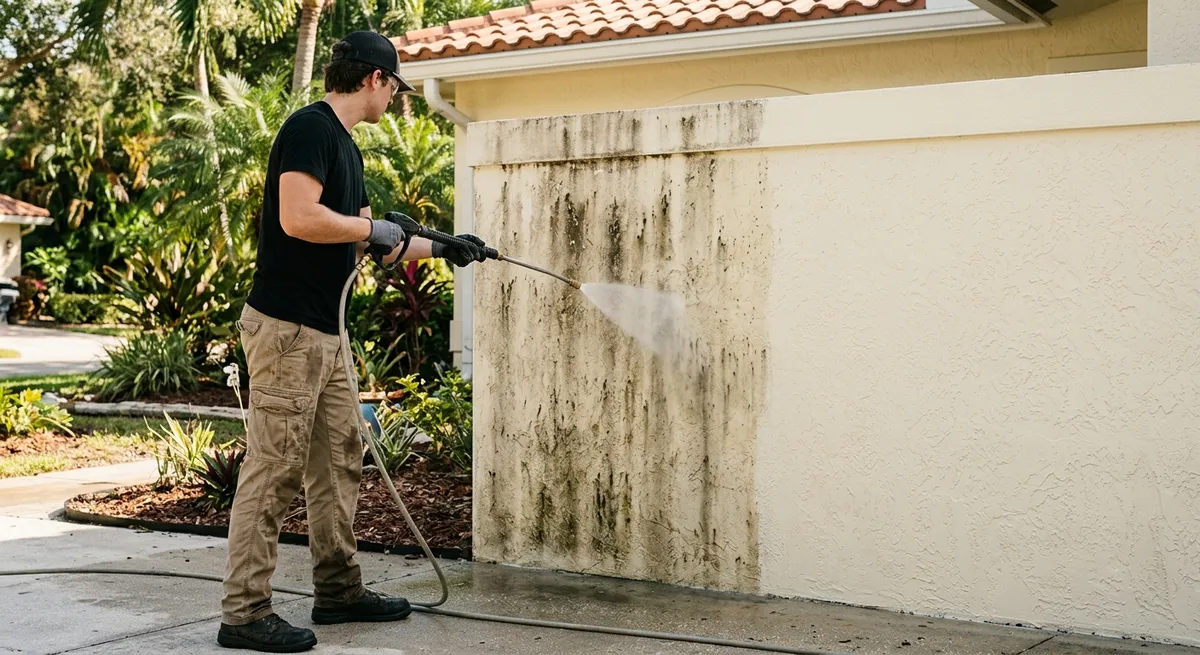
Visible mold on your stucco, siding, or block walls signals a few things to an inspector:
- Potential moisture intrusion issues
- Deferred maintenance
- Possible interior mold concerns (if exterior mold is significant, what's happening inside?)
Trees and Landscaping
Dead trees, overhanging branches touching the roof, and overgrown landscaping near the structure are all flagged. Dead or dying trees near the home are a particular concern in hurricane-prone areas — they're a projectile risk during storms.
General Property Condition
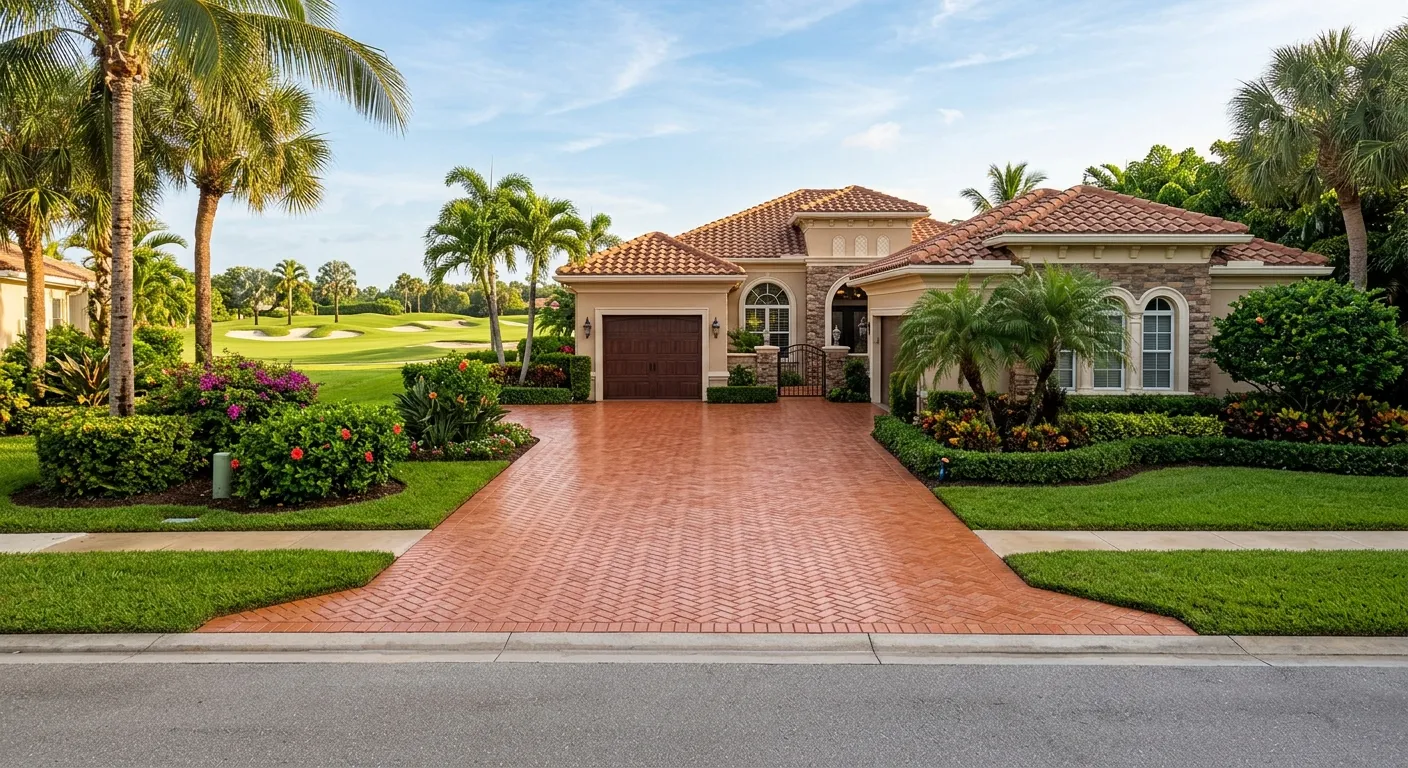
Insurance is fundamentally about risk assessment. A property that looks well-maintained signals a lower risk of claims than a property that looks neglected. This isn't fair in every case — you might be meticulously maintaining your interior while the exterior suffers — but insurers work with visual data, and exterior appearance is what they can see.
The ROI of Keeping Your Home Clean for Insurance
Let's talk numbers, because this is where the business case gets compelling.
Cost of Professional Exterior Cleaning
A comprehensive exterior cleaning for a typical Palm Beach County home:
- Roof soft wash: $350-700 depending on size and roof type
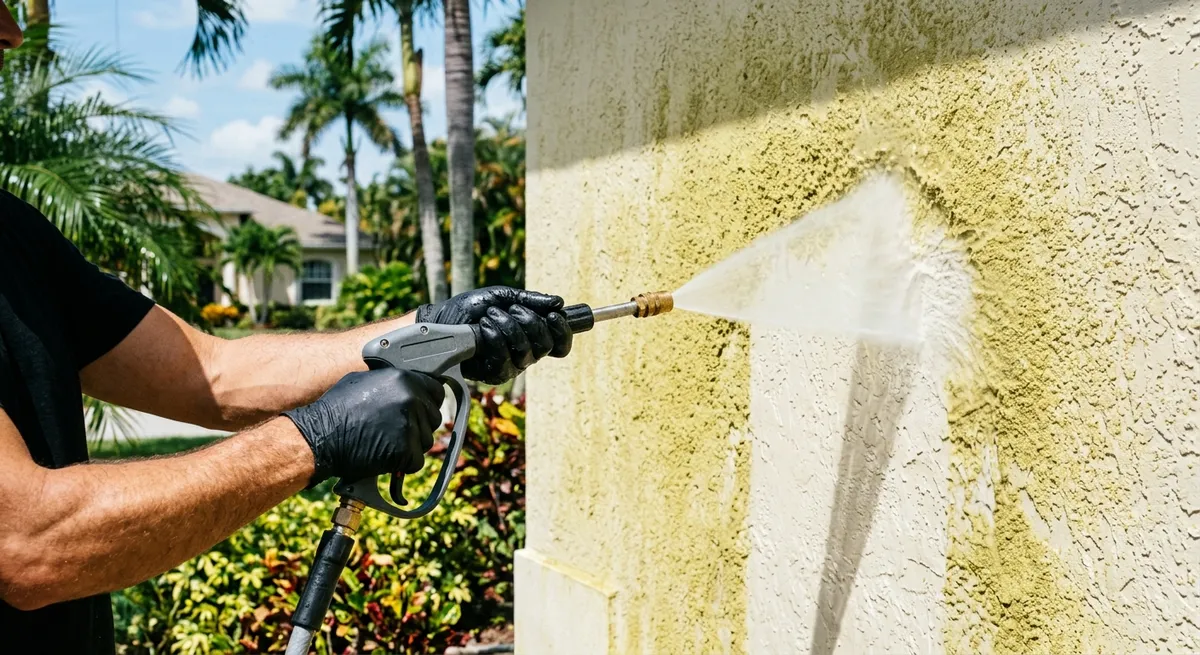
- House wash (walls): $250-500
- Driveway and walkways: $150-350
- Full property package: $600-1,200
Cost of Insurance Consequences
- Premium increase of 20-40% on a $5,000 annual premium = $1,000-2,000 per year
- Non-renewal forcing you to Citizens (often more expensive and less comprehensive coverage)
- Being uninsurable — some homes with significant deferred maintenance can't get coverage at any price
- Premium surcharges that persist for years even after addressing the issue
Frequency for Insurance Purposes
For keeping your property in insurance-favorable condition, we recommend:
- Roof soft wash: Annually (or at minimum every 18 months)
- House wash: Annually
- Driveway and hardscape: Annually
Getting Ahead of the Inspection Cycle
The smartest approach is proactive rather than reactive. Here's how to stay ahead:
Know When Your Policy Renews
Mark your calendar 60-90 days before your renewal date. This is the window when insurers are evaluating whether to renew and at what rate. Having your property freshly cleaned before this window means any inspection — drone, drive-by, or formal — sees your home at its best.
Request Your Own Inspection
After cleaning, consider getting a roof certification inspection from a licensed roofer. This document states the professional assessment of your roof's condition and estimated remaining life. Having this in your file with your insurer provides objective evidence that your roof is in good shape, countering any automated assessment based on aerial imagery.
Document Everything
Take date-stamped photos of your clean property. Photos of your roof (from ground level and elevated if possible), exterior walls, and overall property condition provide documentation you can submit to your insurer if they raise concerns.
Maintain Year-Round
Rather than one major annual cleaning, some homeowners opt for semi-annual maintenance cleanings — lighter scope but more frequent. This keeps your property in inspection-ready condition throughout the year, so it doesn't matter when the drone flies over or the inspector drives by.
The Insurance-Cleaning Connection Most People Miss
Here's the subtle point that ties this all together: insurance companies aren't just evaluating your current condition — they're using it as a proxy for how you maintain your property overall.
A homeowner with a clean roof, well-maintained exterior, and obviously cared-for property is statistically less likely to file claims than a homeowner with visible deferred maintenance. Whether that's because proactive homeowners catch problems early, invest in prevention, or simply have less damage — the correlation is real and insurers act on it.
By keeping your home's exterior clean, you're not just avoiding algae stains. You're signaling to your insurer that you're a lower-risk policyholder. In today's Florida market, that signal can mean the difference between affordable coverage and an insurance nightmare.
What to Do If You've Already Gotten a Notice
If you've already received a non-renewal notice or a significant rate increase that cites property condition:
1. Don't panic — you have time, and the situation is often resolvable 2. Schedule professional cleaning immediately — roof, walls, and any surfaces mentioned in the notice 3. Get a roof certification from a licensed roofer after cleaning 4. Document the improvements with photos and receipts 5. Contact your agent with the documentation and request reconsideration 6. If your current insurer won't budge, use the documentation when shopping for a new policy — it demonstrates the property's actual condition versus the appearance that triggered the action
Many of our customers have successfully reversed insurance decisions or significantly reduced premium increases using this approach. It doesn't work in every case (some decisions are based on factors beyond your control, like the insurer leaving Florida entirely), but for condition-based actions, clean evidence makes a strong case.
Prevention Is Cheaper Than Crisis
The Florida home insurance market isn't getting easier anytime soon. The structural issues — hurricane risk, litigation environment, reinsurance costs — aren't resolving quickly. What you can control is how your property presents to insurers.
For homeowners in Palm Beach Gardens, Jupiter, West Palm Beach, and across Palm Beach County, Crouching Tiger Exterior Cleaning helps keep properties in insurance-favorable condition year-round. We understand the connection between clean exteriors and insurance outcomes because we've seen it play out hundreds of times with our customers.
Get your free quote and start protecting both your home and your insurability. A clean exterior is one of the most cost-effective investments you can make as a Florida homeowner — not just for curb appeal, but for your financial security. Call us or book online today.