Your First Professional House Wash: No Mysteries
If you've never had your home professionally washed, you probably have questions. What do they actually do? Do I need to be home? Will the chemicals kill my plants? How long does it take? Is my house going to look weird?
These are all fair questions. The pressure washing and soft washing industry doesn't always do a great job of explaining the process to homeowners. You call, get a quote, someone shows up with a truck full of equipment, and two hours later they leave and your house looks different. What happened in between can feel like a black box.
Let's open that box. Here's exactly what happens during a professional house washing — specifically for South Florida homes, which have their own particular needs and challenges.
Before the Crew Arrives: Your Prep Checklist
A good company will tell you what to do before they arrive. Here's what we recommend:
Close All Windows and Doors
This sounds obvious, but it's the one people forget most often. Every window and door needs to be fully closed and latched — not just pushed shut but actually locked or latched. Water and cleaning solution at pressure can push past a window that's closed but not latched, especially on older windows or sliding glass doors with worn seals.
This includes:
- All windows (including second-story and bathroom windows that might be cracked for ventilation)
- Sliding glass doors
- French doors
- Garage doors (if the exterior walls near the garage are being cleaned)
- Pet doors (secure the flap)
Move or Secure Items Near the House
Anything within about 3-4 feet of your exterior walls should be moved or secured:
- Patio furniture — move it away from walls or at least away from the side being cleaned
- Potted plants — move small ones, larger ones will be protected during cleaning
- Doormats and decorative items — remove from entryways
- Grills and outdoor equipment — move if possible, cover if not
- Children's toys and pool floats — clear from the area
- Cars — move out of the driveway or at least 20+ feet from the house
Bring Pets Inside
Your dog or cat needs to be inside during the service. Cleaning solutions are applied to exterior surfaces and rinsed off — the runoff goes through landscaping beds and across walkways. While properly diluted solutions are safe for plants (more on that below), pets shouldn't walk through active cleaning areas, drink from puddles of solution, or be startled by equipment noise.
Turn Off Irrigation
If your irrigation system is set to run during the scheduled cleaning window, turn it off or adjust the timer. Sprinklers activating mid-service interferes with chemical dwell time and rinse patterns. It also creates a slip hazard for the crew.
Point Out Problem Areas
If there's a specific spot that's been driving you crazy — that dark streak under the eave, the mold spot by the AC unit, the stain on the front of the garage — let the crew know. They'll address it, but they might not know it's a concern unless you mention it.
The Soft Wash Process: Step by Step
For most South Florida homes — which are CBS (concrete block and stucco) construction — soft washing is the appropriate method, not high-pressure washing. Here's why and how it works.
Why Soft Wash, Not Pressure Wash?
Stucco is the dominant exterior finish on homes in Palm Beach Gardens, Jupiter, West Palm Beach, and throughout Palm Beach County. Stucco has a textured surface that's more delicate than it looks. High-pressure washing can:
- Crack or chip stucco
- Force water behind the stucco into the wall cavity
- Blast off paint
- Create uneven texture (some areas eroded more than others)
- Damage window seals and caulking
Step 1: Property Walk and Assessment
The crew chief walks the full perimeter of your home before anything gets turned on. They're looking for:
- The type and extent of organic growth (algae, mold, mildew, lichen — each responds differently)
- Surface conditions — loose stucco, peeling paint, cracked caulk, exposed wood
- Landscape proximity — what plants are near the walls and how to protect them
- Access issues — locked gates, narrow side yards, overhead obstacles
- Electrical hazards — exterior outlets, junction boxes, light fixtures
- Anything unusual — wasp nests, damaged soffit, evidence of water intrusion
Step 2: Pre-Wet Landscaping
Before any cleaning solution is applied, the crew thoroughly soaks all landscaping within the splash zone — typically everything within 5-6 feet of the house walls.
Why? The cleaning solution's active ingredient is sodium hypochlorite (a bleach-based compound). While it's diluted significantly for application, it can stress or damage plants if it contacts dry foliage and sits there. Pre-wetting plants serves two purposes:
1. The water creates a barrier on the leaves so cleaning solution runs off rather than absorbing 2. It dilutes any solution that does contact the plants
This step is not optional — any company that skips it is cutting corners that will cost you landscaping.
Step 3: Apply Cleaning Solution
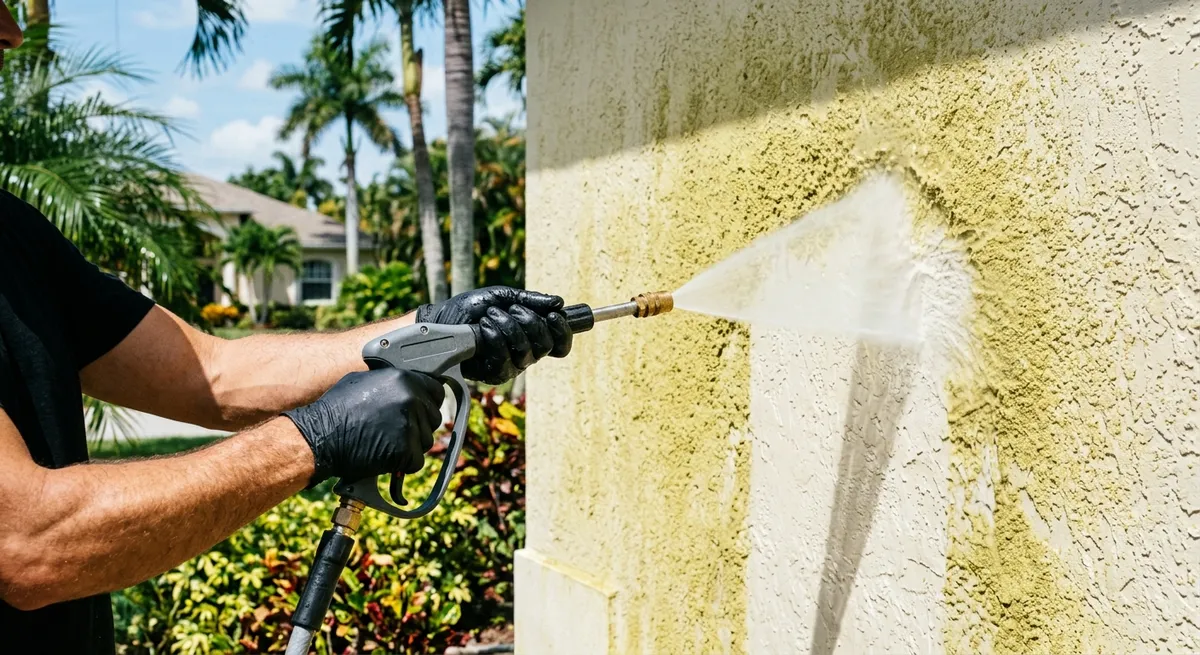
The crew applies the soft wash solution to your home's exterior using a low-pressure spray system. The solution is typically applied from the bottom up. This might seem counterintuitive (wouldn't you start at the top?), but there's a reason:
Applying from the bottom up ensures the lower surfaces are pre-wetted with solution before runoff from upper areas reaches them. If you start at the top, concentrated solution runs down onto dry lower surfaces and can cause streaking or uneven cleaning.
What the solution looks like: It's usually a slightly soapy, clear to slightly tinted liquid. You won't see dramatic foaming or color in most cases, though some surfactants create a light foam that helps the crew see coverage. What the solution does: The sodium hypochlorite kills the organic growth (mold, mildew, algae) at the cellular level. The surfactants help the solution cling to vertical surfaces rather than immediately running off, and they help lift dirt and grime from the surface.Step 4: Dwell Time
After application, the solution needs time to work. This is the dwell time, typically 10-15 minutes depending on the severity of growth and the surface type.
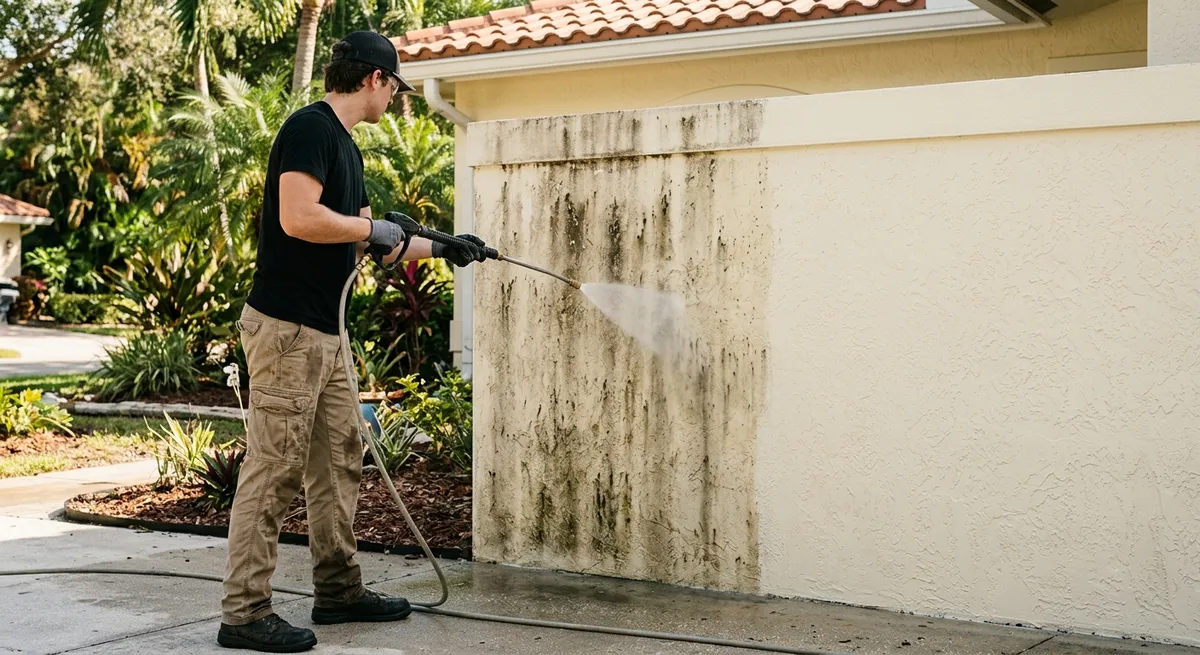
During dwell time, you'll see the organic growth start to change color and break down. Dark mold streaks will begin to lighten. Green algae will start to turn whitish or translucent. This is the solution doing its job — killing the growth and loosening its grip on the surface.
The crew doesn't just stand around during dwell time. They're:
- Monitoring the solution on the surface (ensuring it doesn't dry before rinse)
- Re-wetting landscaping if needed
- Pre-treating heavily affected areas that may need a second application
- Preparing rinse equipment
Step 5: Rinse
The rinse phase uses clean water at moderate pressure — enough to flush away the solution and dead organic material, but not enough to damage stucco or painted surfaces.
Rinsing is done from the top down (opposite of application). This ensures dirty water and dead organic material flushes down and off the surface completely, without leaving streaks.
The crew pays particular attention to:
- Under eaves and soffits — these collect solution and need thorough rinsing
- Around windows and doors — ensuring no solution residue remains on glass or frames
- Gutters and downspouts — rinsing inside and outside
- Foundation/base of walls — where the most runoff concentrates
Step 6: Post-Rinse Landscape Flush
After the walls are rinsed, the crew does a final thorough rinse of all landscaping in the area. This flushes any residual cleaning solution from leaves and soil, ensuring your plants are fully protected.
Step 7: Detail Work and Final Walk
The crew chief does a final walk around the property, checking:
- All areas were cleaned evenly
- No streaks or missed spots
- Window glass is clean (not streaked with residue)
- Landscape areas are properly rinsed
- Any problem areas you pointed out have been addressed
How Long Does It Take?
For a typical single-story South Florida home (1,500-2,500 sq ft), expect 2-3 hours for a complete house wash. This includes setup, landscaping protection, application, dwell time, rinse, and cleanup.
Factors that increase time:
- Two-story homes: Add 1-1.5 hours — second-story work requires different equipment setup and more careful rinse management
- Heavy organic growth: Severely affected homes may need double application with additional dwell time
- Large properties: Homes over 3,000 sq ft or properties with significant wall area take proportionally longer
- Extensive landscaping: More plants = more time protecting and rinsing them
- Additional services: Pool deck, driveway, lanai screen, etc. are typically separate from the house wash
Common Concerns Answered
"Will it damage my plants?"
No — with proper technique. The pre-wet and post-rinse process protects landscaping effectively. In our experience, properly executed soft washing causes zero plant damage. We've cleaned homes with expensive orchid collections, mature hibiscus, and delicate bromeliads along the walls without incident.That said, if a company doesn't pre-wet and post-rinse plants, or if they use concentrations that are too high, plant damage can absolutely occur. This is a skill and care issue, not a process issue.
"Will it damage my paint?"
Not if it's sound paint. Soft washing is gentler on paint than pressure washing. However, if your paint is already peeling, chalking, or poorly adhered, the cleaning process will remove loose paint. This is actually a good thing — it reveals paint failures that need attention — but it can be surprising if you weren't expecting it.If your home has been recently painted (within the last 2-3 years) with quality paint properly applied, soft washing will clean it beautifully without issue.
"What are those chemicals? Are they safe?"
The primary cleaning agent is sodium hypochlorite (SH) — essentially the same active ingredient in household bleach, but in a professional concentration that gets diluted before application. The other components are surfactants (think dish soap at an industrial level) that help the solution cling and clean.
These chemicals are:
- Biodegradable — they break down rapidly in the environment
- The industry standard — used by professional exterior cleaners nationwide
- Applied at specific dilutions calculated for each surface type
- Rinsed thoroughly after application
"Will my house look perfect immediately?"
Mostly yes, with a caveat. After the rinse, most organic growth is gone and your house will look dramatically better — often like a different house entirely. However, some improvements continue for 24-48 hours after cleaning.Why? The cleaning solution continues to work at a microscopic level even after rinsing. Organic growth that was killed during the treatment but didn't fully wash away will naturally slough off over the next day or two. Very light stains from long-established growth may fade over this period.
So if you notice a faint shadow where a dark streak used to be, give it 48 hours. It usually resolves. If it doesn't, that's likely a stain that has penetrated the surface — not active growth, but a cosmetic mark that may require a different treatment.
"How often should I have this done?"
For most homes in Palm Beach County, once per year is the standard recommendation. Homes with heavy shade, north-facing walls, or proximity to water may benefit from twice-yearly cleaning (typically spring and fall).
You'll know it's time when you start seeing dark streaks returning on the walls or green tinting on textured surfaces. Staying on an annual schedule prevents growth from becoming deeply established, which means each cleaning is faster, easier, and less expensive than playing catch-up after years of neglect.
Choosing the Right Company
Not all house washing services are equal. For South Florida specifically, look for:
- Soft wash capability — any company that wants to pressure wash your stucco walls is using the wrong method
- Plant protection protocol — ask specifically about pre-wetting and post-rinsing
- Insurance — both liability and workers' comp (you're liable if an uninsured worker gets hurt on your property)
- Specific experience with South Florida homes — CBS/stucco construction has different needs than wood siding
- Willingness to explain their process — a company that won't tell you what chemicals they use or how they protect your property is a red flag
Ready to See the Difference?
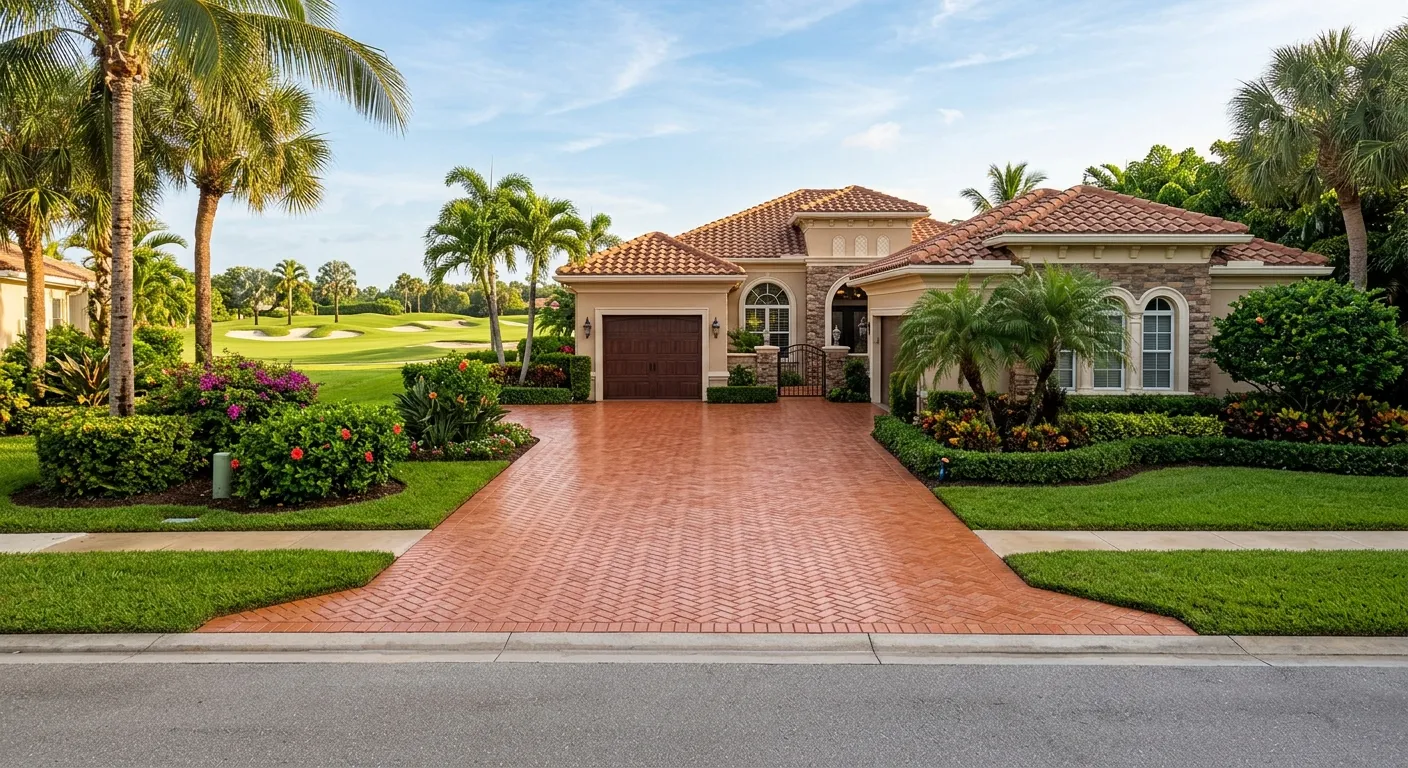
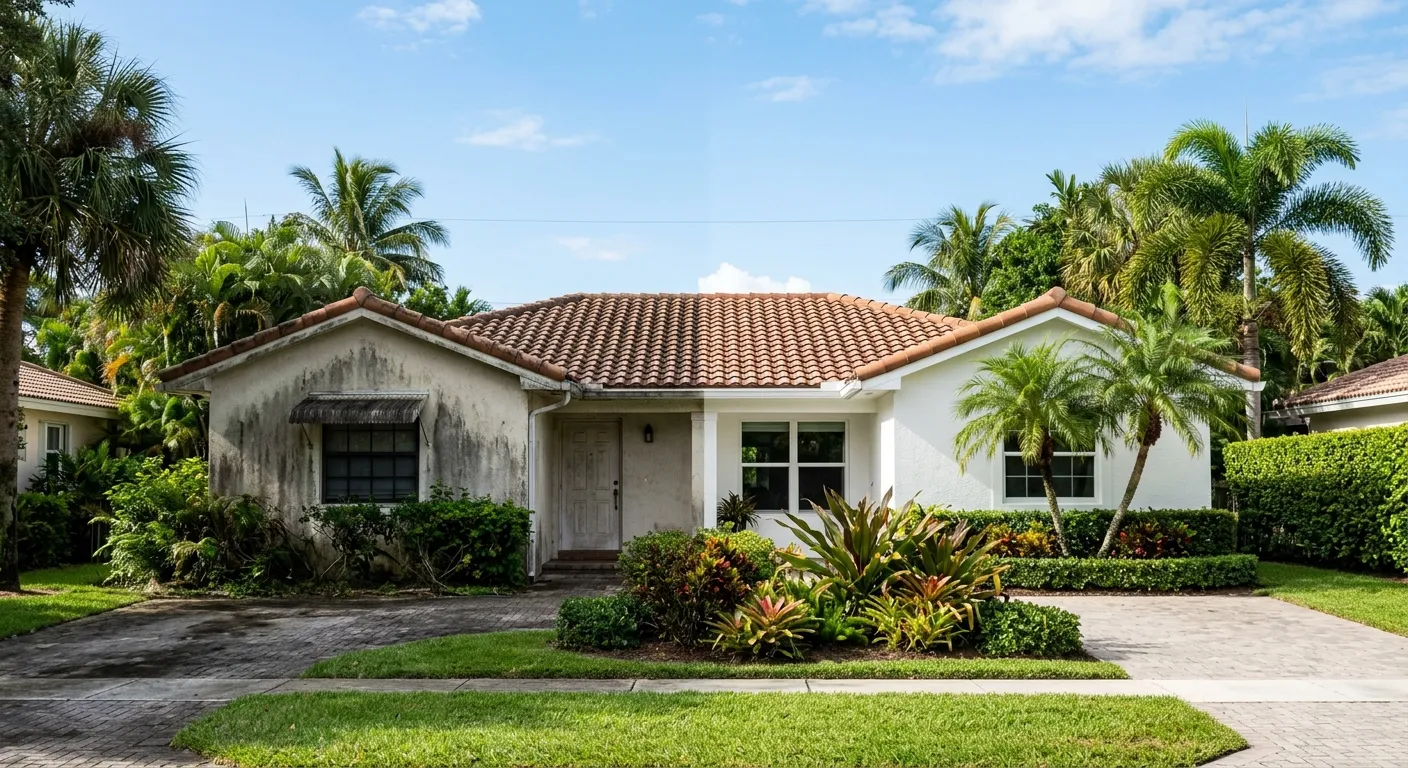
If you've been looking at your home's exterior thinking it just looks "aged" or "faded," there's a very good chance it's not aging — it's just dirty. South Florida's climate deposits a constant layer of organic growth that dims, darkens, and discolors every exterior surface. A professional soft wash removes that layer and reveals the home underneath.
For homeowners in Palm Beach Gardens, Jupiter, West Palm Beach, and across Palm Beach County, Crouching Tiger Exterior Cleaning provides thorough, careful house washing that protects your property while transforming its appearance.
Get your free quote and find out what your home actually looks like under all that Florida grime. We'll walk you through the process, answer every question, and make sure you know exactly what to expect.