
Why March Is the Magic Month
Spring cleaning means different things in different places. Up north, it's about opening the windows after a long winter and airing out the house. Down here in Palm Beach Gardens, our version is more about resetting your home's exterior before the really rough season starts.
March is the sweet spot, and here's why:
- Pollen hasn't peaked yet. Our worst pollen season (oak, pine, and grass) runs from late March through May. Cleaning before the peak means your surfaces stay cleaner longer.
- It's not brutally hot yet. Cleaning in March means working in the low-to-mid 80s instead of the 90s with oppressive humidity. Better for you if you're DIY-ing, and better results for chemical treatments that need appropriate dwell time before evaporating.
- Rainy season is still a couple months out. The daily afternoon thunderstorms that start in May bring a fresh wave of moisture, mold, and organic growth. Starting the rainy season with clean surfaces gives your home a significant head start.
- It's after dry season buildup. From November through February, dust, sand, and debris accumulate on every exterior surface without regular rain to wash things off. March is the natural time to clear all of that.
The Complete Exterior Spring Cleaning Checklist
We've organized this by area so you can work through it systematically. For each item, we've noted whether it's a good DIY task or one where professional help makes more sense.
Roof
- [ ] Visual inspection from ground level -- Look for missing or cracked tiles, lifted shingles, or any obvious damage from winter wind events. Use binoculars if needed. (DIY)
- [ ] Check for dark streaks or algae growth -- If you see black streaking (Gloeocapsa Magma) or green algae patches, it's time for a soft wash. (Professional)
- [ ] Clear debris from valleys and around penetrations -- Leaves, twigs, and seed pods accumulate in roof valleys, around vents, and against skylights. This debris traps moisture and accelerates deterioration. (Professional -- involves getting on the roof)
- [ ] Inspect flashing around vents, chimneys, and skylights -- Look for gaps, lifting, or rust. (Professional or qualified DIY)
- [ ] Check attic vents for blockage -- Soffit and ridge vents clogged with debris reduce ventilation and increase attic moisture. (DIY from inside attic or professional from outside)
Exterior Walls (Stucco, Siding, or Block)
- [ ] Inspect for cracks, chips, or damage -- South Florida stucco is prone to hairline cracks that allow moisture intrusion. Small cracks can be caulked; larger ones need professional repair. (DIY for small cracks, professional for significant damage)
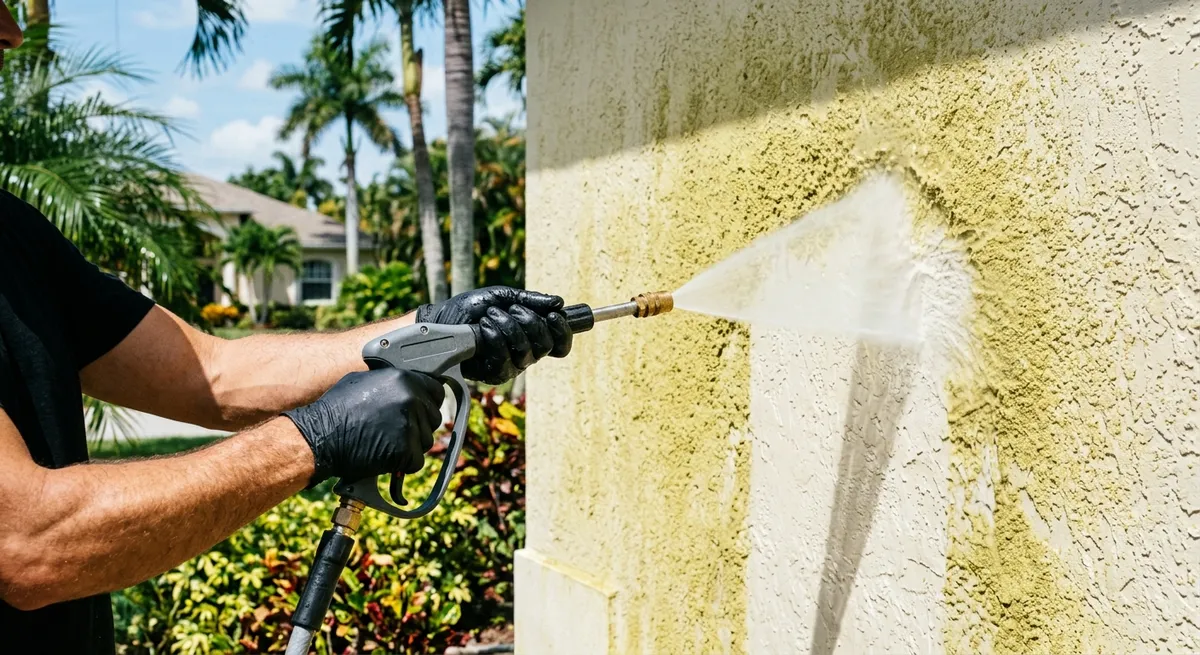
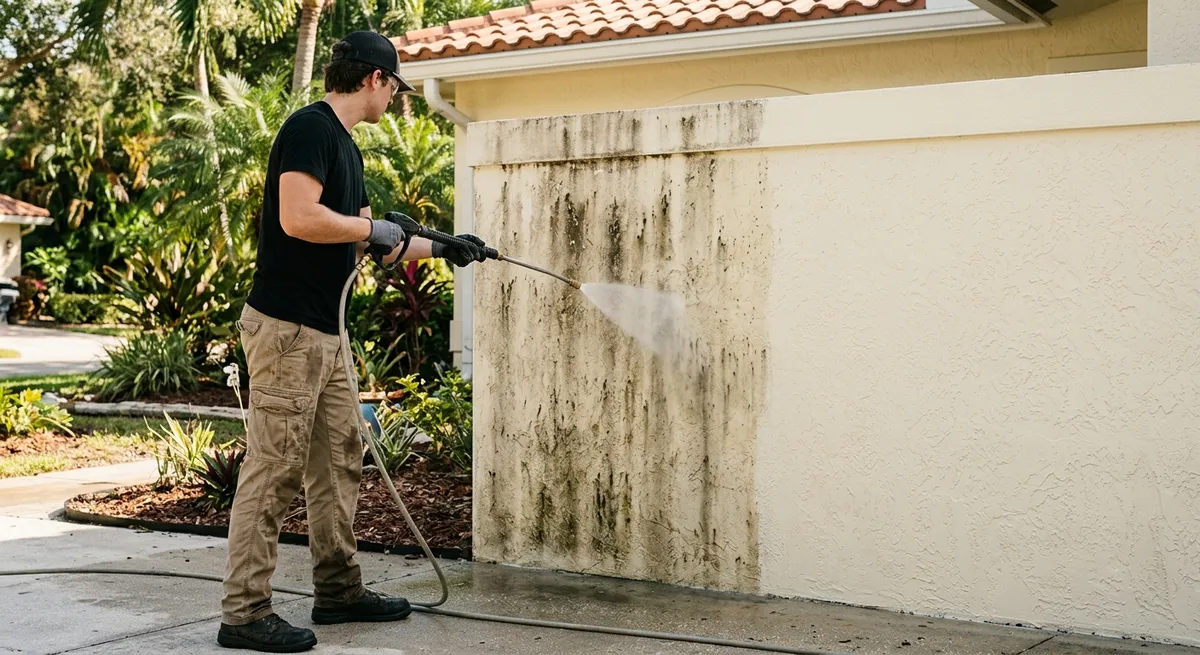
- [ ] Check for mold, mildew, or algae growth -- North-facing walls, areas near landscaping, and shaded spots are the worst offenders. (Professional soft wash recommended)
- [ ] Examine paint condition -- Look for bubbling, peeling, or chalking. If paint is failing, cleaning and repainting should be prioritized before rainy season drives more moisture behind the surface. (Assessment: DIY. Painting: Professional)
- [ ] Inspect caulking around windows, doors, and penetrations -- Failed caulk means water intrusion during summer storms. (DIY)
- [ ] Clean exterior light fixtures and address cobwebs -- Spiders love the warm months; get ahead of them now. (DIY)
Windows
- [ ] Professional window cleaning inside and out -- This makes a bigger difference than most people expect. Clean windows transform a home's appearance. (Professional for second story and above, DIY for accessible windows)
- [ ] Inspect window screens for tears or damage -- Replace or repair before bug season ramps up. (DIY)
- [ ] Clean window tracks and weep holes -- These get packed with dirt and debris, and clogged weep holes can cause water to back up into your home during heavy rain. (DIY)
- [ ] Check weatherstripping -- Replace any that's cracked, compressed, or missing. Good weatherstripping keeps cooled air in and humid air out, saving on energy bills. (DIY)
Driveway and Walkways
- [ ] Pressure wash the driveway -- After dry season, your driveway has months of dust, tire marks, and the beginnings of organic growth. A spring cleaning sets it up well before mold goes into overdrive during rainy season. (Professional for best results, DIY-possible)
- [ ] Clean sidewalks and front walkway -- Don't neglect the path from the street to your front door. First impressions matter. (Professional or DIY)
- [ ] Inspect for cracks or settling -- Concrete and pavers shift over time, especially in Florida's sandy soil. Trip hazards should be addressed. (Assessment: DIY. Repair: Professional)
- [ ] Check expansion joints -- The flexible material between concrete sections degrades over time. Failed joints allow water to undermine the slab. (Professional)
- [ ] Consider sealing -- If your driveway or pavers haven't been sealed in the last 2-3 years, spring is an ideal time (before the daily rains make it impossible to keep surfaces dry long enough for sealer to cure). (Professional)
Pool Deck and Lanai
- [ ] Pressure wash the pool deck -- Slip hazards from algae and mildew are a real safety concern, especially as pool season picks up. (Professional recommended -- chemical choice matters around pool water)
- [ ] Clean screen enclosure -- If you have a screened lanai or pool cage, winter dust and pollen have coated the screens, reducing airflow and making everything look dingy. (Professional soft wash -- screens are easily damaged by pressure)
- [ ] Inspect screen panels for tears or loose splines -- One small tear becomes a highway for mosquitoes. (DIY for identification, professional for re-screening)
- [ ] Clean lanai ceiling and beams -- Cobwebs, dirt dauber nests, and mildew accumulate overhead. (DIY for accessible areas, professional for high ceilings)
- [ ] Check pool deck drainage -- Make sure water flows away from the house and pool equipment area. (DIY inspection)
Gutters and Downspouts
- [ ] Clean gutters -- Even if you don't have significant tree coverage, dust, pollen, and small debris accumulate during dry season. Clogged gutters during rainy season cause fascia rot, foundation erosion, and landscape damage. (Professional recommended -- ladder safety)
- [ ] Flush downspouts -- Run a hose through each downspout to confirm it's clear. A clogged downspout makes a clean gutter useless. (DIY if accessible)
- [ ] Check gutter slope and attachment -- Gutters should slope toward downspouts with no sagging or standing water. (Professional if adjustment needed)
- [ ] Inspect splash blocks or drainage extensions -- Make sure water is directed away from your foundation. (DIY)
Landscaping Borders and Hardscape
- [ ] Edge all beds and borders -- Clean edges make the entire property look maintained. (DIY)
- [ ] Pressure wash retaining walls, garden borders, and decorative stone -- These accumulate algae and dirt just like any other hard surface. (Professional or DIY)
- [ ] Clean outdoor furniture -- Wipe down tables, chairs, and cushion frames. If cushions are mildewed, either clean thoroughly or replace. (DIY)
- [ ] Clean mailbox post and house numbers -- Small details that contribute to curb appeal. (DIY)
- [ ] Inspect and clean outdoor lighting -- Path lights, uplights, and landscape fixtures get coated in dirt and lose their effectiveness. (DIY)
Garage
- [ ] Pressure wash the garage floor -- See our complete guide on garage floor cleaning for details on tackling oil stains. (Professional for oil stains, DIY for general grime)
- [ ] Clean the garage door exterior -- Both the door panels and the tracks. (DIY)
- [ ] Inspect garage door weatherstripping -- The rubber seal at the bottom degrades in Florida's UV exposure. Replace if it's cracked, brittle, or not sealing to the floor. (DIY)
How to Prioritize If You Can't Do Everything
Real talk: most homeowners look at a list like this and feel overwhelmed. If your budget or schedule means you can't tackle everything at once, here's how to prioritize for maximum impact:
Priority 1: Safety and Damage Prevention
- Gutter cleaning (prevents water damage)
- Roof inspection (catches problems before rainy season)
- Caulk and weatherstripping (prevents water intrusion)
- Pool deck cleaning (slip hazard prevention)
Priority 2: Highest Visual Impact
- Driveway pressure washing (biggest visible surface)
- Front walkway and entry cleaning
- Window cleaning (transforms appearance)
- Exterior wall washing (especially the front facade)
Priority 3: Maintenance and Longevity
- Sealing driveways and pavers
- Screen enclosure cleaning
- Landscaping borders and hardscape
- Garage floor cleaning
The "Spring Reset" Concept
Here's how we think about it: your home's exterior is in a constant battle with South Florida's climate. Mold, algae, and organic growth are always trying to establish themselves. Every exterior surface starts clean and progressively gets dirtier.
A thorough spring cleaning resets the clock. You're not just cleaning for appearance -- you're removing the colonies of organisms that will explode in growth once rainy season humidity and moisture give them everything they need.
A surface cleaned in March will still look reasonable in September. A surface that was already dirty in March will be a serious problem by September. It's the difference between keeping up and falling behind.
DIY vs. Professional: The Real Calculation
For many items on this checklist, the question isn't "can I do this myself?" -- it's "should I?" A few things to consider:
- Time: A full exterior spring cleaning done by a homeowner takes multiple weekends. A professional crew can typically complete everything in one day.
- Equipment: Professional equipment delivers dramatically better results, particularly for pressure washing and soft washing. Renting equipment helps, but there's a learning curve.
- Safety: Ladder work, roof access, and high-pressure equipment all carry real risk. Falls from ladders are one of the most common home injury categories.
- Results: Professional-grade chemicals and commercial equipment simply clean better and last longer than consumer alternatives.
Get Your Spring Reset Scheduled
March fills up fast -- every homeowner in Palm Beach County has the same idea once the weather starts warming up. The best time to schedule your exterior spring cleaning is right now, before the calendar gets packed.
We offer comprehensive exterior cleaning packages that cover your roof, walls, driveway, pool deck, lanai, and gutters in a single visit. Get your free quote today and start the season with a clean slate.