Your Home Might Be Making Your Allergies Worse
Every spring, millions of South Floridians start the ritual: Claritin on the nightstand, tissues in every room, eyes that look like you've been crying all day. We blame the air. We blame the trees. We blame Florida in general.
But here's something most people never consider: the exterior surfaces of your home are acting as a reservoir for the very allergens making you miserable, and they're feeding those allergens directly back into your indoor air.
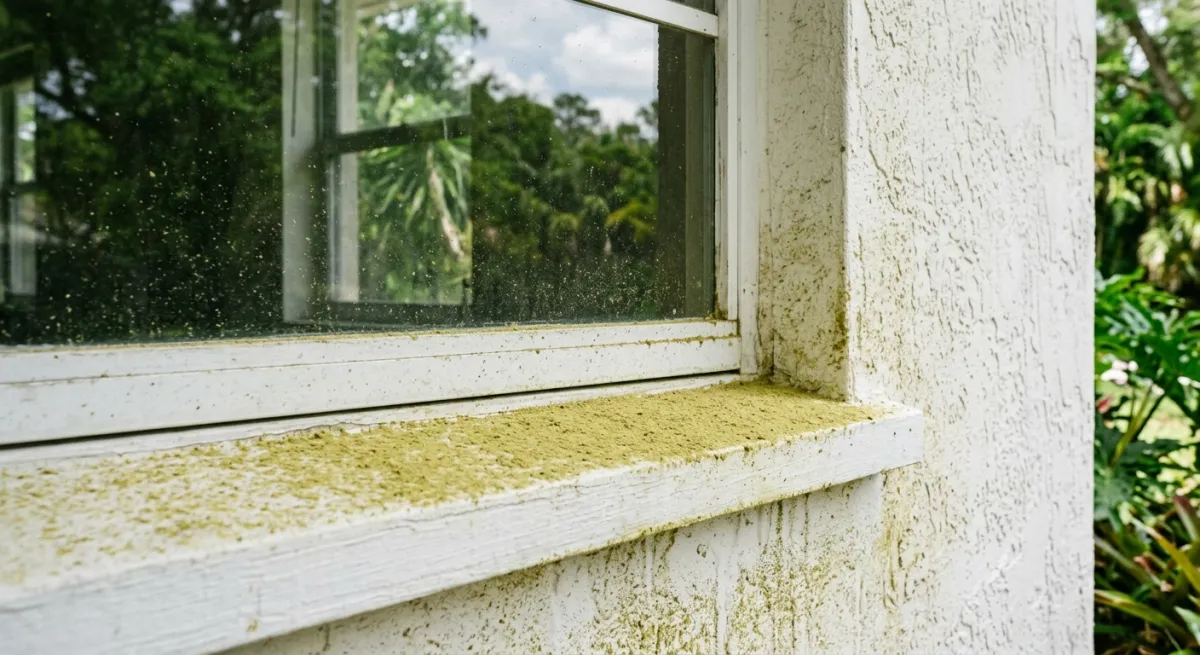
It's not just the pollen floating around outside. It's the pollen, mold, and mildew that have been accumulating on your walls, screens, window frames, and walkways for months. Every time you open a door, every time the wind blows, every time your HVAC system pulls in outdoor air — those surface-level allergens become airborne and enter your home.
Let's trace the path and talk about what you can do about it.
South Florida's Allergy Season Is Brutal (and Long)
Before we get into the home connection, let's acknowledge what we're dealing with. South Florida's allergy season isn't a few weeks in April. It runs roughly from February through June, with peak severity in March and April.
The Worst Offenders in Palm Beach County
Live oaks are arguably the biggest allergy trigger in our area. They produce massive quantities of pollen in late winter and early spring — those yellow-green catkins that coat every surface. If you live in Palm Beach Gardens or Jupiter, you know exactly what I'm talking about. By mid-March, every car, driveway, and patio looks like it's been dusted in yellow powder. Slash pines and sand pines contribute heavy pollen loads throughout spring. Pine pollen is large and visible — it's the stuff that creates that yellow film on puddles and pools. Brazilian pepper trees are a particular problem. They're invasive, they're everywhere in South Florida, and they're potent allergen producers. If you have them on your property or nearby, your exposure risk goes up significantly. Grasses — Bahia grass, Bermuda grass, and St. Augustine grass (which is in basically every yard in Palm Beach County) — all pollinate through spring and summer, keeping the allergen load going well past tree pollen season.And underneath it all: mold and mildew. Our humidity ensures that mold spores are present year-round, but they spike during the warmer, wetter months. Mold is an allergen that gets overlooked because people think of it as an indoor problem. It's not — it thrives on exterior surfaces.
The Path: How Exterior Contamination Becomes Indoor Air Quality
Here's where it gets important. Allergens on your home's exterior don't just sit there harmlessly. They follow predictable paths into your living space.
Path 1: Doors and Windows
Every time you open your front door, sliding glass door, or windows, you create an air exchange. Pollen and mold spores sitting on exterior surfaces near those openings get disturbed and pulled inside. If the area around your door frame is coated in pollen and mildew — which it probably is — you're getting a concentrated dose every time you come and go.
Sliding glass doors are the worst. The track collects pollen and debris, and every time you slide that door open, it stirs everything up right at breathing height. Add in the fact that most South Florida homes have lanais with screen enclosures that are themselves covered in allergens, and you've got a direct pipeline from contaminated surfaces to your lungs.Path 2: HVAC Intake
Your air conditioning system doesn't just recirculate indoor air. It pulls in outside air through returns, and many systems have fresh air intakes that draw directly from the exterior. If the area around your HVAC's outdoor unit and air returns is coated in pollen, mold, or mildew, you're pumping allergens straight into your ductwork.
Think about where your AC condenser sits. It's probably on a concrete pad next to the house, surrounded by landscaping. That concrete pad is covered in organic growth. The unit itself is pulling air through those coils constantly — and whatever's on those surfaces goes right through with it.
Path 3: Screen Enclosures
Screen enclosures are supposed to be a barrier. And they are — for bugs. But for allergens? Not so much. Screen mesh catches and holds pollen, mold spores, and dust. Over time, your screens become coated in a visible layer of contamination.
Now every breeze that blows through your screen enclosure is being filtered through a layer of accumulated allergens. Instead of protecting you, your dirty screens are actually concentrating allergens in the area where you spend your outdoor time.
We've cleaned screen enclosures in Palm Beach Gardens where the before-and-after difference was shocking. Homeowners didn't realize how much buildup was there because it happens gradually. But the amount of pollen and mildew embedded in those screens was significant.
Path 4: Foot Traffic
This one's simple but often overlooked. Your walkways, driveway, and patio are covered in pollen and mold growth. You walk through it. It gets on your shoes. You track it inside. Your kids track it inside. Your pets absolutely track it inside.
Pollen on concrete and pavers doesn't just sit on top — it settles into the texture and pores of the surface. Regular foot traffic grinds it in and also kicks it back up into the air you're breathing as you walk to your car or check the mail.The Mold Connection Most People Miss
Pollen gets all the attention during allergy season, but mold may be the bigger problem when it comes to exterior surfaces affecting your indoor air.
Here's why: mold on your home's exterior walls, under eaves, on screen frames, and on concrete surfaces is actively producing spores. Those spores are microscopic — far smaller than pollen grains — and they travel easily through the air.
Unlike pollen, which has a defined season, mold spore production in South Florida is essentially year-round, with peaks during warm, humid months. And mold on exterior surfaces is self-perpetuating — it feeds on organic material, produces more spores, which colonize more surfaces, which produce more spores.
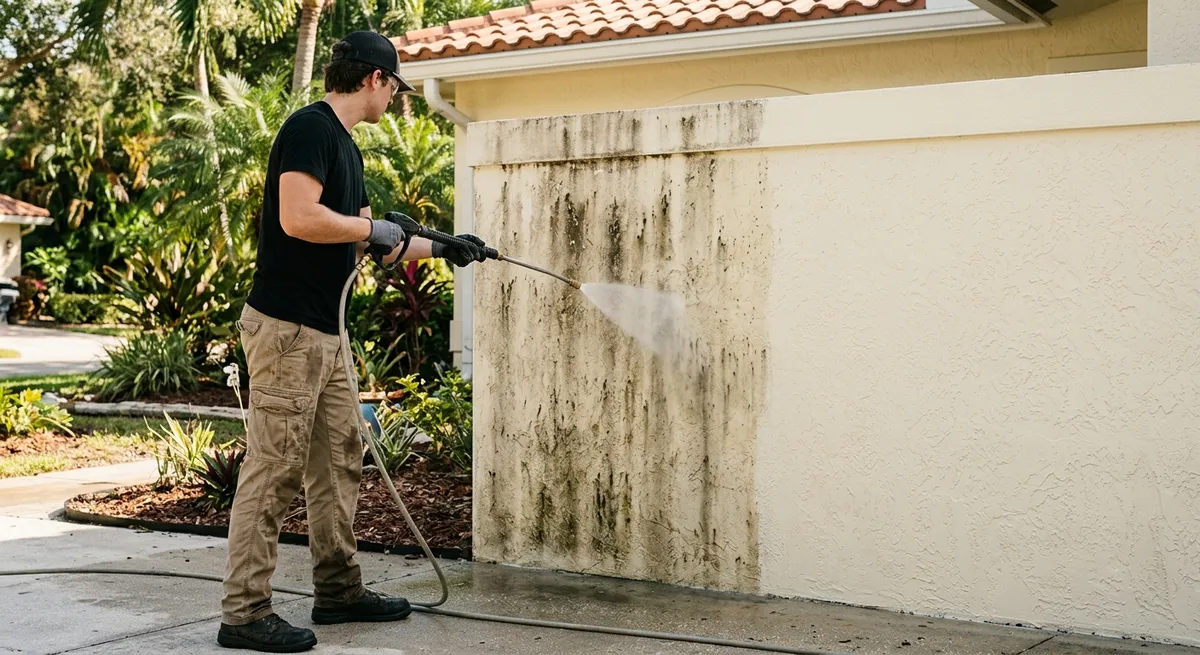
If you have visible mold or mildew on your exterior walls — those green or black streaks and patches — you're looking at an active spore factory within feet of your windows, doors, and air intakes.
Studies on outdoor surface contamination have shown that mold concentrations on building exteriors directly correlate with elevated indoor mold levels, particularly in homes with any air exchange with the outside (which is essentially all homes). The EPA notes that controlling moisture and mold growth on exterior surfaces is an important component of indoor air quality management.What Allergy Sufferers Should Do: February Through April
If you or anyone in your household deals with spring allergies, here's a targeted action plan that addresses the exterior contamination issue.
Priority 1: Clean Screen Enclosures (February)
Get your screen enclosure cleaned before peak pollen season. This does two things: it removes existing mold and mildew from the screens, and it gives you clean screens to catch (rather than concentrate) incoming pollen. A clean screen functions the way it's supposed to. A dirty screen makes things worse.
Priority 2: Soft Wash Exterior Walls (Late February – Early March)
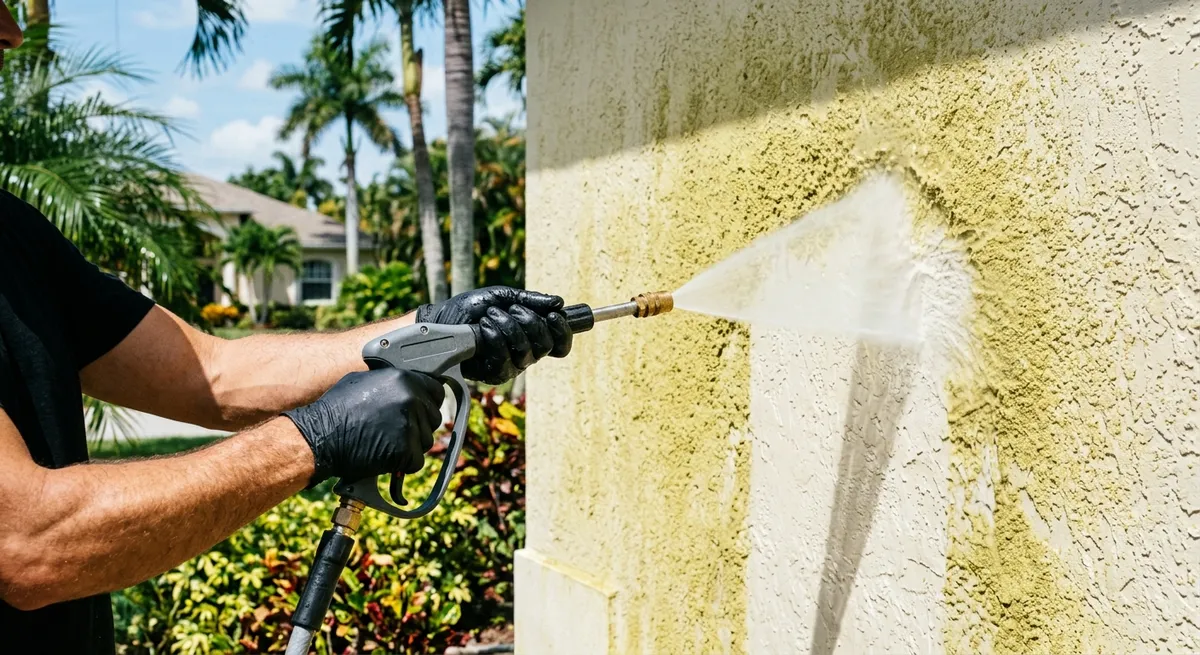
Remove mold, mildew, and accumulated grime from your home's exterior surfaces, focusing on areas near doors, windows, and HVAC intakes. A professional soft wash kills mold at the root and removes the spore-producing colonies from your walls.
Pay special attention to:- North-facing walls (these get the least sun and the most mold)
- Areas near landscaping and trees
- Under eaves and soffits
- Around window and door frames
Priority 3: Pressure Wash Walkways and Driveways (March)
Clean the surfaces you walk on every day. This removes accumulated pollen, mold, and organic material that you and your family are tracking inside.
Priority 4: Clean Around the HVAC Unit (March)
Pressure wash the concrete pad around your AC condenser. Clear any vegetation that's encroaching on the unit. Make sure the area around air returns is clean. This reduces the allergen load your HVAC system pulls in from outside.
Priority 5: Maintain Through April
After the initial cleaning, a weekly rinse of high-traffic surfaces and screen enclosures with a garden hose can knock down pollen accumulation between professional cleanings. It's not a substitute for a proper soft wash, but it helps.
It's Not Just About Comfort
Allergy symptoms are miserable, but the health implications go beyond sneezing and itchy eyes. Prolonged exposure to elevated allergen levels can:
- Trigger or worsen asthma — especially in children
- Disrupt sleep — which affects everything from immune function to cognitive performance
- Increase sinus infections — chronic exposure leads to inflammation, which creates the conditions for infection
- Reduce quality of life — it's hard to enjoy your home when you're uncomfortable in it
The Difference Is Noticeable
We've had clients in Palm Beach Gardens and Jupiter tell us that getting their home's exterior cleaned during allergy season made a bigger difference in their indoor comfort than changing their HVAC filter. That's anecdotal, but it makes sense when you understand the contamination pathways.
A clean exterior means:
- Less mold actively producing spores near your living space
- Less pollen accumulation on surfaces you interact with daily
- Cleaner air entering your home through doors, windows, and HVAC
- Less allergen material tracked inside on shoes and pets
Take Control of Your Indoor Air Quality
If allergy season hits your household hard, let's talk about a cleaning plan that targets the exterior sources affecting your indoor air. We'll assess the specific problem areas on your property and prioritize the surfaces that will make the biggest difference for your air quality.
Get your free quote for a pre-allergy-season exterior cleaning. We serve Palm Beach Gardens, Jupiter, West Palm Beach, and all of Palm Beach County. Your lungs will thank you.