Your Pavers Are Talking — Are You Listening?
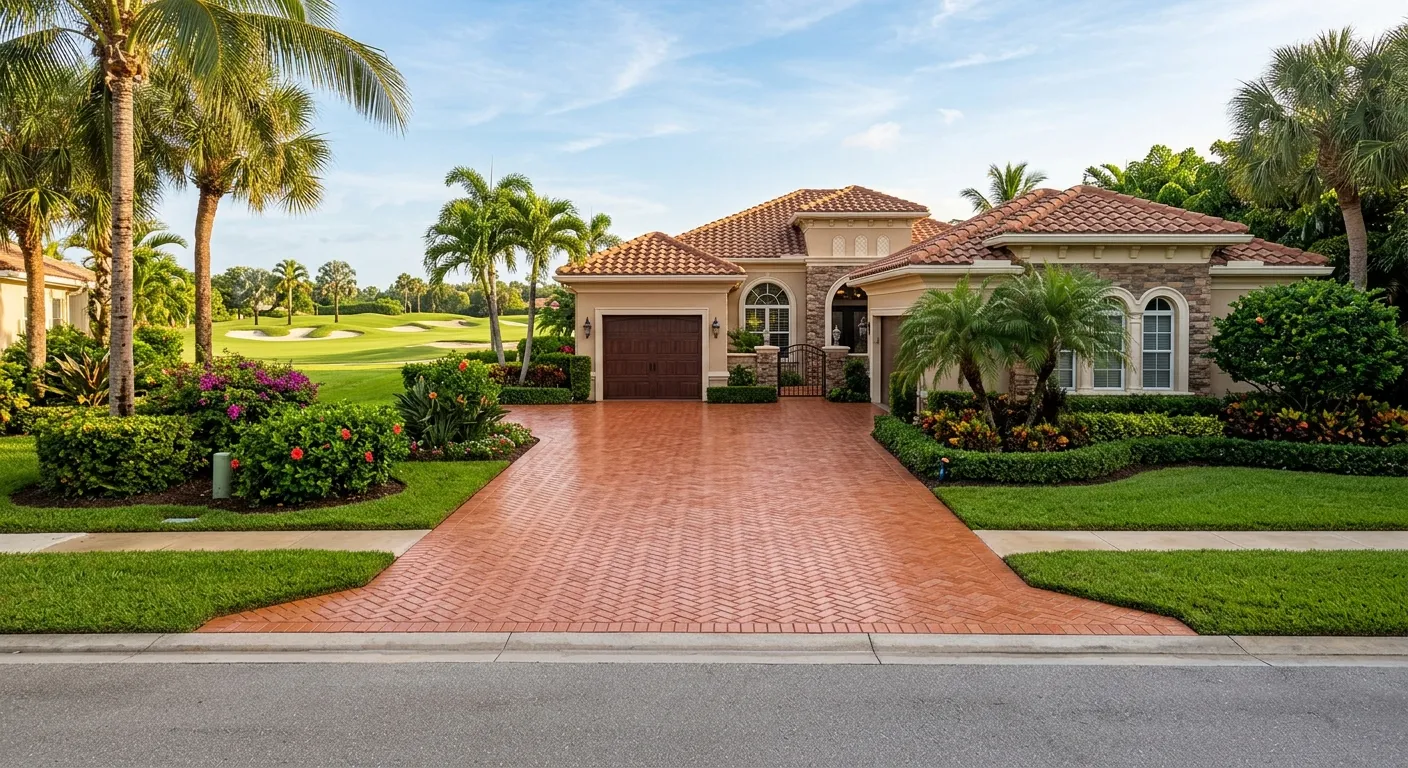
Pavers are one of the most popular driveway and patio materials in Palm Beach County, and for good reason. They look great, they're durable, and they handle Florida's climate better than most alternatives. But they're not maintenance-free.
The sealer on your pavers is doing more work than you realize. It's blocking UV damage, repelling water and stains, locking in the joint sand that keeps everything stable, and giving your pavers that rich, vibrant color. When that sealer breaks down — and it always does eventually — your pavers become vulnerable.
The tricky part? Sealer doesn't fail all at once. It degrades gradually, which makes it easy to miss. One day you look at your driveway and realize it looks... tired. Faded. Not quite right.
Here are the seven signs that your pavers are overdue for resealing. If you spot even two or three of these, it's time.
1. Water No Longer Beads on the Surface
This is the single easiest test you can do, and it takes about five seconds.
The test: Pour a small cup of water onto your pavers. Watch what happens. Sealed pavers: Water beads up on the surface and sits there. It rolls around. It takes its time soaking in, if it soaks in at all. Unsealed pavers: Water immediately absorbs into the surface. It darkens the paver almost instantly and disappears.If your water is soaking right in, your sealer is gone. The paver surface is now fully exposed to moisture, stains, and everything else South Florida throws at it. This is the earliest and most reliable indicator, and you can check it anytime you want.
Why it matters: Without the water barrier, rain saturates your pavers. That moisture gets trapped underneath, promotes mold growth in the sand joints, and accelerates efflorescence (those white mineral deposits). In freeze-thaw climates this causes cracking — we don't get freezes here, but the moisture damage still adds up over time.2. The Color Has Faded Significantly
Think back to when your pavers were first installed — or when they were last sealed. Remember that rich, deep color? The warm terra cotta, the deep charcoal, the rustic brown?
Now look at them.
If your pavers look washed out, chalky, or like a faded version of themselves, the sealer's UV protection has broken down. South Florida's intense sun is brutal on unsealed surfaces. Our UV index regularly hits 10-11 during summer months — that's categorized as "very high" to "extreme."
Without sealer, UV radiation bleaches the pigments in your pavers over time. This isn't just cosmetic — it's an indication that the entire protective layer is compromised. If the color is fading, the surface protection is gone too.
Quick comparison test: Find a paver that's been covered by a planter, a doormat, or a piece of furniture. Lift it and compare the color underneath to the exposed surface. If there's a dramatic difference, your pavers are screaming for resealing.3. Joint Sand Is Washing Out
Look at the gaps between your pavers. When they were installed (or last sealed), those joints were filled with polymeric sand — a specialized material that hardens and locks pavers in place while still allowing drainage.
Signs the sand is washing out:- Gaps between pavers are deeper than they used to be
- You can see the base material under the pavers through the joints
- Sand is accumulating at the low end of your driveway or patio after rain
- Joints look uneven — some full, some nearly empty
Once the sand starts washing out, everything else accelerates. Pavers shift, weeds move in, ants build colonies in the gaps, and your once-stable surface starts to feel loose underfoot. Resealing includes re-sanding the joints, which resets the entire system.
4. Weeds Are Growing Between Pavers
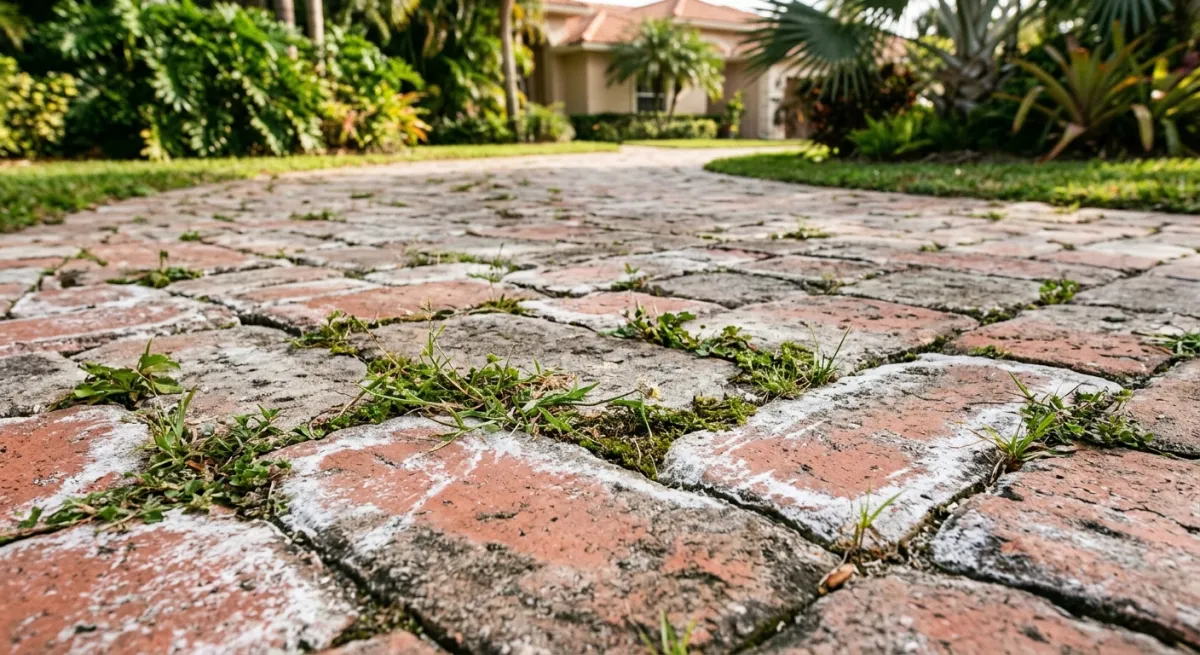
Speaking of joints — if you're pulling weeds out from between your pavers regularly, that's a clear sign your sealer and joint sand have failed.
Properly sealed pavers with intact polymeric sand are essentially weed-proof. The hardened sand doesn't give roots anything to grab onto, and the sealer adds an extra layer of protection. When you start seeing weeds, it means:
- The joint sand has broken down enough for seeds to take root
- Moisture is penetrating freely into the joints
- The seal has failed
5. White Haze (Efflorescence) on the Surface
Efflorescence is that white, chalky, sometimes crusty buildup that appears on paver surfaces. It looks like someone dusted your driveway with baking soda. It's not dirt — it's mineral deposits.
What's happening: Water is penetrating your pavers, dissolving minerals in the concrete, and then carrying those minerals to the surface as it evaporates. The white residue left behind is calcium carbonate and other salts.Some efflorescence is normal on brand-new pavers — it's called "new construction bloom" and it fades as excess moisture works its way out. But on established pavers that have been sealed before, efflorescence means your sealer has failed and water is freely moving through the material.
The frustrating thing about efflorescence is that you can scrub it off, and it comes right back. That's because you're treating the surface while the problem is happening underneath. The real fix is addressing the moisture intrusion — which means cleaning, treating, and resealing.
Pro tip: If you're seeing efflorescence mainly near your irrigation system, check for overspray hitting your pavers. Our mineral-heavy Florida water makes this worse. Adjusting your sprinkler heads can help, but you'll still need to reseal.6. Stains Are Penetrating Deeper Than Before
Remember when you could spill something on your driveway and wipe it up without a trace? When your sealer was fresh, it acted as a barrier — oil, grease, leaf tannins, and rust stains sat on top of the surface and could be cleaned easily.
Now? That oil drip from your car leaves a dark spot that won't come out. The leaf that sat on your patio for a few days left a ghost image. The rust ring from a metal planter seems permanent.When stains start penetrating into the paver material itself, you've lost your protective barrier. And here's the catch — the longer you wait, the harder (and more expensive) the restoration. Deeply set stains may require specialized chemical treatment before resealing, adding time and cost to the project.
The most common stain culprits in South Florida:- Oil and transmission fluid from vehicles
- Leaf tannins from tropical landscaping (especially oak and mahogany leaves)
- Rust from metal furniture, tools, or irrigation components
- Fertilizer that gets tracked or washed onto pavers
- Berry stains from palm trees and tropical plants
7. It's Been More Than 2-3 Years Since the Last Seal
Even if your pavers look fine — and I mean genuinely fine, not "I've just gotten used to how they look" fine — sealer has a finite lifespan. In South Florida's climate, most quality sealers last 2 to 3 years before they need to be reapplied.
Some factors that shorten sealer life:
- Heavy vehicle traffic (driveways wear faster than patios)
- Direct sun exposure (south- and west-facing surfaces degrade faster)
- Proximity to pools or water features (constant splash and chemical exposure)
- Frequent pressure washing (aggressive cleaning strips sealer faster)
- Low-quality sealer on the original application
The Cost of Waiting Too Long
Paver resealing is one of those maintenance tasks where timing matters enormously. Here's the rough cost comparison:
Routine resealing (every 2-3 years): Clean, re-sand joints as needed, apply sealer. Straightforward, affordable, done in a day. Neglected pavers (5+ years, multiple signs of failure): Strip old sealer remnants, deep clean to remove embedded stains and biological growth, treat efflorescence, re-level shifted pavers, fully re-sand all joints, then seal. Could take two days, and the cost is significantly higher. Severely neglected pavers (7+ years): All of the above, plus potential paver replacement for cracked or permanently stained units, re-grading the base where settling has occurred, and potentially a full re-installation of sections. Now you're talking about a major project.The math is simple: consistent maintenance is always cheaper than restoration.
Your Quick Self-Test
Grab a cup of water and walk your property. Hit the driveway, the patio, the pool deck, and any walkways. Pour water in several spots — sunny areas, shaded areas, high-traffic zones, and edges.
Score yourself:
- Water beads everywhere, color looks rich, no weeds, no stains: You're in good shape. Check again in 6 months.
- Water soaks in some spots, slight fading, a few weeds: You're approaching the window. Schedule a consultation soon.
- Water soaks in immediately everywhere, faded color, weeds, stains, efflorescence: You're past due. The longer you wait now, the more it'll cost later.
Let's Take a Look
Every paver installation is different — different materials, different base preparation, different exposure conditions. We'll assess your specific situation, let you know exactly where things stand, and give you honest recommendations on timing and scope.
Get your free quote for paver cleaning and sealing. We serve Palm Beach Gardens, Jupiter, West Palm Beach, and all of Palm Beach County. Let's get your pavers back to looking — and performing — the way they should.