The Forgotten Surface: Your Screen Enclosure
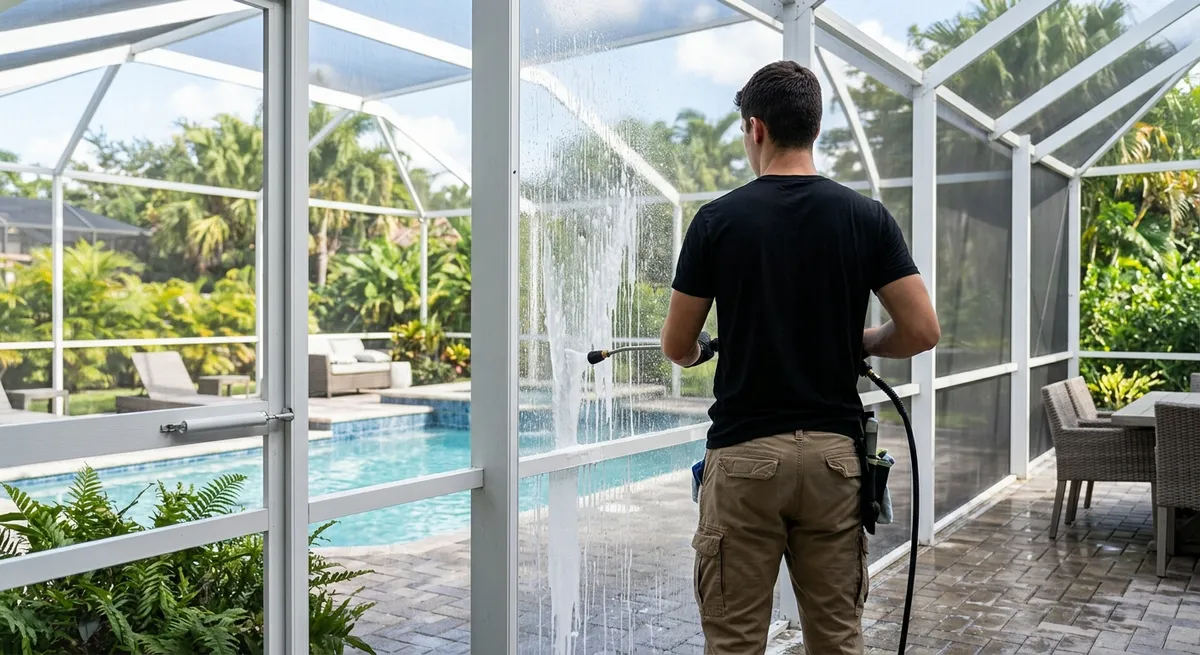
In Palm Beach County, screen enclosures (lanais, pool cages, patio screens) are practically universal. They keep the bugs out, provide shade, and define the outdoor living spaces that make Florida feel like Florida.
They also get absolutely filthy.
Because screen enclosures are semi-transparent, the buildup happens gradually. You stop noticing the slow accumulation of pollen, algae, dust, and oxidation until one day you realize your once-bright lanai feels dim, stuffy, and grimy. The airflow that made it pleasant has been cut by clogged screen mesh, and the aluminum frames have turned from white to chalky gray.
Sound familiar? The good news: it's very fixable.
What's Actually on Your Screens
Pollen Paste
Spring pollen (especially from oaks and pines) coats screen mesh and combines with humidity to form a sticky film that traps everything else. By late April, most untreated screens have a visible yellow-green tint.Algae and Mold
The north-facing panels and any sections in shade develop green algae and black mold. Screen mesh retains moisture in its weave, creating a perfect microenvironment for organic growth.Dust and Airborne Particulates
Road dust, construction debris, and general airborne particulates build up layer by layer. Screens near busy roads or active construction sites accumulate this fastest.Oxidation on Aluminum Frames
The aluminum frames of your enclosure develop a chalky white residue over time—this is aluminum oxidation, not just dirt. It gives frames a dull, aged appearance and can transfer to anything that touches them.Spider Webs and Insect Debris
Spiders love screen enclosures. Their webs collect in corners and along frame joints, trapping insects and creating unsightly clusters that are difficult to reach.Hard Water Spots
If your irrigation system sprays onto the exterior of your enclosure, you'll see mineral deposits on the lower screen panels that look like white spots or streaks.Why a Garden Hose Isn't Enough
Most homeowners' first instinct is to spray the screens with a garden hose. This helps with loose dust but doesn't address:
- Algae and mold embedded in the screen weave (water alone won't kill it)
- Pollen paste that has bonded to the mesh (requires cleaning solution)
- Aluminum oxidation (needs chemical treatment to remove)
- Upper panels and ceiling screens (hose pressure can't reach effectively from the ground)
Why You Should Never Pressure Wash Screens
This is critical: standard pressure washing will destroy screen enclosures.
Screen mesh is thin and has very little structural strength. Even moderate pressure from a pressure washer will:
- Tear screen mesh instantly
- Blow screens out of spline channels
- Bend or dent aluminum frame members
- Damage screen door rollers and tracks
- Break corner joints on older enclosures
The Right Way: Professional Soft Washing
Professional screen enclosure cleaning uses a completely different approach:
Step 1: Chemical Application
We apply a biodegradable cleaning solution to the entire enclosure—screens, frames, and structural members. This solution is specifically formulated to:- Kill algae and mold at the root
- Dissolve pollen paste and organic buildup
- Break down aluminum oxidation
- Loosen hard water deposits
Step 2: Dwell Time
The solution needs time to work—typically 10-15 minutes. During this period, it's actively killing organic growth and breaking down accumulated grime.Step 3: Low-Pressure Rinse
Using pressure equivalent to a strong garden hose (not a pressure washer), we rinse the entire enclosure. The cleaning solution has already done the heavy lifting, so gentle water flow is all that's needed to wash everything away.Step 4: Detail Work
We address corners, frame joints, door tracks, and ceiling panels that accumulate the heaviest buildup. Screen doors get special attention since they're handled frequently and show dirt quickly.Step 5: Final Inspection
We walk through the completed enclosure checking for any spots that need touch-up and inspecting screen condition. If we notice torn or damaged panels during cleaning, we'll let you know.The Difference Clean Screens Make
Homeowners are consistently surprised by the transformation. Clean screens let in dramatically more light and airflow. The effect is immediate and significant:
Dirty screens can block 30-50% of incoming light. Once they're clean, your lanai feels open and bright again. You also get the cross-breeze back, because clogged mesh kills the airflow that makes Florida lanais comfortable in the first place.
If your pool is enclosed, clean screens mean a cleaner pool, too. Less debris falling through, less organic matter washing into the water.
Screen enclosures are visible from the street and from above (think drone photos in real estate listings). A clean enclosure lifts the entire property's appearance. And if anyone in your household has allergies, removing that layer of pollen and mold from the screens makes a real difference in your outdoor air quality.
How Often Should You Clean Your Screen Enclosure?
Once per year is the minimum for most Palm Beach County homes. Spring (March-April) is ideal timing—you're cleaning off winter and pollen accumulation right before you start using your outdoor space heavily. Twice per year is better for enclosures that are:- Under heavy tree coverage
- North-facing (more shade, more algae)
- Near water (Intracoastal, canals, lakes)
- Used frequently for entertaining
Don't Forget the Interior
While the exterior of your enclosure faces the worst environmental exposure, the interior accumulates dust, cobwebs, and mildew too. Professional cleaning addresses both sides of the screen mesh and all interior frame surfaces.
Interior ceiling panels—the flat aluminum panels between screen sections—collect mildew and spider webs that are difficult to reach without proper equipment. These are easy to overlook but make a noticeable difference when cleaned.
Restore Your Outdoor Living Space
Your screen enclosure is one of the features that makes Florida living worth it. We clean enclosures of all sizes throughout Palm Beach Gardens, Jupiter, and the surrounding area, from small patio screens to full pool cage enclosures. Grab a quote and get your lanai back.