The Price of Paradise
You chose to live near the water for the views, the breeze, and the lifestyle. What nobody mentioned in the real estate listing is that the same ocean air that makes Palm Beach County so beautiful is quietly attacking your home every single day.
Salt air corrosion is the most underestimated challenge facing coastal homeowners in Jupiter, Juno Beach, Singer Island, and oceanfront Palm Beach. Properties within a mile of the coast experience dramatically faster deterioration of exterior surfaces compared to inland homes.
Understanding how salt damage works is the first step to preventing it from costing you thousands in repairs.
How Salt Air Damages Your Home
The Science (Simply Explained)
Ocean waves and surf create microscopic salt water droplets that become airborne. Onshore breezes—which blow almost constantly in Palm Beach County—carry these salt particles inland. They land on every exterior surface of your home and begin their work.
Salt is hygroscopic, meaning it attracts and holds moisture. When salt deposits sit on surfaces, they create a thin film of salt water that stays damp far longer than clean surfaces would. This persistent moisture is the real damage mechanism:
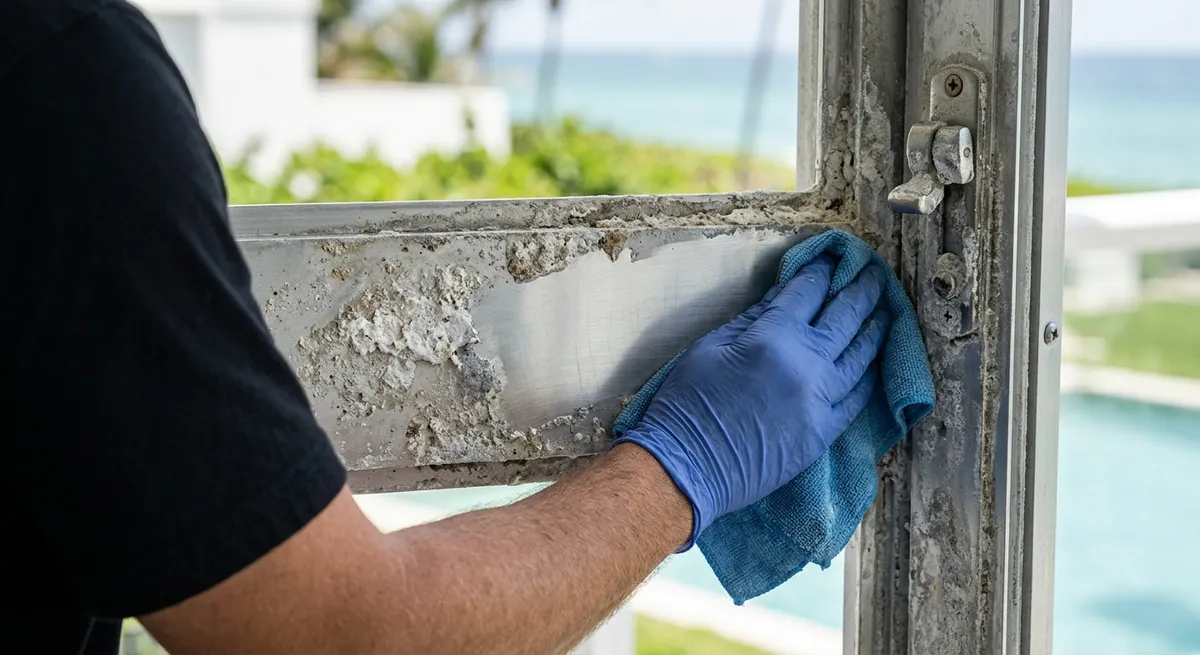
- On metal, salt water triggers oxidation (rust) at an accelerated rate
- On concrete and stucco, salt crystals grow and expand in pores, causing surface spalling
- On glass, salt slowly etches the surface, creating permanent cloudiness
- Paint and coatings lose adhesion as salt moisture breaks them down, causing peeling and flaking
- On wood, salt-trapped moisture promotes rot and speeds up weathering
The Damage Isn't Always Obvious
Salt damage is gradual. You don't wake up one morning to find your house falling apart. Instead:
- Windows get slightly hazier each month
- Metal fixtures develop a dull patina, then pitting
- Stucco starts showing fine surface cracks
- Paint begins to chalk and lose adhesion
- Concrete develops rough, spalling patches
What Gets Hit Hardest
Windows and Glass
Salt film on windows is the most immediately noticeable effect of coastal living. The film builds up fast—within days of cleaning during periods of strong onshore wind—and does more than just obstruct your view.
Over months and years, salt deposits actually etch glass. The sodium chloride creates microscopic scratches and pits in the glass surface. Eventually, this damage becomes permanent cloudiness that no amount of cleaning can remove. At that point, your only option is window replacement at $200-500+ per window.
Prevention: Regular professional window cleaning every 2-3 months for oceanfront properties, quarterly for properties within a half mile of the beach.Metal Components
Every piece of exterior metal on your home is vulnerable:
- Door handles and locksets
- Mailbox hardware
- Light fixtures
- Railing and fence hardware
- Gutter hangers and downspout brackets
- AC condenser coils and housing
- Garage door hardware and springs
Roof Surfaces
Salt deposits on your roof do two things: they attract and hold moisture (promoting algae growth), and they degrade roofing materials through chemical interaction. Tile roofs in coastal areas often show faster deterioration of the surface finish, while shingle roofs lose granules more rapidly.
Prevention: Soft washing your roof every 2-3 years removes salt buildup along with algae and organic growth. This is even more important for coastal homes than inland properties.Stucco and Exterior Walls
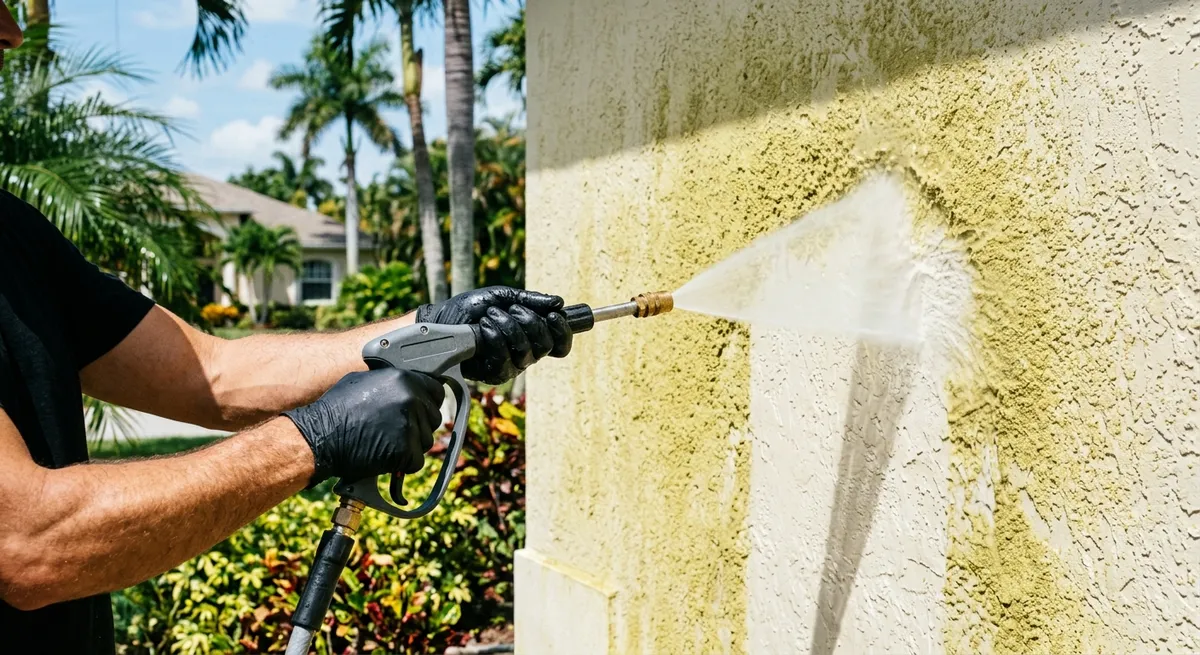
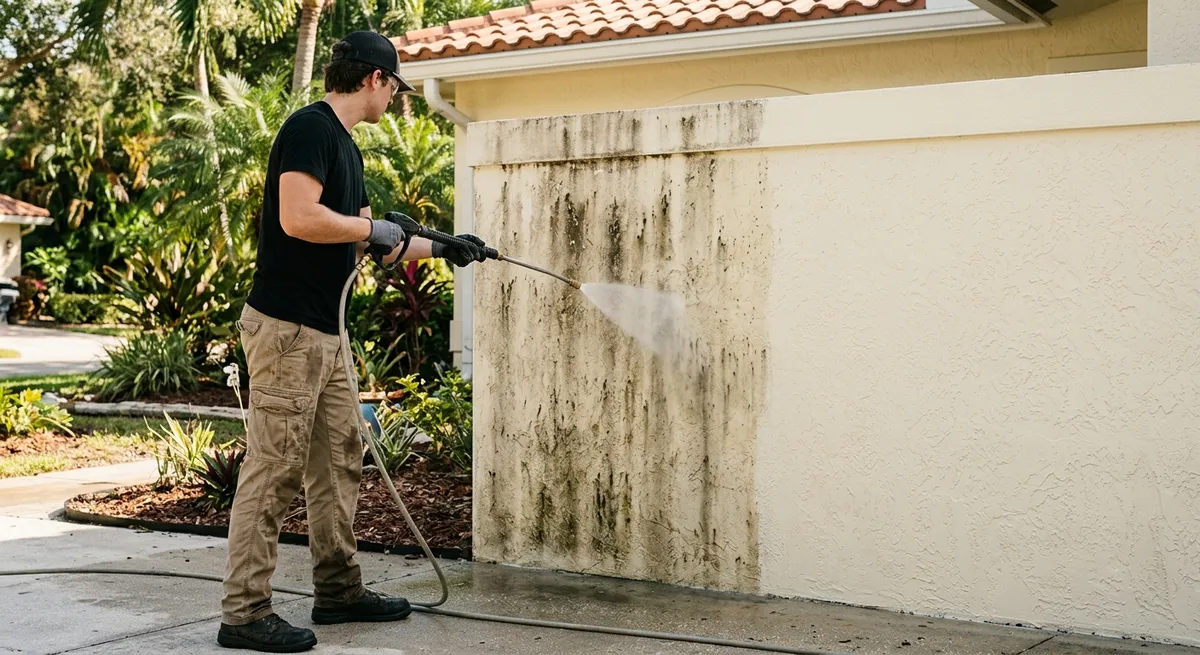
Stucco is porous, and salt finds its way into those pores. As salt crystals grow (a process called subflorescence), they expand inside the stucco, causing surface pop-outs and spalling. You'll see this as rough, crumbling patches that get progressively worse.
Prevention: Regular soft washing keeps salt deposits from accumulating in stucco pores. Applying a breathable masonry sealer after cleaning provides an additional barrier against salt infiltration.Concrete and Pavers
Driveways, pool decks, and walkways near the coast develop a white, chalky film from salt deposits. Over time, salt penetration causes the same spalling damage as in stucco—surface deterioration that requires patching or replacement.
Sealed pavers fare much better than unsealed ones, as the sealer creates a barrier between salt deposits and the paver surface.
Prevention: Pressure washing removes surface salt. Sealing pavers and applying concrete sealer to driveways provides lasting protection.The Coastal Maintenance Calendar
Properties within a mile of the coast need a more aggressive maintenance schedule than inland homes. Our recommended schedule for coastal Palm Beach County homeowners:
Every 2-3 Months
- Window cleaning — Remove salt film before it etches glass
- Rinse exterior surfaces — A simple freshwater rinse of walls, railings, and fixtures between professional cleanings
Every 6 Months
- Pressure wash driveways, walkways, and pool decks
- Clean gutters (salt deposits clog faster)
- Inspect metal hardware for early corrosion
Annually
- Soft wash exterior walls and stucco
- Professional exterior deep clean of entire property
- Inspect and touch up any failing paint or coatings
Every 2-3 Years
- Soft wash roof
- Reseal pavers (coastal pavers may need resealing on the shorter end of the 3-5 year range)
- Evaluate concrete sealer condition on driveways
The Freshwater Rinse: Your Best Daily Defense
The single most effective thing coastal homeowners can do between professional cleanings is simple: rinse your exterior surfaces with fresh water.
Salt damage requires salt to sit on surfaces and attract moisture over time. A quick freshwater rinse with a garden hose dilutes and washes away salt deposits before they can do their work. Focus on:
- Windows and glass doors
- Metal fixtures and hardware
- Railings and gates
- Areas directly facing the ocean or Intracoastal
Coastal Properties Are Worth Protecting
Oceanfront and near-ocean properties in Palm Beach County carry significant premiums. A home in Jupiter's Bluffs community, on Singer Island, or along Juno Beach's coastline represents a major investment that salt air is constantly working to degrade.
For coastal homes, regular professional exterior cleaning is a genuine investment protection strategy, not a cosmetic luxury. The cost of maintaining a cleaning schedule is a fraction of the cost of replacing etched windows, corroded hardware, spalling stucco, or deteriorated roofing.
We Specialize in Coastal Properties
We serve coastal homes throughout Jupiter, Juno Beach, Singer Island, Palm Beach, and the surrounding Intracoastal communities, with cleaning methods and schedules tailored to protect against salt damage.
Don't wait for the damage to become visible. Get a quick quote and put a maintenance plan in place now.