"It's Just a Pressure Washer" — And Other Dangerous Assumptions
Every spring, hardware stores in Palm Beach Gardens and across South Florida see a spike in pressure washer rentals. The logic makes sense: your driveway looks terrible after pollen season, you've seen the pros do it and it looks straightforward, and you can rent a unit for a fraction of the cost of hiring someone.
What most homeowners don't realize is that pressure washers are responsible for an estimated 6,000+ emergency room visits annually in the United States. That's not a typo. These machines generate enough force to cause serious lacerations, eye injuries, bone fractures, and even amputations in extreme cases.
We're not saying this to scare you out of ever touching a pressure washer. We're saying it because the "it's just a pressure washer" attitude is genuinely dangerous — and it's how most injuries happen. If you're going to use one, you need to understand what you're working with.
Understanding PSI: The Numbers That Matter
PSI stands for pounds per square inch — it's the measure of how much force the water hits with. Here's some context for those numbers:
What Different PSI Levels Can Do
- 1,500-2,000 PSI: Light-duty residential units. Can clean cars, patio furniture, and light surface dirt. Still capable of causing skin injury at close range.
- 2,500-3,000 PSI: Medium-duty units. What most homeowners rent for driveways and siding. Can lacerate skin from 12 inches away. Can etch concrete, strip paint, and damage wood.
- 3,500-4,000 PSI: Heavy-duty commercial units. Can cause injuries through leather boots. Used by professionals with specific training. Can destroy pavers, crack stucco, and strip sealants.
- 4,000+ PSI: Industrial-grade equipment. Can cut through steel-toed boots. Absolutely no reason for a homeowner to use one.
The Skin Injury Threshold
Here's the number that should get your attention: human skin can be lacerated at approximately 1,160 PSI when the stream is concentrated at close range. That's well below what even the cheapest rental pressure washer produces.
A pressure washer injury isn't like a cut from a knife. The water injects contaminants — dirt, bacteria, cleaning chemicals — deep into the tissue. These injuries frequently become infected and can require surgery to debride (clean out) the wound. Emergency physicians treat pressure washer lacerations more like gunshot wounds than simple cuts.
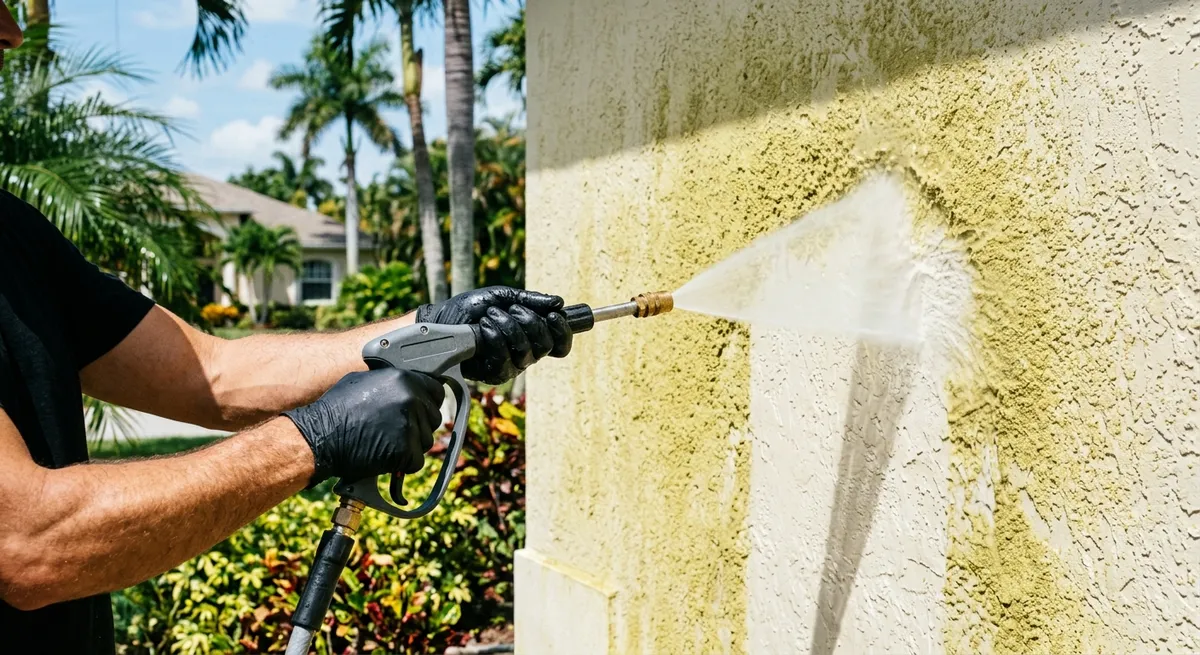
The zero-degree (red) nozzle tip is the most dangerous. It concentrates all the force into a pinpoint stream. Professional crews rarely use zero-degree tips except for very specific applications, yet it's often the one homeowners try first because "more power must be better."The Six Most Common Pressure Washer Injuries
Understanding how people get hurt helps you avoid it. Here are the injuries emergency rooms see most frequently:
1. Lacerations and Puncture Wounds
The most common injury, usually to hands and feet. It happens when:
- The user sprays their own foot or hand by accident (especially when starting the machine)
- The wand kicks back unexpectedly from recoil
- Someone walks into the spray path without the operator noticing
- A trigger lock fails or the wand is set down while still pressurized
2. Eye Injuries
Debris propelled by the pressure washer — sand, paint chips, concrete fragments, algae — becomes a projectile. Eye injuries from pressure washing range from irritation to permanent vision loss. Safety glasses are non-negotiable, yet the majority of DIY pressure washers don't wear them.
3. Injection Injuries
This is the scary one. High-pressure water can penetrate the skin and inject water, dirt, and chemicals into deeper tissue. These injuries often look minor on the surface — a small puncture — but internally they can cause compartment syndrome, infection, and tissue death. Any pressure washer injury that breaks the skin needs immediate medical attention, even if it looks minor.
4. Falls
Pressure washing creates wet, slippery surfaces. You're often working on concrete or pavers that are now coated in water, soap, and algae — essentially an ice rink. Falls are the second leading cause of pressure washer-related ER visits. This risk multiplies if you're working on:
- Sloped driveways (very common in Palm Beach Gardens)
- Pool decks with smooth tile or travertine
- Elevated surfaces or using ladders
5. Electrical Shock
Pressure washers combine two things that don't mix: water and electricity. Electric pressure washers pose obvious risks if connections get wet, but even gas-powered units have risks — they're often used near outdoor outlets, light fixtures, and electrical panels. Water spray travels further than you think, and mist can reach electrical connections 15-20 feet away.
6. Burns
Gas-powered pressure washers have exhaust components that reach extreme temperatures. Contact burns happen more often than you'd expect, especially when adjusting nozzles or troubleshooting while the machine is running. Additionally, some pressure washers have hot water capability — inadvertent exposure to high-pressure hot water compounds the injury significantly.
Florida-Specific Safety Concerns
Pressure washing anywhere has risks, but doing it in South Florida adds some unique hazards most safety guides don't cover.
Heat Exhaustion and Heat Stroke
This is a serious and underappreciated risk. Pressure washing is physical work — you're handling a heavy wand, maintaining a stable stance, and moving across surfaces in direct sunlight. In South Florida, even spring days regularly hit the upper 80s and 90s with high humidity.
The heat index — what it actually feels like — routinely exceeds 100-105°F from April through October in Palm Beach County. You're generating your own heat through exertion while also absorbing heat from the sun and hot concrete surfaces (which can reach 140°F+ in direct sun).
Signs to watch for:
- Heavy sweating that suddenly stops (this is an emergency sign)
- Dizziness, confusion, or irritability
- Nausea or headache
- Muscle cramps
- Rapid heartbeat
Lightning
South Florida is the lightning capital of the United States. Between May and October, afternoon thunderstorms develop rapidly and often without much warning. If you're in the middle of pressure washing your driveway when a storm rolls in, you're standing in water holding a metal wand connected to a machine — not where you want to be during a lightning storm.
Professional crews monitor weather radar in real-time. We've called off jobs mid-service when conditions develop because it's simply not worth the risk.
Wildlife Encounters
This sounds almost funny until it happens to you. Pressure washing around landscaping, under decks, and near pool equipment in South Florida means potentially disturbing:
- Fire ant mounds (they attack aggressively when flooded)
- Wasp and hornet nests (often hidden under eaves and in landscaping you're cleaning near)
- Snakes (water moccasins and pygmy rattlesnakes are present in Palm Beach County)
- Iguanas and large lizards (usually not dangerous but can cause a startle that leads to falls or spray redirection)
Chemical Safety
Modern exterior cleaning isn't just water and pressure. Most effective cleaning involves sodium hypochlorite (bleach-based solutions), surfactants, and sometimes specialty chemicals for rust or oxidation stains.
What You're Working With
- Sodium hypochlorite (SH): The active ingredient in most exterior cleaning solutions. Effective at killing mold, mildew, and algae. Also capable of killing plants, staining clothing, irritating skin and eyes, and producing dangerous chlorine gas if mixed with certain other chemicals.
- Surfactants: Help the cleaning solution cling to surfaces. Generally low-risk on their own but can be irritating to eyes and skin.
- Oxalic acid: Used for rust stain removal. Corrosive to skin and eyes, toxic if ingested.
- Sodium hydroxide (lye): Sometimes used for heavy degreasing. Extremely caustic — can cause severe chemical burns on contact.
The Mixing Danger
Never mix cleaning chemicals unless you know exactly what you're combining. The most common dangerous scenario: mixing a bleach-based cleaner with an acid-based cleaner produces chlorine gas, which can be fatal. This isn't theoretical — it happens, sometimes because homeowners grab a "second bottle" to boost cleaning power without checking what they're mixing.Protecting Yourself
If you're using any cleaning chemicals with a pressure washer:
- Chemical-resistant gloves (not regular work gloves)
- Safety glasses or goggles (splash-rated, not regular sunglasses)
- Long sleeves and pants (despite the Florida heat — chemical splash burns are painful)
- Closed-toe shoes (rubber boots are ideal)
- Proper dilution ratios — stronger is NOT better and can damage surfaces
- Pre-wet all landscaping before applying chemicals and rinse thoroughly after
Protecting Your Property
Cleaning chemicals don't just threaten you — they threaten your landscaping, your outdoor furniture finishes, your car paint, and your pool water chemistry. We've seen homeowners kill entire hedge rows with overspray from bleach-based cleaners, bleach spots on lanai furniture, and pool water chemistry thrown so far off that the pool turned green.
Ladder Dangers: Roof and Gutter Work
Let us be direct about this one: homeowners should not pressure wash from ladders. The combination of recoil from the wand, wet rungs, chemical-slicked surfaces, and the physical demand of managing a heavy wand overhead is a serious fall risk.
Falls from ladders are the leading cause of traumatic brain injury in home maintenance activities. Add a pressure washer's recoil, and you've dramatically increased the risk.
For roof cleaning and gutter cleaning, professional crews use:
- Roof-rated safety harnesses with anchor points
- Soft wash systems that work from the ground (no ladder needed for many roof applications)
- Telescoping wands that reach second-story gutters from ground level
- Experience with wet surface stability — knowing which roof tiles are safe to walk on when wet vs. which become dangerously slippery
When to DIY Safely vs. When to Hire a Professional
We're not going to tell you never to touch a pressure washer. There are legitimate DIY applications where the risk-to-benefit ratio makes sense — if you take proper precautions.
Reasonable DIY Tasks (With Proper Safety Gear)
- Rinsing patio furniture with a light-duty unit (under 2,000 PSI)
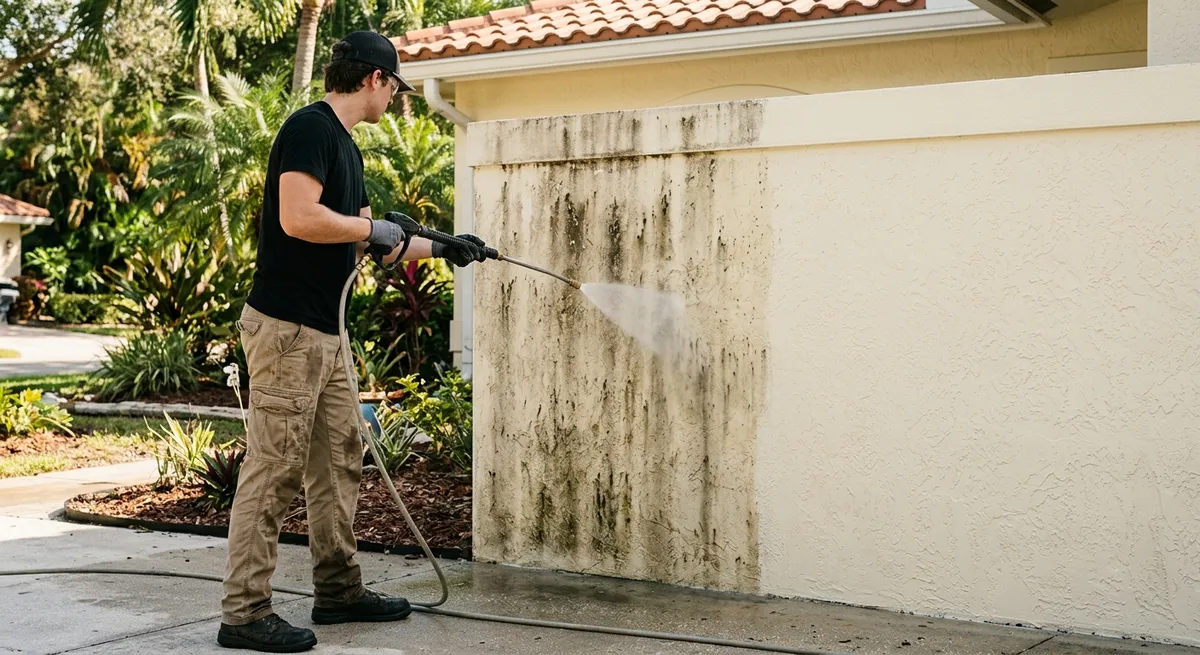
- Cleaning a small section of flat driveway — flat ground, open area, no overhead work
- Washing trash cans and outdoor storage bins
- Light cleaning of fences at ground level (not wood — pressure washing damages wood fences quickly)
Hire a Professional For
- Roof cleaning — fall risk, chemical knowledge required, damage risk to shingles
- Second-story anything — never pressure wash from a ladder
- Stucco and painted surfaces — wrong pressure or technique causes thousands in damage
- Pool decks — slip hazard, chemical runoff into pool, travertine and paver damage risk
- Large driveway or property cleaning — heat exhaustion risk, time exposure, technique matters for even results
- Any job requiring chemical application — proper dilution, application, plant protection, and disposal
- Paver cleaning and sealing — wrong pressure dislodges joint sand, poor technique creates uneven results
The Real Cost Comparison
A common argument for DIY is cost savings. Let's be honest about the math:
- Rental unit: $75-150/day
- Cleaning chemicals: $30-80
- Safety gear (if you actually buy it): $50-100
- Your time: 4-8 hours for a full property
- If something goes wrong: Hundreds to thousands in surface damage, medical bills, or dead landscaping
The gap between DIY and professional cost is a lot smaller than most people assume — especially when you factor in the risk of things going wrong.
Safety Checklist If You Do It Yourself
If you're going to proceed with DIY pressure washing, at minimum:
- [ ] Wear closed-toe shoes (rubber boots preferred)
- [ ] Wear safety glasses (rated for impact, not just UV)
- [ ] Wear hearing protection (gas units are loud enough to cause hearing damage)
- [ ] Use the widest nozzle tip that works (green 25° or white 40° for most jobs — never start with red 0°)
- [ ] Keep the nozzle at least 12 inches from surfaces and your body
- [ ] Never point the wand at anyone, including yourself
- [ ] Clear the area of children, pets, and bystanders
- [ ] Check for electrical hazards — outlets, light fixtures, exposed wiring
- [ ] Check weather radar before starting (no pressure washing during lightning risk)
- [ ] Hydrate aggressively — water every 20-30 minutes minimum
- [ ] Work in the morning when temperatures are lower
- [ ] Test on an inconspicuous area before cleaning visible surfaces
- [ ] Never pressure wash from a ladder
- [ ] Know where your shutoff is and keep it accessible at all times
Be Honest With Yourself
The biggest safety risk with pressure washing isn't the machine — it's overconfidence. These machines look simple. Point and spray. But the difference between a clean driveway and an etched driveway, or between a productive Saturday project and an ER visit, comes down to knowledge, technique, and respect for what the equipment can do.
If you're in Palm Beach Gardens, Jupiter, West Palm Beach, or anywhere in Palm Beach County and you're weighing DIY versus professional cleaning, we're happy to talk through what makes sense for your specific situation. Some jobs are fine to tackle yourself. Others genuinely aren't worth the risk.
Get your free quote from Crouching Tiger Exterior Cleaning — we'll give you an honest assessment of the work involved and whether professional service makes sense for your property. Your safety is worth more than the cost difference.