The Storm Has Passed. Now What?
The wind has stopped, the rain bands have moved on, and you're looking at your property wondering where to even start. If you've been through a hurricane in Palm Beach County before, you know this feeling. If this is your first one -- take a deep breath. There's a logical order of operations here, and following it will save you time, money, and a lot of frustration.
This guide walks through the post-hurricane exterior cleanup process step by step, from the first 48 hours through full restoration. We've helped homeowners throughout Palm Beach Gardens, Jupiter, and West Palm Beach recover after every significant storm, and these are the lessons we've learned.
First 48 Hours: Safety and Documentation
Before you pick up a single branch or touch your pressure washer, there are two priorities that come before everything else: safety and insurance documentation.
Safety First -- No Exceptions
Every year after hurricanes, more people are injured during cleanup than during the storm itself. Take these precautions seriously:
Watch for downed power lines. Assume every downed line is live. Don't touch them, don't move debris that's touching them, and don't drive over them. Call FPL (Florida Power & Light) to report downed lines and keep everyone -- including pets -- away from them. Be careful with standing water. Floodwater may contain sewage, chemicals, sharp debris, and electrical hazards. Don't wade through it if you can avoid it. If you must, wear rubber boots and avoid contact with skin. Check for structural damage before entering. Walk around your home's exterior and look for leaning walls, cracked foundations, shifted roof sections, or sagging structures. If anything looks compromised, stay out and call a structural engineer or your insurance company before entering. Wear protective equipment during cleanup. At minimum: closed-toe shoes (preferably boots), work gloves, long pants, eye protection, and a dust mask or N95 respirator. Storm debris contains nails, broken glass, mold spores, and contaminated materials. Watch for wildlife. Storms displace snakes, fire ants, and other critters into unusual locations -- including your yard, garage, and even inside debris piles. Move carefully and check before reaching into piles.Insurance Documentation: Before You Clean Anything
This is the step most homeowners rush past, and it can cost thousands of dollars. Document everything before you move or clean anything.
Your insurance claim depends on evidence. Once you start cleaning up, you're destroying that evidence. Here's how to document properly:
Photograph everything. Walk your entire property and take photos and video of all damage from multiple angles. Include wide shots that show the overall scene and close-ups of specific damage. Date-stamp your photos (most phones do this automatically). Document with context. Take photos that show damage in relation to known reference points -- your house number, street signs, or distinctive features. This helps adjusters identify locations when they review your claim. Make a written inventory. List every item of exterior damage you can see:- Roof damage (missing tiles, lifted shingles, dented metal)
- Screen enclosure damage (torn screens, bent frames, collapsed sections)
- Fence damage (knocked down sections, broken posts, leaning)
- Landscape damage (fallen trees, uprooted plants)
- Hardscape damage (cracked pavers, shifted walkways, stained surfaces)
- Exterior wall damage (impact marks, cracked stucco, water stains)
- Window and door damage (broken glass, dented frames, failed seals)
- Gutter and downspout damage
Week One: Debris Removal and Emergency Measures
Once safety is confirmed and documentation is complete, it's time to start the physical cleanup. Prioritize in this order:
Priority 1: Remove Hazards
Clear debris that creates immediate safety risks:
- Branches or trees blocking walkways and driveways
- Broken glass and sharp debris in high-traffic areas
- Standing water that could become a breeding ground for mosquitoes
- Unstable structures that could collapse (damaged fence sections, leaning screen enclosures)
Priority 2: Protect Against Further Damage
Take measures to prevent additional damage while you wait for full repairs:
Tarp damaged roof sections. Blue tarps are available from FEMA distribution points and home improvement stores after major storms. A properly secured tarp prevents additional water intrusion until permanent repairs can be made. Board or cover broken windows. Plywood or even heavy plastic sheeting prevents rain, insects, and debris from entering your home. Clear gutters and downspouts. Storm debris clogs drainage systems, and the next rain (which in Florida is never far away) can cause water to back up into soffits, fascia, and even interior spaces. Secure loose fencing and screen enclosure sections. If your screen enclosure is partially collapsed, secure the remaining sections to prevent further damage in subsequent weather events. Hurricane season doesn't end just because one storm passed.Priority 3: Yard and Landscape Debris
This is the most visible and often the most labor-intensive part of cleanup:
- Cut fallen branches into manageable sizes for curbside pickup (check Palm Beach County's post-storm debris collection schedule)
- Separate vegetative debris from construction debris -- they're collected separately
- Rake scattered leaves and small branches from lawns, beds, and hardscaped areas
- Right any tipped-over pots, outdoor furniture, or decorative elements
Weeks Two Through Four: Surface Cleaning and Restoration
Once debris is cleared and emergency measures are in place, it's time to address what the storm left behind on your exterior surfaces.
Salt Spray Damage
Even if a hurricane doesn't make direct landfall in Palm Beach County, the outer bands push salt-laden ocean air and spray miles inland. This coats everything: windows, stucco, concrete, pavers, metal fixtures, screen enclosures, and outdoor furniture.
Salt spray is corrosive. The longer it sits, the more damage it does:- Aluminum window frames and screen enclosure frames pit and oxidize
- Metal hardware (hinges, locks, light fixtures) corrodes
- Glass develops etched spots where salt crystals concentrate
- Stucco absorbs salt, which can cause efflorescence and accelerated deterioration
Mud, Soil, and Organic Debris
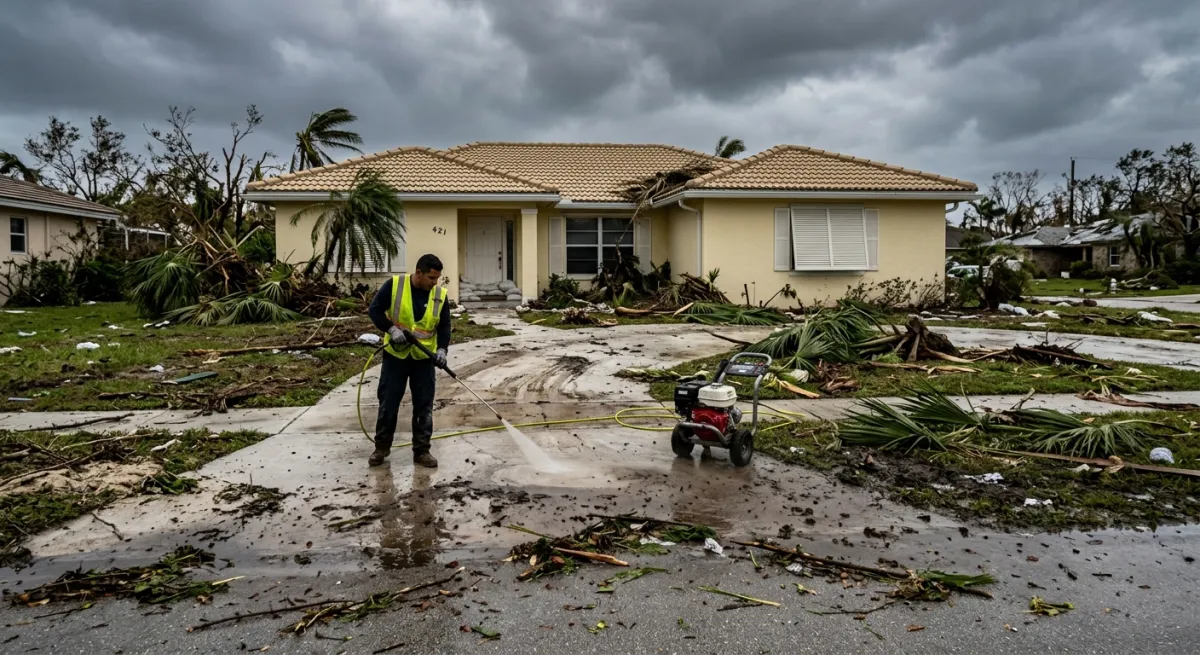
Storm surges, heavy rain, and flooding deposit mud and organic silt across driveways, walkways, patios, and pool decks. This material hardens quickly in the Florida sun and becomes much more difficult to remove after just a few days.
For concrete and paver surfaces, professional pressure washing at appropriate PSI levels removes storm mud effectively. For travertine and natural stone surfaces, we use lower pressure with pH-neutral solutions to avoid damage.
Pool decks and surrounding areas often need special attention, as storm water carries contaminants that you don't want tracked into your pool or living spaces.
Stucco and Exterior Walls
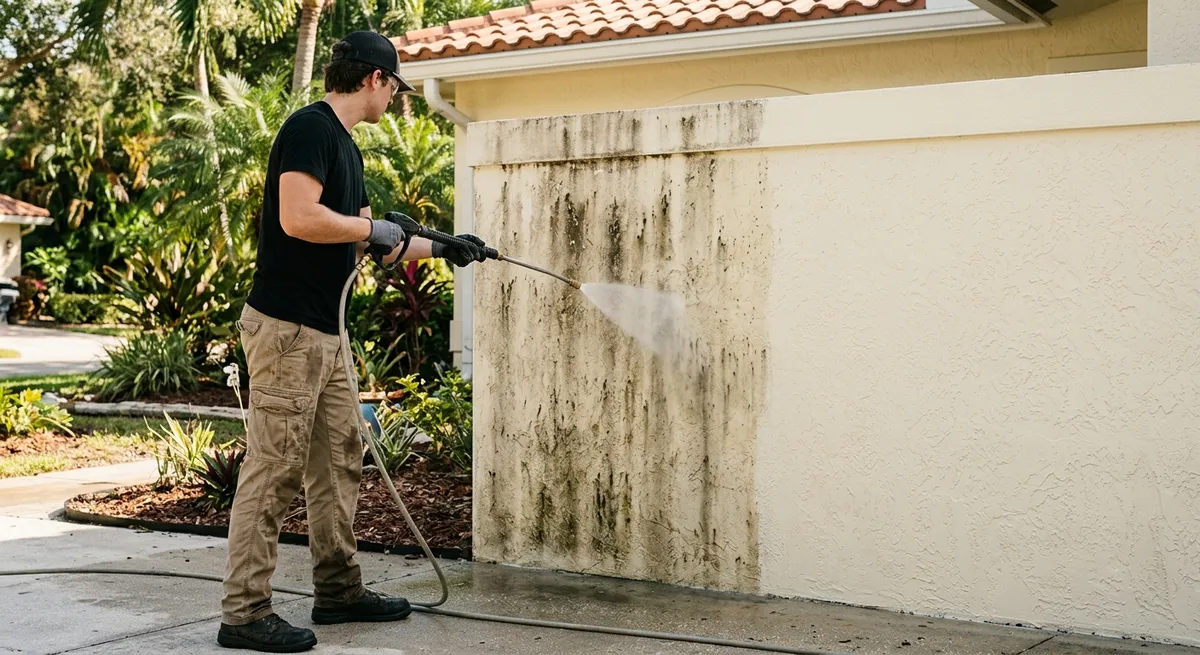
Hurricane-force winds drive rain horizontally against walls, which means every exterior surface gets saturated. Once the storm passes, this moisture begins to evaporate -- but not always evenly. Stucco that stays damp in shaded areas becomes a perfect environment for mold growth, which can establish itself within 48-72 hours in warm, humid conditions.
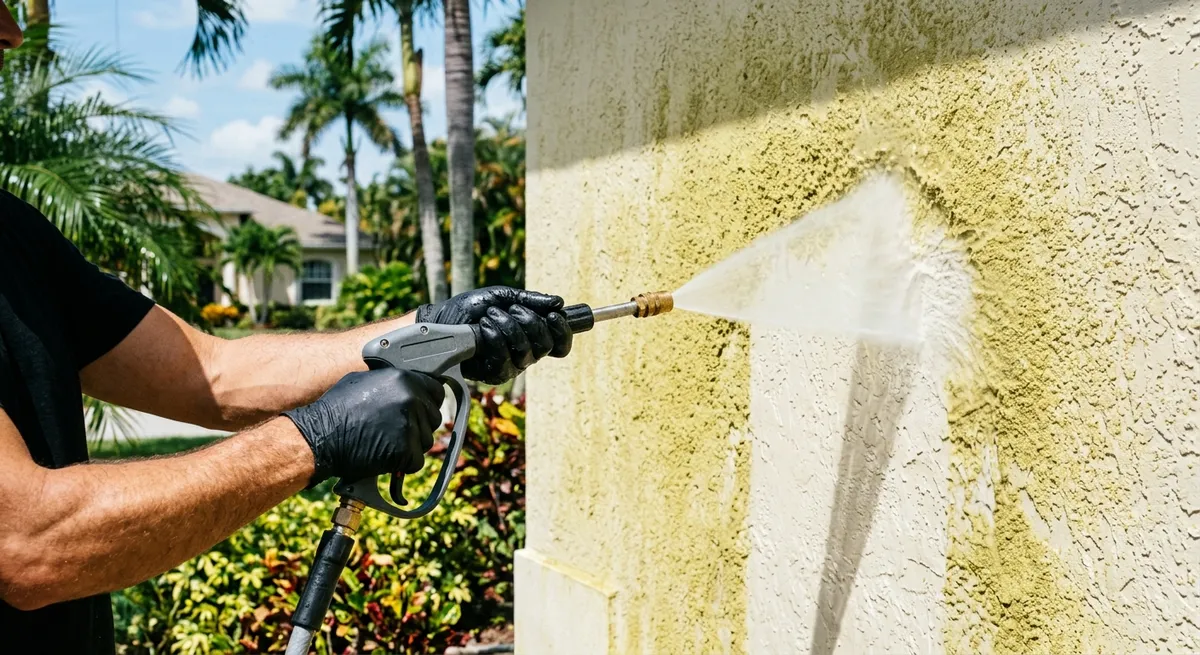
Professional soft washing after a storm does double duty: it removes storm residue (salt, dirt, organic matter) and applies antimicrobial solutions that inhibit mold growth during the critical post-storm period.
Screen Enclosures
If your screen enclosure survived the storm intact, it still needs attention. Screens collect a heavy film of salt, mineral deposits, and organic debris during tropical weather events. This film is corrosive to aluminum frames and clogs screen mesh, reducing airflow and visibility.
Professional screen cleaning restores transparency and removes corrosive deposits from frames. If sections of screen are torn or frames are bent, cleaning the surviving sections still makes sense -- it protects your investment while you arrange repairs for damaged areas.
Mold Prevention: The Post-Storm Urgency
Mold is the hidden danger after any hurricane or tropical storm. South Florida's warm, humid conditions are already mold-friendly -- add storm saturation and organic debris, and you've created ideal conditions for rapid mold colonization.
Where Mold Establishes First
Watch these areas closely in the weeks after a storm:
- Under eaves and soffits -- these stay damp longest after wind-driven rain
- North-facing walls -- less direct sunlight means slower drying
- Behind landscaping -- bushes and hedges trap moisture against walls
- Around windows and doors -- especially where caulking may have been compromised
- Inside screen enclosures -- the semi-enclosed environment traps humidity
Prevention Is Cheaper Than Remediation
Interior mold remediation can cost $2,000-10,000+ depending on the extent. Exterior mold remediation is less expensive but still significant. Post-storm soft washing with antimicrobial solutions costs a fraction of remediation and prevents mold from establishing in the first place.
If you notice mold growth on exterior surfaces within weeks of a storm, address it immediately. Don't wait for your next scheduled cleaning. Mold colonies that establish post-storm grow aggressively in summer conditions and can spread to interior spaces through compromised building envelopes.
When Surfaces Need Repair vs. Cleaning
Not everything can be cleaned. Some damage requires repair or replacement. Here's how to tell the difference:
Cleaning Will Fix It
- Surface staining from mud, salt, or organic debris
- Algae and mold growth on intact surfaces
- Mineral deposits on glass and metal
- Discoloration of concrete, pavers, and stucco (non-structural)
- Film on screen enclosure mesh and frames
Repair Is Needed
- Cracked or chipped stucco -- needs patching before cleaning, or water intrusion will worsen
- Cracked or shifted pavers -- structural repair before cosmetic cleaning
- Torn screens -- replacement, not cleaning
- Damaged roof tiles -- replacement by a licensed roofer
- Compromised caulking and seals -- replacement before or concurrent with cleaning
- Etched or pitted glass -- may require glass restoration or replacement
Working With Your Insurance
If your homeowners insurance claim covers exterior damage, professional cleaning may be a covered expense. Keep these tips in mind:
1. Get your adjuster's approval in writing before proceeding with professional cleaning services related to storm damage 2. Keep detailed invoices from all service providers -- cleaning, landscaping, tree removal, repairs 3. Take before-and-after photos of professional cleaning work -- these document the restoration process 4. Understand your deductible -- hurricane deductibles in Florida are typically 2-5% of your home's insured value, which can be substantial 5. Don't sign over insurance benefits to contractors -- some disreputable operators will offer to "handle your insurance claim" in exchange for signing over your benefits. This rarely works in your favor.
The Recovery Timeline
A realistic timeline for full exterior recovery after a significant hurricane:
This timeline assumes a moderate storm impact. Direct hits from major hurricanes can extend recovery significantly.
You Don't Have to Do It Alone
Post-storm cleanup is overwhelming, and there's no shame in calling for help. Professional exterior cleaning teams have the equipment, experience, and volume capacity to restore your property efficiently -- and we know exactly what South Florida storms leave behind.
Get a free quote from Crouching Tiger Exterior Cleaning for post-storm cleanup services. We serve Palm Beach Gardens, Jupiter, West Palm Beach, and all of Palm Beach County. Whether it's salt spray removal, mold prevention, debris cleanup, or full exterior restoration, we're here to help you recover.