When Your Nose Knows Something's Wrong
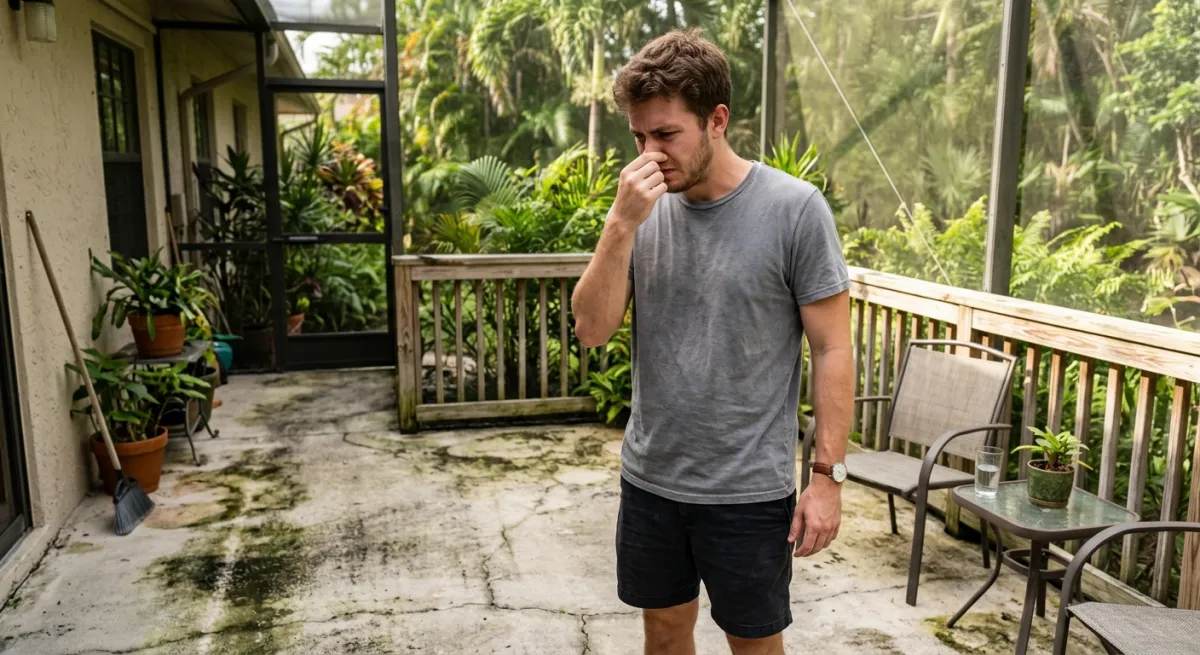
You step outside onto your patio in Palm Beach Gardens on a warm April morning, coffee in hand, and something hits you. Not the pleasant scent of plumeria or salt air. Something else. Something... off.
Maybe it's a musty, earthy funk. Maybe it's sharp and sour. Maybe it's that vaguely rotten smell that seems to come and go, and you can't quite pinpoint where it's coming from.
Here's what most people do: they ignore it. They light a citronella candle, spray some air freshener on the patio, and decide it's just "a Florida thing." And yeah, South Florida has a lot of natural smells. But many outdoor odors around your home are actually warning signs of contamination, biological growth, or maintenance issues that need attention.
Your nose is a surprisingly good diagnostic tool. Let's decode what it's telling you.
The Musty, Earthy Smell: Mold and Mildew
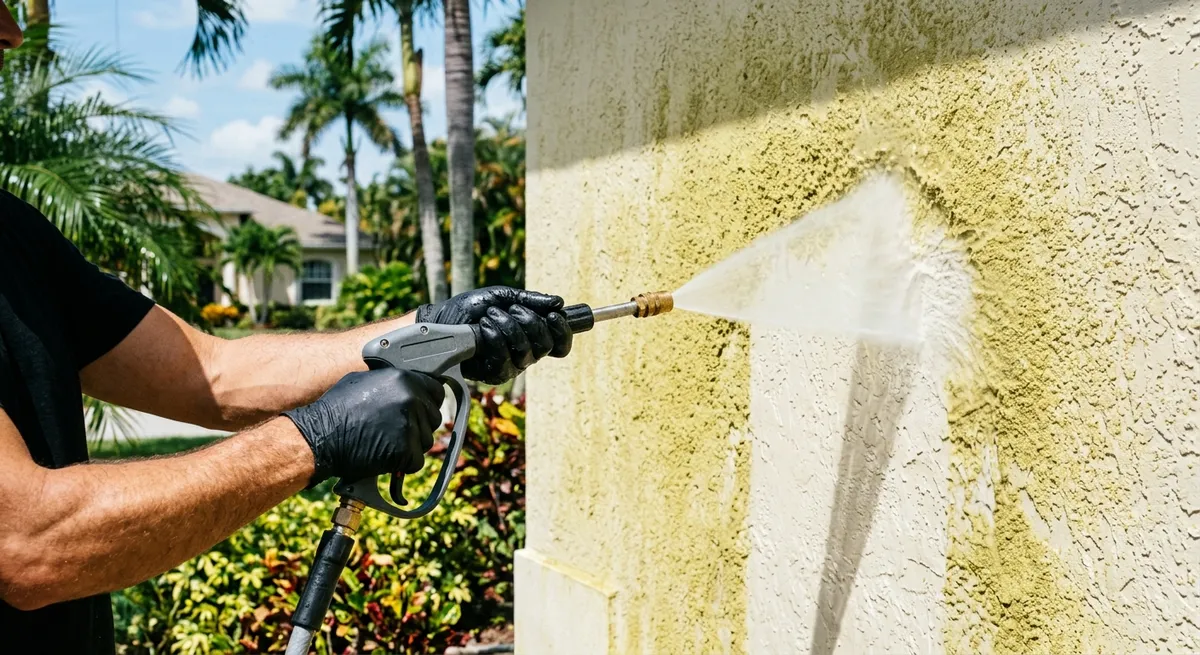
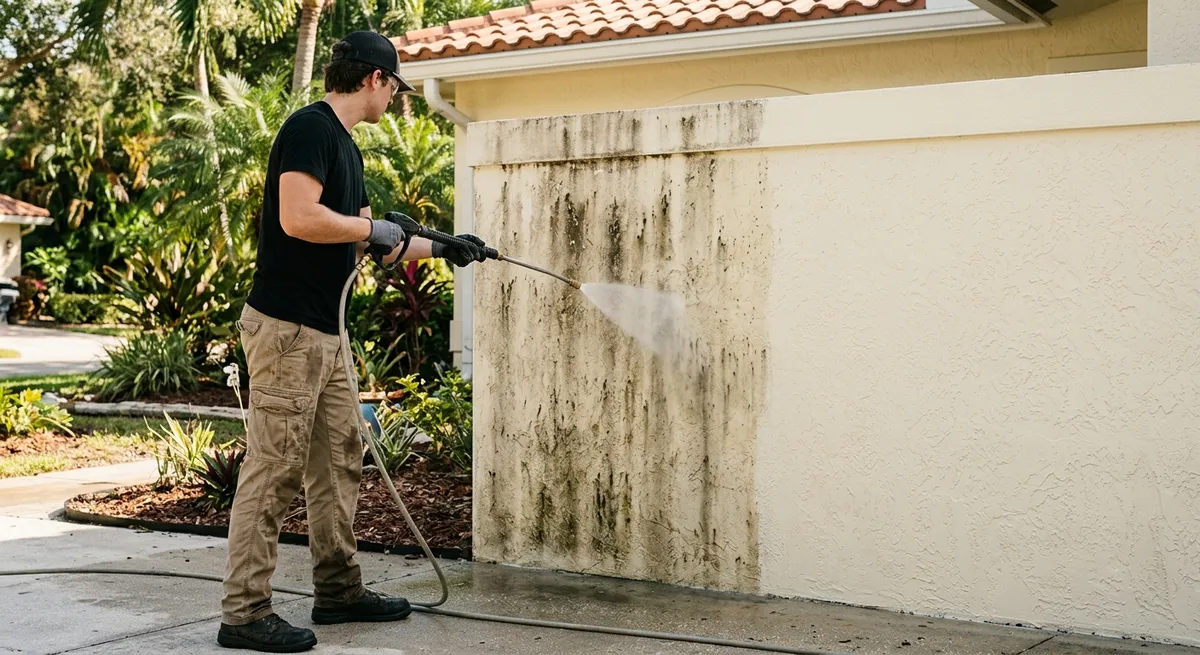
What it smells like: Damp basement, old books, wet dirt. That distinctive musty odor that gets stronger after rain. What it means: You have active mold and mildew growth on exterior surfaces. This is by far the most common outdoor odor issue in South Florida, and it's the one homeowners adapt to fastest — which is a problem, because it means it's often severe by the time someone decides to deal with it. Where to look: North-facing walls, under eaves, the base of your home where landscaping meets the foundation, screen enclosure frames, shaded concrete, and any surface that stays damp after rain. Why it gets worse in South Florida: Our combination of heat and humidity creates ideal growing conditions for mold and mildew. After rain, exterior surfaces can stay damp for hours — and in shaded areas, they may never fully dry out between rain events during wet season. The temperature range in Palm Beach County is basically the sweet spot for biological growth year-round. The fix: Professional soft washing kills mold and mildew at the root, not just on the surface. Consumer mold sprays might knock down the visible growth, but the underlying colony survives and regrows within weeks. A proper soft wash treatment uses commercial-grade solutions that penetrate the surface and eliminate the growth that's producing the odor. Why air fresheners don't work: You're masking the symptom while the cause continues to worsen. The mold colony is growing, producing more spores, and the smell will keep getting stronger. Plus, those mold spores are affecting your air quality regardless of whether you can smell them over the lavender plug-in.The Rotten Egg Smell Near Driveways and Pavers
What it smells like: Sulfur, rotten eggs, decaying vegetation. Usually localized to specific areas of your driveway, walkway, or patio. What it means: Organic matter is decomposing in the joints between your pavers or in cracks in your concrete. Leaves, mulch, grass clippings, and other debris have worked their way into gaps and are rotting. Where to look: Paver joints, especially in areas near trees and landscaping. Cracks in concrete driveways. Expansion joints in sidewalks. The edges where your driveway meets landscaping beds. Why it happens here: South Florida's abundant vegetation drops debris constantly — it's not just a fall thing. Oak catkins, palm fronds, flower petals, and seed pods accumulate in surface joints throughout the year. Combined with frequent rain and warm temperatures, this debris decomposes rapidly. Anaerobic decomposition (decomposition without adequate oxygen, which happens when debris is trapped in tight joints) produces sulfur compounds — that rotten egg smell. The fix: Thorough pressure washing removes the decomposing organic material from joints and cracks. For pavers, this is often combined with re-sanding and resealing, which prevents new debris from accumulating in the joints. Regular maintenance every 6-12 months keeps this cycle from starting.The Fishy Smell: Algae Colonies
What it smells like: Fish, pond water, swamp. Sometimes described as "low tide." What it means: You have significant algae growth, likely in areas with standing water or consistent moisture. Certain types of algae produce trimethylamine and other compounds that smell distinctly fishy. Where to look: Shaded areas of concrete that stay wet, the base of planters that sit on pavers, areas near sprinkler heads or hose bibs, pool decks, and anywhere water tends to pool. Fun fact for the Palm Beach County homeowners: The same algae that makes your pool deck smell like a fishing pier is closely related to the algae that causes those massive red tide events along the Florida coast. It thrives in warm, nutrient-rich conditions — and your fertilizer-treated, irrigated property is nutrient-rich. The fix: Pressure washing combined with algaecide treatment. For areas with recurring algae (like that permanently shaded stretch of sidewalk), we may recommend adjusting drainage or irrigation to reduce standing moisture. Sealing concrete surfaces can also help by making them less hospitable to algae colonization.The Sewer Smell: Drain Issues
What it smells like: Sewer gas, raw sewage. Unmistakable and unpleasant. Usually strongest near specific drain locations. What it means: You likely have a clogged or dirty drain — not necessarily a plumbing emergency, but definitely something that needs attention. Where to look: Floor drains on patios and in garages, French drains, trench drains along driveways, and the area around your home's clean-out pipes. Common causes in South Florida:- Blocked P-traps in floor drains — floor drains have a water seal (P-trap) that blocks sewer gas. In South Florida's heat, that water evaporates if the drain isn't used regularly. No water seal = sewer gas escaping into the open.
- Organic buildup in surface drains — leaves, dirt, and biological growth clog surface drains, creating stagnant water that smells terrible.
- Infrequently used drains — guest bathroom floor drains, garage drains, and outdoor shower drains that don't get regular water flow lose their P-trap seal.
The Sweet, Rotting Smell: Something Died (or Is Decomposing)
What it smells like: Sickly sweet and rotten. Gets worse over several days, then gradually fades over a week or two. Concentrated in one area. What it means: Usually a dead animal. In South Florida, it's often a lizard, rat, possum, or bird that got into a wall void, under a deck, or behind landscaping. What to do: This isn't a cleaning issue — it's a removal issue. Locate the source and remove it. If it's accessible, it's a quick (if unpleasant) fix. If it's in a wall or soffit, you may need a pest control company. Once the source is removed, the odor fades naturally. After removal: Pressure washing the area where the animal was found eliminates residual bacteria and decomposition fluids from concrete and other surfaces. This is especially important for health reasons if the area is near where people walk or children play.The Chemical Smell: Irrigation and Mineral Deposits
What it smells like: Chlorine, sulfur, or "hard water" smell. Sometimes metallic. What it means: Your irrigation water contains minerals — which is extremely common in Palm Beach County. Our groundwater is high in calcium, magnesium, and sometimes sulfur. When sprinklers hit your home's exterior, the water evaporates and leaves mineral deposits behind. These deposits can produce a noticeable odor, especially sulfur. Where to look: Anywhere your sprinklers hit that isn't grass — walls, windows, driveways, pavers, and screen enclosures. You'll often see white or brownish staining alongside the smell. The fix: Adjusting sprinklers to minimize overspray is the first step. Professional cleaning removes existing mineral deposits. For persistent issues, we may recommend applying a protective treatment to affected surfaces.How Heat Makes Everything Worse
There's a reason these smells seem strongest on hot afternoons. South Florida's heat acts as an amplifier for every odor-producing process:
- Higher temperatures accelerate decomposition — organic matter breaks down faster, producing more odor compounds
- Heat causes volatile compounds to evaporate faster — mold and mildew smell stronger when it's warm because the odor molecules are more readily becoming airborne
- Hot concrete and pavers release absorbed odors — surfaces that absorbed moisture and organic material during the night release those compounds as they heat up during the day
- Thermal air currents carry odors further — hot surfaces create convection currents that lift and spread odor molecules
Prevention: Keeping Your Exterior Odor-Free
Most outdoor odors around your home are symptoms of surfaces that need cleaning. A regular maintenance schedule prevents the buildup that causes them:
- Quarterly soft washing of exterior walls, especially shaded areas, keeps mold and mildew from establishing odor-producing colonies
- Semi-annual pressure washing of driveways, patios, and walkways removes organic debris before it has time to decompose
- Annual paver cleaning and sealing prevents organic buildup in joints
- Monthly drain checks — run water into every floor drain on your property to maintain P-trap seals
- Post-storm cleanup — remove debris from surfaces before it starts decomposing
Don't Mask It — Fix It
If you're noticing persistent outdoor odors around your home, don't reach for the air freshener. Your nose is trying to tell you something. Most of the time, it's telling you that surfaces need professional cleaning — and the sooner you address it, the simpler and cheaper the fix.
Get your free quote for exterior cleaning and let us diagnose what's causing the odor. We serve homes and businesses throughout Palm Beach Gardens, Jupiter, West Palm Beach, and Palm Beach County. Your patio should smell like fresh air, not a science experiment.