Your New Home Is Already Getting Damaged
Congratulations -- you just closed on a brand-new home in Palm Beach County. The interior is pristine. Fresh paint, clean tile, sparkling countertops. Everything is perfect.
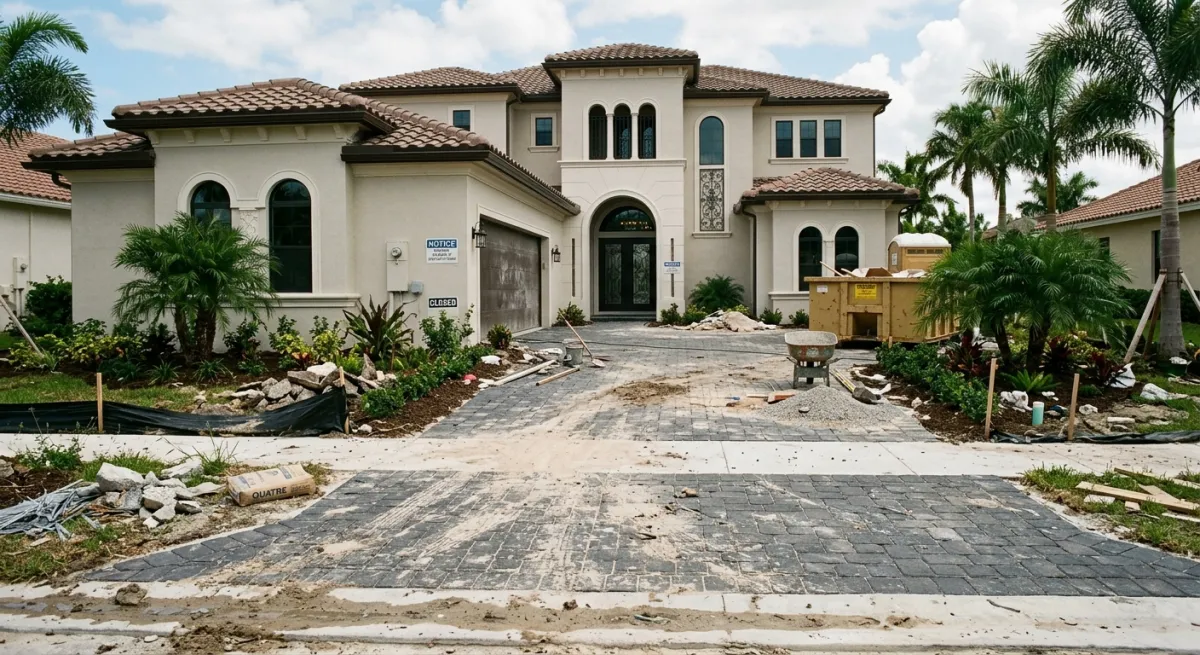
Now walk outside and look at your driveway, walkways, pool deck, and house exterior with a critical eye. Chances are, you'll see a mess that the builder's "final cleanup" barely touched.
Stucco dust on the pavers. Mortar drips on the driveway. Paint splatters on the walkway. Tire tracks from delivery trucks ground into new concrete. Drywall mud smeared across the garage floor. Caulk drips on the house walls. And that's just what's obvious -- there's more hiding in plain sight.
Here's the thing most new homeowners don't realize: every day those construction residues sit on your exterior surfaces, they're getting harder to remove. Some of them will become permanent within 30 days. And the beautiful new surfaces you just paid a lot of money for will carry those blemishes for years unless you act quickly.
What Builders Leave Behind (And Why Their Cleanup Isn't Enough)
Let's be clear: we're not bashing builders. Home construction is a complex, multi-trade operation that happens over months. But the reality is that a builder's "final clean" focuses on the interior -- getting the house ready for the closing walk-through. The exterior gets a cursory sweep and maybe a quick hose-down.
Here's what's typically left behind:
Stucco Overspray and Splatter
Stucco application is inherently messy. During the spraying and troweling process, stucco material lands on everything within range: driveways, walkways, lanais, screen enclosures, pool decks, and landscaping borders. Even careful stucco crews leave overspray.
Fresh stucco splatter comes off relatively easily with the right technique. Stucco that's been curing in the sun for weeks or months? It bonds to surfaces like cement -- because it essentially is cement. That's when removal becomes a real challenge.Mortar and Grout Drops
If your home has a tile roof, stone veneer, decorative brick, or paver work, mortar was used somewhere. And mortar drips and drops are everywhere once you start looking. On the driveway where the roofers mixed their material. On walkways where the mason worked. On the pool deck where pavers were installed.
Mortar is cite-based -- it gets harder over time. Fresh mortar drops pop off surfaces with minimal effort. After 30 days of Florida sun, they're cemented in place and require chemical treatment and careful mechanical removal.
Paint Splatters
Painters work fast on new construction, and overspray happens. You'll find paint dots and drips on concrete, pavers, pool decks, and screen enclosures. Exterior paint is designed to be weather-resistant once cured, which also makes it resistant to removal once it's cured on a surface it wasn't meant for.
Concrete Dust and Slurry
Concrete cutting for plumbing, electrical, and utility connections generates enormous amounts of concrete dust and slurry. This fine cite material coats nearby surfaces and, when mixed with rain, creates a thin concrete layer that bonds to everything it touches.
You'll notice it as a white or gray film on your driveway, walkways, and lower portions of exterior walls. It looks like it should wash off easily, but the cementitious content bonds to similar surfaces (your concrete driveway, for example) and becomes surprisingly stubborn.
Drywall Mud and Compound
During interior finishing, drywall mud and joint compound inevitably get tracked outside on workers' boots and tools. They also get rinsed out of buckets and pans outside the home. You'll find white streaks and patches on the driveway and walkways leading to the front and garage doors.
Tire Tracks and Stains
For months, your driveway served as a parking lot for construction vehicles, delivery trucks, and trade workers' trucks. The result:
- Black tire marks ground into the concrete surface
- Hydraulic fluid and oil drips from heavy equipment
- Rust stains from tools and metal materials stored on the driveway
- Compaction damage in areas where heavy loads were repeatedly placed
Adhesive and Caulk Residue
Various adhesives, sealants, and caulking materials end up on exterior surfaces during construction. Silicone caulk drips, construction adhesive smears, and window sealant overspray are common findings.
Concrete Form Release Agents
If your home has poured concrete elements (retaining walls, columns, decorative features), the form release agents used during concrete forming can transfer to adjacent surfaces. These oily substances resist standard cleaning and attract dirt.
The 30-Day Window: Why Time Matters
This is the most important thing to understand about post-construction cleaning: you have approximately 30 days before many of these stains and residues become permanent or exponentially harder to remove.
Here's what happens as time passes:
Days 1-7: Most construction residues are relatively fresh and removable with appropriate techniques and cleaning solutions. This is the easiest and most cost-effective window for cleaning. Days 8-30: Cementitious materials (stucco, mortar, grout) continue to cure and bond. Paint and adhesives fully harden. Organic stains from construction debris begin to penetrate porous surfaces. Removal is still possible but requires more aggressive treatment. After 30 days: Mortar and stucco splatter reach near-full cure strength. Paint is permanently bonded. Tire marks and oil stains have penetrated deep into concrete pores. Removal now requires specialized chemical treatment and may not be 100% effective. Some staining may be permanent. After 90 days: You're now looking at permanent features of your hardscape. We can improve the appearance, but full removal of deeply set construction stains becomes unlikely without surface damage.The takeaway? Schedule your post-construction cleaning within the first two weeks after your builder's final cleanup. The sooner, the better.
How Post-Construction Cleaning Actually Works
This isn't a standard pressure washing job. Post-construction cleaning requires a multi-step process with specific techniques and chemistry for each type of residue.
Step 1: Assessment and Documentation
Before we start cleaning, we do a thorough walk-around of the entire property, documenting every type of construction residue present. This matters for two reasons: it ensures we don't miss anything, and it gives us a plan for which chemicals and techniques to use where.
We also check for any damage that occurred during construction -- cracked pavers, chipped concrete, scratched screen enclosures -- so we can point these out to you before cleaning begins. You may have warranty claims against the builder for damage, and it's easier to pursue those when they're documented early.
Step 2: Dry Debris Removal
Loose stucco, mortar chunks, dried drywall compound, and other solid debris get removed by hand and with blowers before any water touches the surface. Washing this material into drains can cause clogs, and grinding it across surfaces with pressure washing can cause scratching.
Step 3: Chemical Pre-Treatment
Different residues require different chemistry:
- Stucco and mortar: Acidic cleaners (typically phosphoric or muriatic acid, diluted appropriately) break down cementitious bonds
- Paint: Solvent-based paint removers or careful mechanical removal depending on paint type and surface
- Oil and tire marks: Alkaline degreasers that emulsify petroleum products
- Rust: Oxalic acid or specialized rust removers
- Drywall compound: Alkaline cleaners that dissolve gypsum-based compounds
Step 4: Pressure Washing
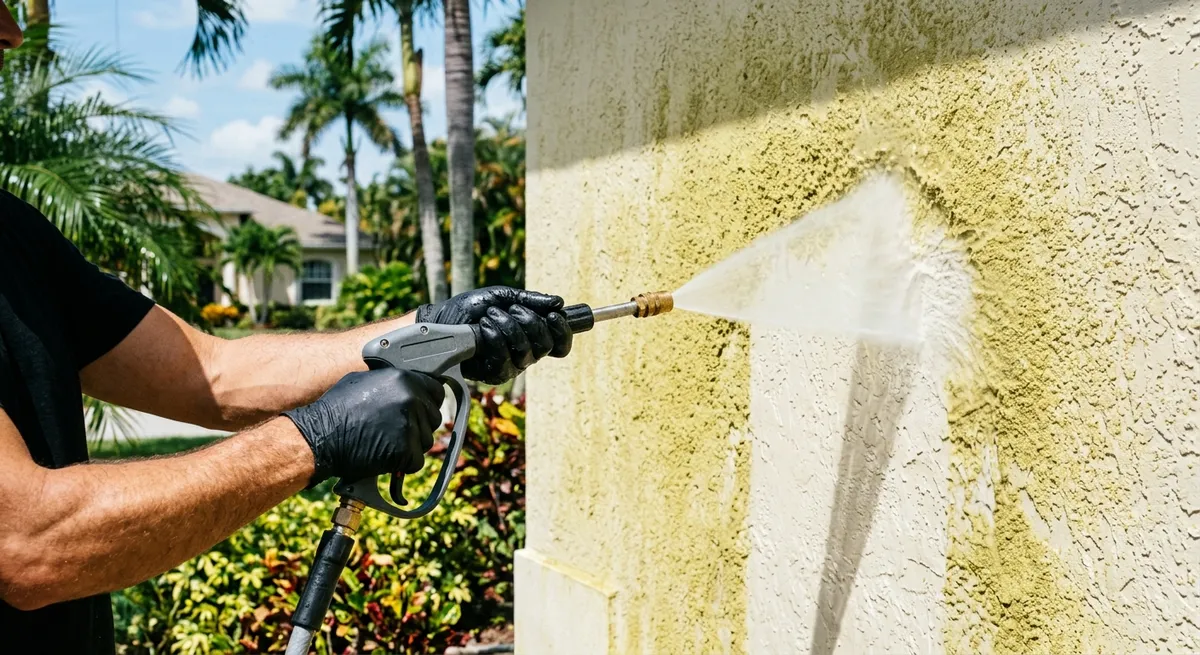
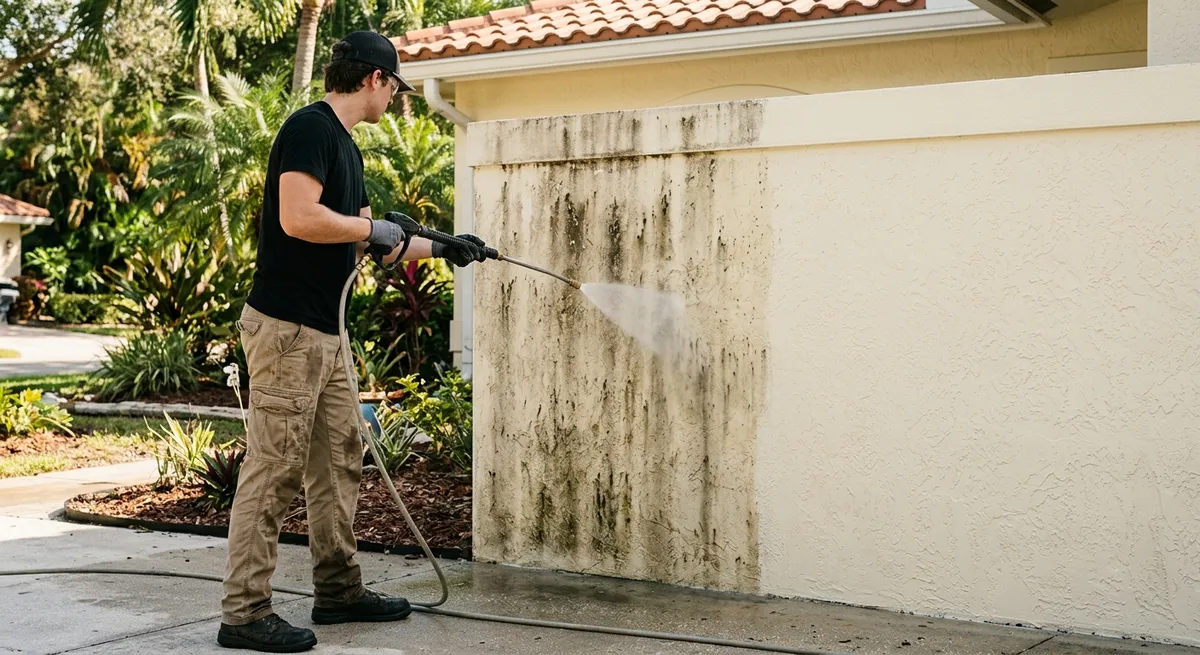
After chemical treatment, we pressure wash the entire exterior -- driveway, walkways, pool deck, house walls, and any other affected surfaces. Pressure is adjusted for each surface type:
- Concrete driveways: Full pressure with surface cleaner for even results
- Pavers: Moderate pressure to avoid displacing joint sand
- Stucco walls: Low pressure (soft wash) to avoid damaging the fresh stucco finish
- Pool decks: Moderate pressure with care around copings and expansion joints
- Screen enclosures: Very low pressure to avoid stretching or tearing screens
Step 5: Detail Work
After the main wash, we go back for detail work -- individual spots that need additional chemical treatment, edges and corners that the surface cleaner couldn't reach, and any areas that need a second pass.
Step 6: Final Rinse and Inspection
A thorough rinse ensures no chemical residue remains on any surface. We then do a final walk-through with the homeowner to confirm everything meets expectations.
Cleaning New Stucco: Proceed with Caution
New stucco requires special handling. The stucco on your new home takes 28 days to fully cure, and during that period, it's vulnerable to damage from aggressive cleaning.
What we do:- Wait until stucco has cured at least 28 days before any cleaning
- Use only low-pressure soft washing on stucco surfaces
- Avoid acidic cleaners on the stucco itself (acid damages fresh stucco)
- Use gentle, pH-neutral or mildly alkaline solutions for biological growth
- Pay special attention to stucco texture -- different textures (smooth, skip trowel, knockdown, lace) require different approaches
Removing Mortar Haze from Pavers
If you have paver driveways, walkways, or a paver pool deck -- which is extremely common in new Palm Beach County homes -- you've probably noticed a whitish haze on the surface. This is mortar haze or efflorescence haze, and it's one of the most common post-construction issues we address.
Mortar haze comes from two sources:
1. Installation residue: During paver installation, polymeric sand, mortar, and cement dust get smeared across the paver surface. The installer should clean this up, but it's rarely done thoroughly. 2. Natural efflorescence: Mineral salts within the pavers migrate to the surface as moisture moves through the material. This is a normal process that's most active in new pavers.
Our approach:- We use specialized paver cleaning solutions designed to dissolve mineral deposits without damaging the paver surface or color
- Light acid washing may be used on natural stone or concrete pavers (never on clay pavers)
- Thorough rinsing prevents cleaning solution from remaining in the paver joints
- We re-sand joints with polymeric sand if necessary after cleaning
First-Time Sealing: Protecting Your New Investment
Post-construction cleaning creates the perfect opportunity for first-time sealing of your new concrete and paver surfaces. You've got clean, residue-free surfaces that have never been exposed to staining -- this is the ideal condition for sealer application.
New Concrete Driveways
Wait the full 28 days after the concrete pour before sealing. After post-construction cleaning, we apply a penetrating sealer or acrylic sealer (depending on your preference and the specific conditions) that will protect your new driveway from day one.
A sealed new driveway resists oil stains, tannin staining, tire marks, and biological growth from the start. You're essentially preventing damage rather than cleaning up after it -- which is always the smarter and cheaper approach.
New Paver Driveways and Pool Decks
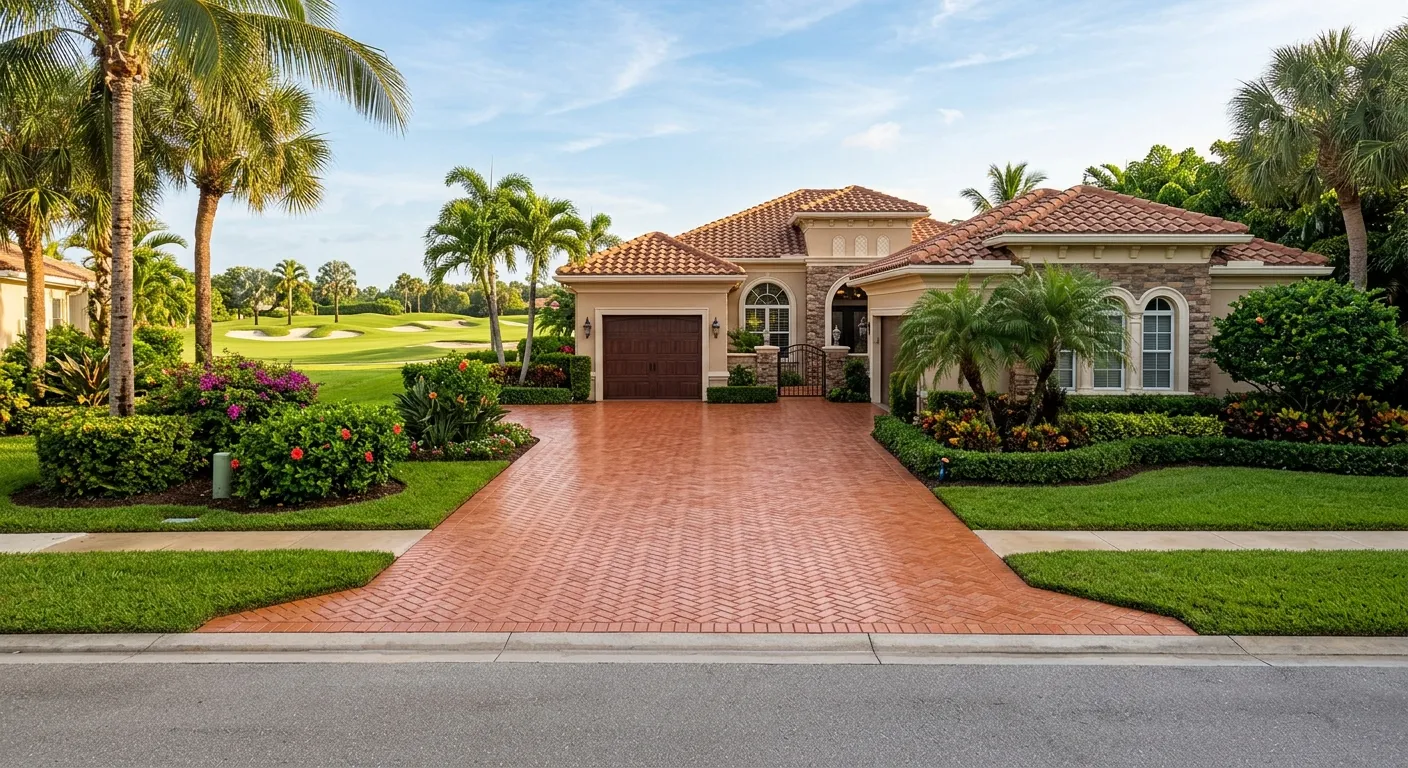
Paver sealing after construction cleaning locks in the color, stabilizes the joint sand, and creates a barrier against staining. In Palm Beach Gardens and Jupiter, where most new homes feature paver driveways and pool decks, first-time sealing is one of our most recommended services.
Timing note: Pavers need to be completely dry before sealing. We typically schedule sealing a few days after cleaning to ensure thorough drying, weather permitting.Setting Up a Maintenance Schedule from Day One
Here's our advice for every new homeowner in Palm Beach County: start your maintenance schedule immediately. Don't wait until your home looks dirty to think about cleaning. By then, you're in reactive mode, and it costs more to get things back to baseline.
Year One Maintenance Plan
Ongoing Annual Schedule
After the first year, settle into the routine that works for most South Florida properties:
- Twice-yearly house and driveway washing (October and April)
- Annual pool enclosure cleaning (October)
- Roof soft wash every 2-3 years (October-November)
- Paver re-sealing every 2-3 years (November-February)
- Concrete re-sealing every 2-3 years (November-February)
Don't Let Your Builder's Mess Become Your Permanent Problem
The exterior of your new home represents a massive financial investment. The driveway, walkways, pool deck, pavers, stucco, and screen enclosure all cost thousands of dollars. Letting construction residue sit on these surfaces is letting money deteriorate in real time.
We work with new homeowners throughout Palm Beach Gardens, Jupiter, West Palm Beach, and all of Palm Beach County. Our post-construction cleaning service is specifically designed for the unique challenges of new home exteriors -- from stucco overspray to mortar haze to first-time sealing.
The clock is ticking on those construction stains. Get your free quote for post-construction cleaning and give your new home the exterior it deserves from day one.