Painting Season Is Here -- And It Starts with a Wash
If you've been thinking about repainting the exterior of your home, congratulations on your timing. November through April is prime painting season in South Florida, and for good reason. Our dry season brings lower humidity, minimal rain, and the kind of consistent conditions that let paint cure properly.
But here's the thing most homeowners (and even some painters) get wrong: the paint job is only as good as the prep work underneath it. And in South Florida, that prep work absolutely has to include professional pressure washing or soft washing.
We've seen it dozens of times across Palm Beach Gardens, Jupiter, and West Palm Beach -- homeowners spend thousands on premium paint and a skilled crew, only to watch it peel, bubble, or fade within a year or two. The culprit? They painted over dirty surfaces.
Why Paint Fails Without Proper Surface Prep
Let's talk about what's actually on your home's exterior right now. Even if it looks relatively clean, South Florida surfaces accumulate:
- Algae and mildew -- our humidity keeps these organisms thriving year-round
- Salt deposits -- especially within a few miles of the coast
- Oxidized paint residue -- chalky buildup from UV breakdown of existing paint
- Dust and pollen -- a constant presence from our lush vegetation
- Pollution and road grime -- particularly on homes near major roads like PGA Boulevard or US-1
How Pressure Washing and Soft Washing Prepare Surfaces
Not all exterior surfaces should be cleaned the same way. The approach depends on what you're painting:
Stucco (Most South Florida Homes)
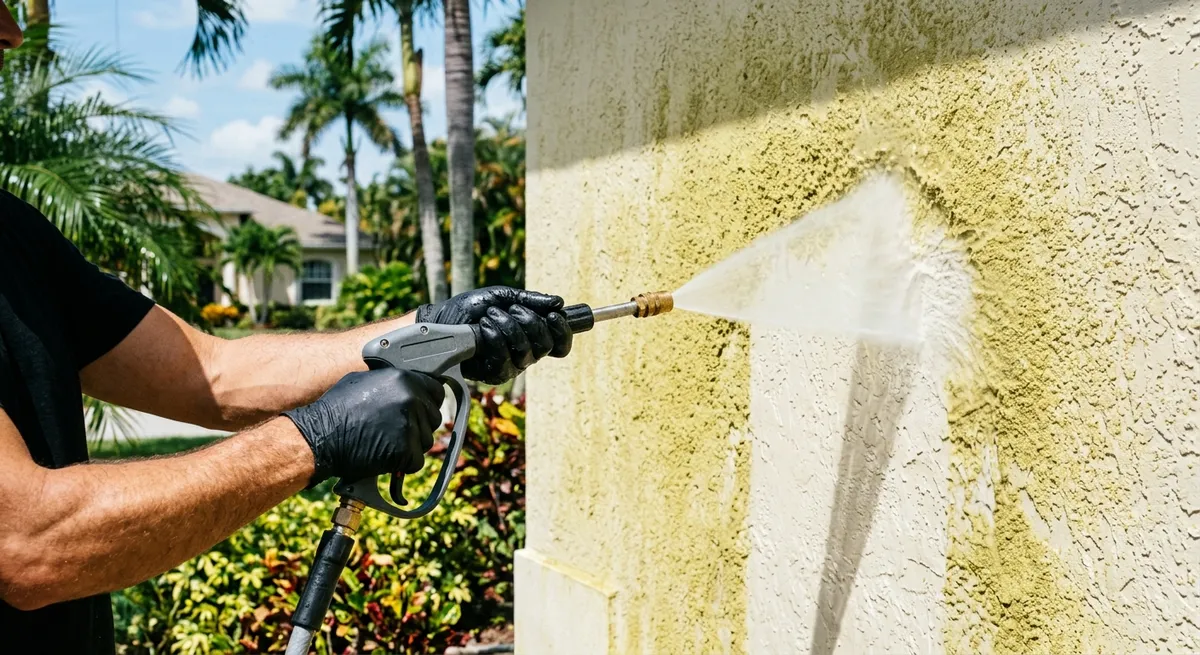
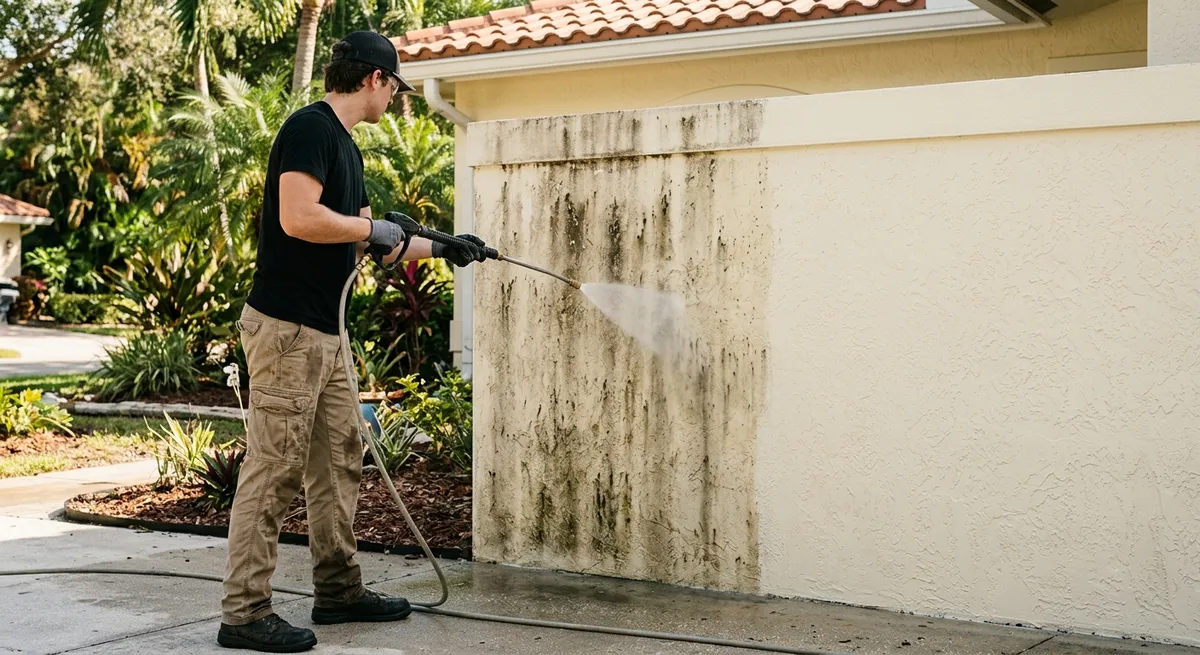
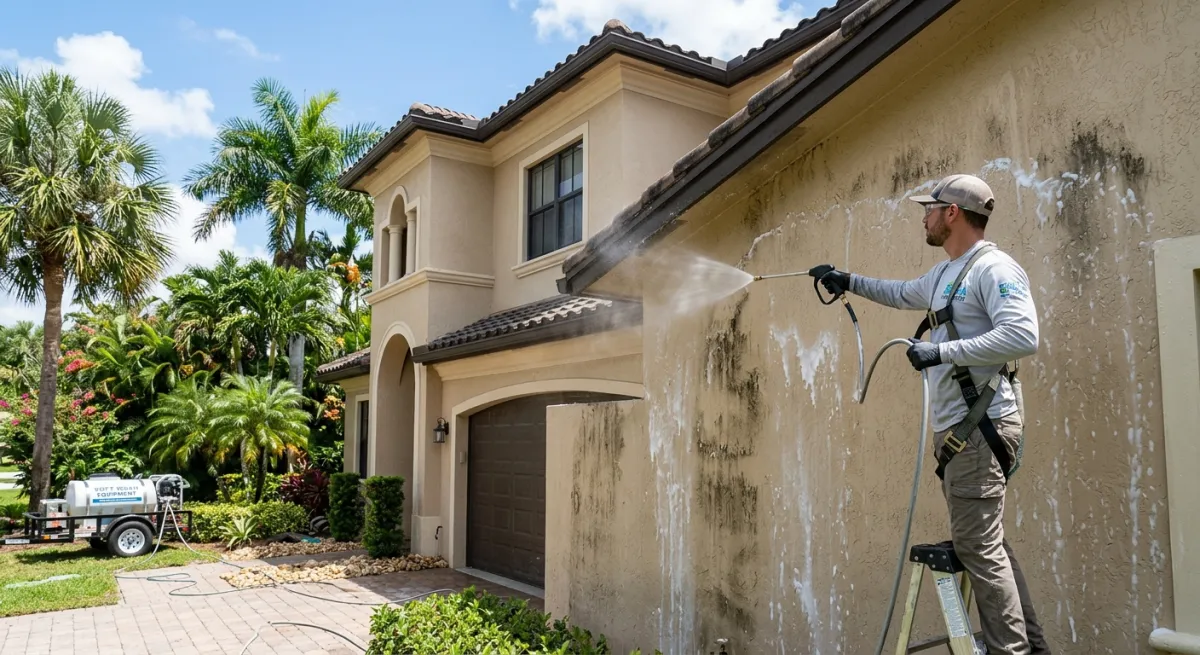
Stucco is the dominant exterior material in Palm Beach County, and it requires careful handling. We use soft washing for stucco -- a low-pressure application of specialized cleaning solutions that kill organic growth at the root and dissolve surface contaminants.
Why not high pressure? Stucco is more porous and fragile than it looks. High-pressure water can:
- Force moisture deep into the stucco, creating problems behind the surface
- Crack or chip the finish coat
- Create rough spots that show through paint
- Blast away existing paint unevenly, creating an inconsistent surface
Concrete Block and CMU
For exposed concrete block, we can use moderate pressure with appropriate surface cleaners. The key is removing all organic growth from the block's textured surface, including down inside the pores where algae loves to hide.
Wood Trim and Fascia
Wood gets soft-washed with even more care. We use gentler solutions and lower pressure to avoid raising the wood grain. Raised grain creates a rough surface that's harder to paint and doesn't hold paint as well.
Previously Painted Surfaces
If the existing paint is in decent shape, we're cleaning it and creating a surface that new paint can bond to. If it's already peeling or flaking, pressure washing helps remove the loose paint -- but it won't replace scraping and sanding for serious peeling. That's part of the repair phase that comes after washing.
The Timeline: Wash, Dry, Repair, Prime, Paint
Here's how a properly prepped exterior paint job should flow in South Florida:
Step 1: Professional Pressure Washing / Soft Washing
This is where we come in. A thorough exterior wash typically takes a few hours for an average-sized home. We clean all surfaces that will be painted -- walls, trim, fascia, soffits, and any other areas your painter will be working on.
Step 2: Drying Time (24-72 Hours)
This step is non-negotiable and frequently rushed. After washing, your home needs time to dry completely. For stucco, we recommend at least 48-72 hours of dry weather before painting begins. Concrete block needs a similar window. Wood can sometimes be ready in 24-48 hours depending on conditions.Painting over a surface that still holds moisture is one of the fastest paths to paint failure. The moisture gets trapped under the paint film, and as it tries to escape, it pushes the paint off the surface. You'll see bubbling, blistering, and peeling -- sometimes within weeks.
This is another reason dry season is painting season. During the summer, between daily afternoon thunderstorms, you might never get a dry enough window for proper curing.
Step 3: Surface Repair
Once the surface is clean and dry, your painter (or a handyman) addresses any damage:
- Filling cracks in stucco
- Replacing rotted wood trim
- Patching holes or chips
- Caulking gaps around windows and doors
- Scraping and sanding any remaining loose paint
Step 4: Priming
A quality primer creates the ideal bonding surface for your topcoat. On bare stucco or repaired areas, primer is essential. Many painters also prime the entire surface for maximum adhesion and uniform color.
Step 5: Paint Application
Finally -- the actual painting. With properly prepped surfaces, quality paint bonds deeply into the material and creates a film that flexes with temperature changes, resists UV damage, and keeps moisture out.
What Happens When Painters Skip the Wash
Some painting crews will tell you they can "power wash and paint the same day" or that their paint products don't require washing first. Be cautious.
Here's what we see when washing gets skipped or done poorly:
Within 1-3 months:- Paint starts peeling at edges and around windows
- Bubbles or blisters appear, especially on south-facing walls
- Color looks uneven as paint bonds differently to clean vs. dirty areas
- Large sections of paint start failing
- Mildew grows through the new paint (because the spores were still alive underneath)
- Chalking begins prematurely as the paint film breaks down
- The whole paint job looks 5-10 years old
- You're facing a repaint that costs just as much as the first one
- This time, the failed paint layer has to be fully removed before repainting
Stucco-Specific Prep Considerations
Since most homes in Palm Beach Gardens and surrounding areas are stucco, let's dive deeper into stucco prep:
Dealing with Stucco Cracks
Stucco develops hairline cracks over time -- it's normal. But these cracks harbor moisture and organic growth. Our soft washing process cleans inside these cracks, which is important for two reasons:
1. Your painter needs to see all the cracks to repair them properly 2. Organic growth inside cracks will continue to spread under new paint
Efflorescence (White Mineral Deposits)
That white, powdery substance on your stucco is efflorescence -- mineral deposits left behind as moisture evaporates through the stucco. It's extremely common in Florida and must be removed before painting. Paint applied over efflorescence won't bond properly.
Our cleaning solutions dissolve efflorescence effectively. Once removed, your painter can apply a masonry primer that helps prevent it from recurring.
Mold Staining vs. Active Mold
There's an important distinction: killing mold and removing mold stains are two different things. Our soft wash process kills all active mold and algae. However, some dark staining may remain on heavily affected areas even after the organisms are dead.
Your painter needs to know this. Stained areas may need primer specifically designed to block stains (like a shellac-based primer) before topcoating.
How to Coordinate with Your Painter
The best results come from good communication between your pressure washing service and your painting crew. Here's how to set that up:
1. Book pressure washing first. Schedule us at least 3-5 days before your painter is set to begin. This gives adequate drying time and a buffer for weather delays.
2. Share the plan with both crews. Let us know which surfaces are being painted so we can focus our attention there. Let your painter know when we're scheduled so they can plan their start accordingly.
3. Ask your painter about timing. Some painters prefer surfaces to dry for a specific number of days. We'll work with whatever timeline they need.
4. Consider the full property. While we're there prepping your walls for paint, it's a great time to clean your driveway, pool deck, and roof too. Bundling services saves on setup costs, and your whole property looks fresh when the painting is done.
Cost of Doing It Right vs. Cost of Repainting Early
Let's put real numbers on this:
Doing It Right:- Professional soft wash / pressure wash: $300-$600
- Quality exterior paint job: $4,000-$8,000
- Expected lifespan: 7-10 years
- Total cost over 10 years: $4,300-$8,600
- Skip the wash or do a quick rinse: $0-$100
- Same paint job: $4,000-$8,000
- Expected lifespan: 1-3 years
- Second paint job (with proper prep this time): $5,000-$10,000
- Total cost over 10 years: $9,000-$18,000+
Ready to Prep for Your Paint Job?
If you've got an exterior paint job planned this dry season, start with the most important step. Our professional soft washing and pressure washing removes everything that stands between your surfaces and a lasting paint job.
Get your free quote and we'll have your home cleaned and ready for paint within the week. We serve Palm Beach Gardens, Jupiter, West Palm Beach, and all of Palm Beach County.