The Great Driveway Debate
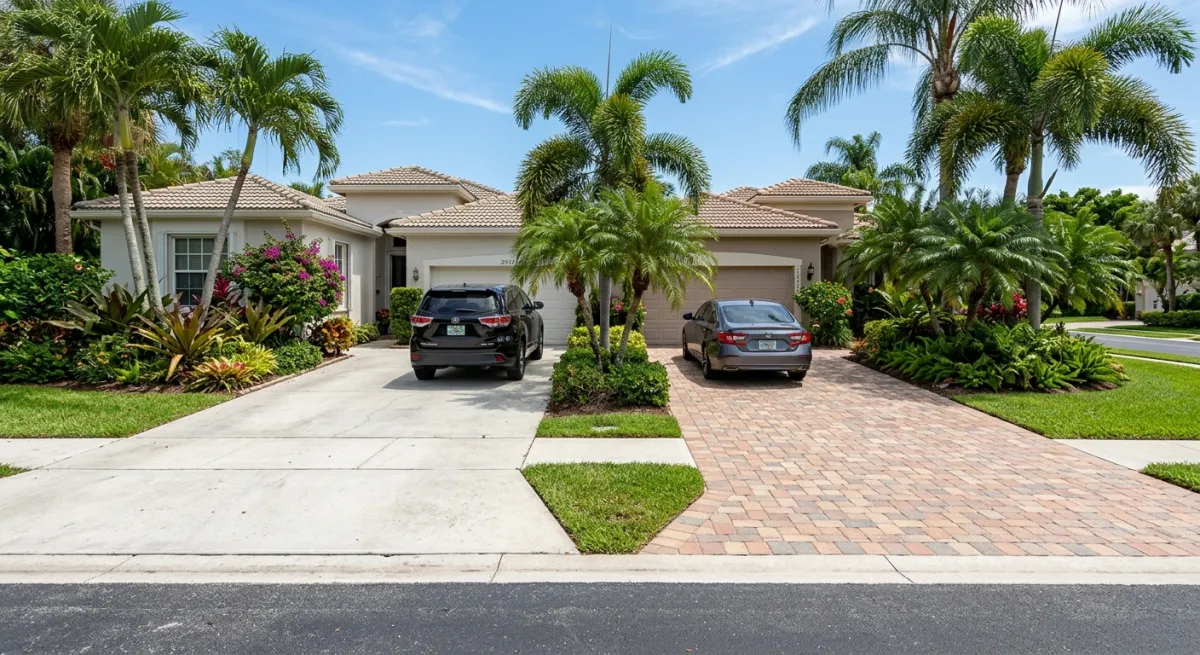
Drive through any neighborhood in Palm Beach Gardens, Jupiter, or West Palm Beach, and you'll see both concrete and paver driveways. Some homeowners swear by one or the other. HOAs sometimes mandate a specific look. Builders default to whatever fits the price point.
But here's what most people don't think about until they're already committed: how these surfaces perform over years in South Florida's climate, and what it actually costs to keep them looking good.
We clean both surfaces every day. We've seen brand-new concrete driveways that looked terrible within two years, and 15-year-old paver driveways that still look sharp. We've also seen the reverse. The material matters less than the maintenance.
Let's break down the real differences — not the sales pitch you got from the installer, but what actually happens when South Florida weather starts working on your driveway.
How Each Material Handles South Florida's Climate
Concrete in the Subtropics
Concrete is porous. That's the most important thing to understand about it in Florida's climate. Water soaks into the surface, and with it comes everything dissolved or suspended in that water — minerals, organic matter, and the spores that become algae and mold.
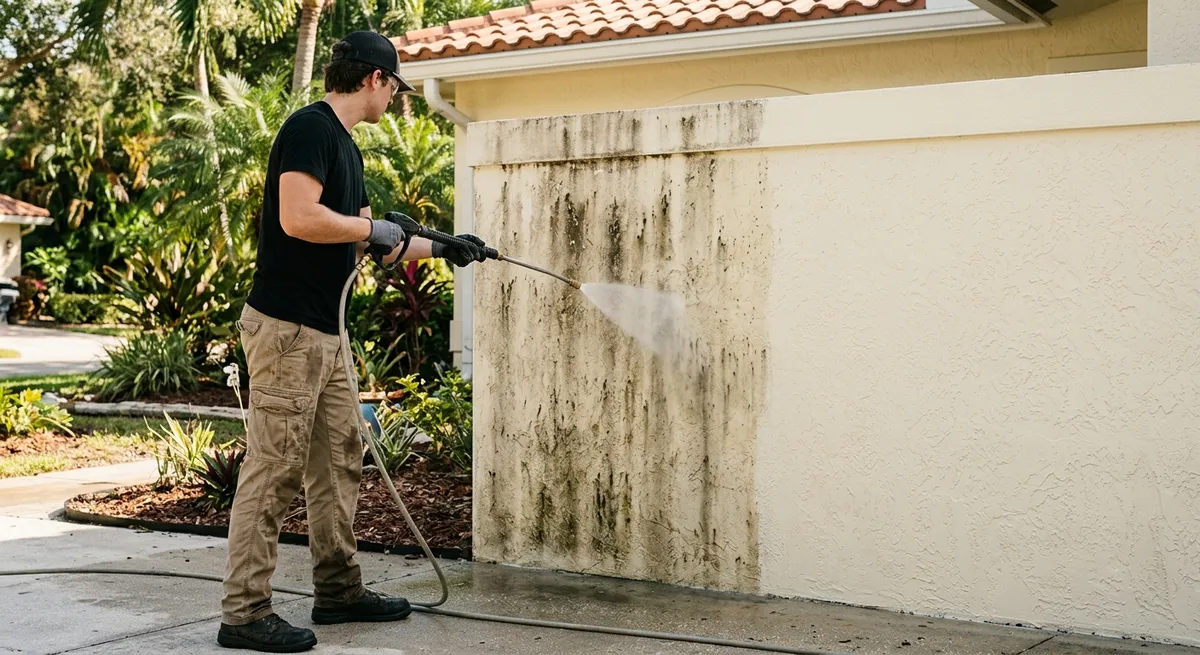
How concrete stains in South Florida:- Algae and mold create green or black discoloration across the surface
- Rust stains appear from irrigation water with high iron content or from fertilizer runoff
- Tire marks build up over time, especially from hot tires in summer
- Oil and transmission fluid soak deep into the pores quickly
- Tree tannins from oak and palm debris leave brown or orange stains
The good news: concrete is easy to clean. A professional pressure wash brings it back to near-original condition, and it responds well to chemical treatment for organic stains.
Pavers in the Subtropics
Pavers handle some of Florida's challenges better than concrete, and some worse. They flex with ground movement rather than cracking, which is a significant advantage on Florida's sandy, shifting soil. But they have their own maintenance requirements.
How pavers stain and degrade in South Florida:- Joint sand erosion from heavy rain washes out the stabilizing material between pavers
- Weed and grass growth pushes through weakened joints, especially in summer
- Algae and mold grow on the surface and in joints simultaneously
- Efflorescence (white mineral deposits) is common in the first 1-2 years
- Ant hills push sand out of joints and create uneven surfaces
- Individual paver settling creates trip hazards over time
The good news: pavers can be individually replaced if damaged, they don't develop spreading cracks like concrete, and they can be lifted and relaid if the base needs attention.
Cleaning Methods: Different Approaches for Different Surfaces
This is where the differences really matter for homeowners. You can't clean both surfaces the same way and expect good results.
Cleaning Concrete Driveways
Concrete is relatively forgiving when it comes to cleaning. Professional surface cleaners (the spinning disc attachments that provide even cleaning) work exceptionally well on concrete flatwork.
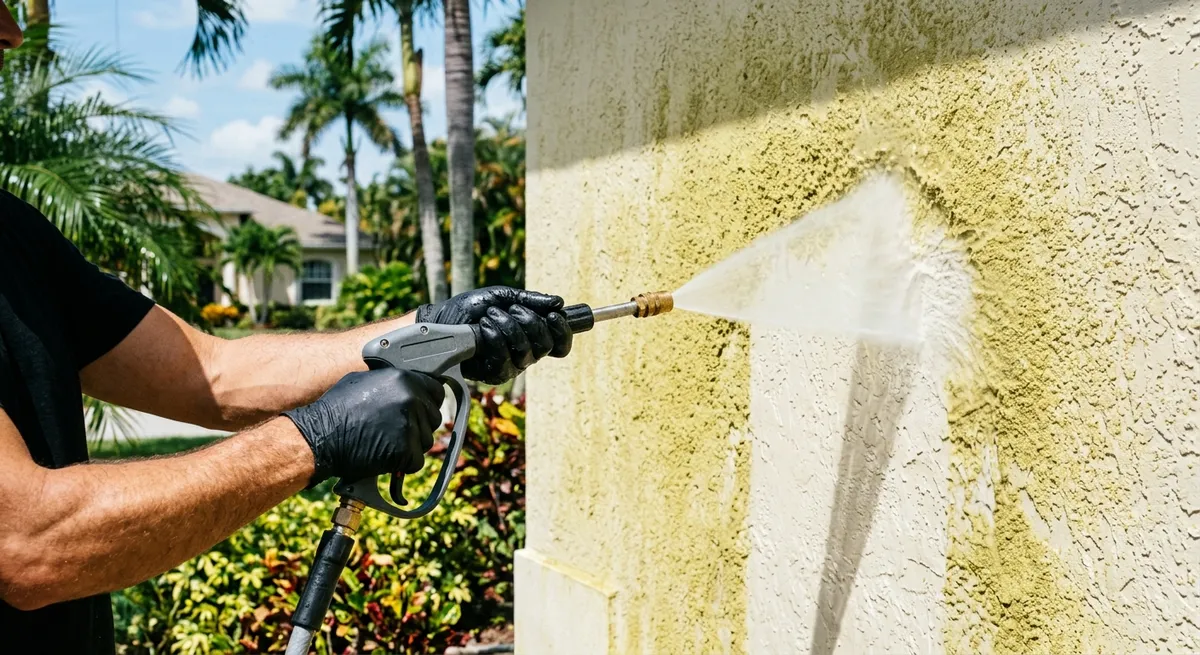
Our approach: 1. Pre-treat the surface with a cleaning solution to kill organic growth 2. Surface clean with commercial-grade equipment at appropriate pressure (typically 3,000-3,500 PSI with a surface cleaner) 3. Detail edges and expansion joints with a wand 4. Post-treat with a solution that inhibits regrowth Frequency needed in South Florida: Every 6-12 months, depending on shade and tree coverage. What to avoid: Using a zero-degree nozzle (the red tip) directly on concrete. This concentrates pressure into a tiny line that etches the surface. We see DIY etching damage constantly — it's the number one reason people call us after trying to clean their own driveway.Cleaning Paver Driveways
Pavers require more care and a different technique. The joints are the vulnerable point — too much pressure blasts out the joint sand, which defeats the purpose of cleaning.
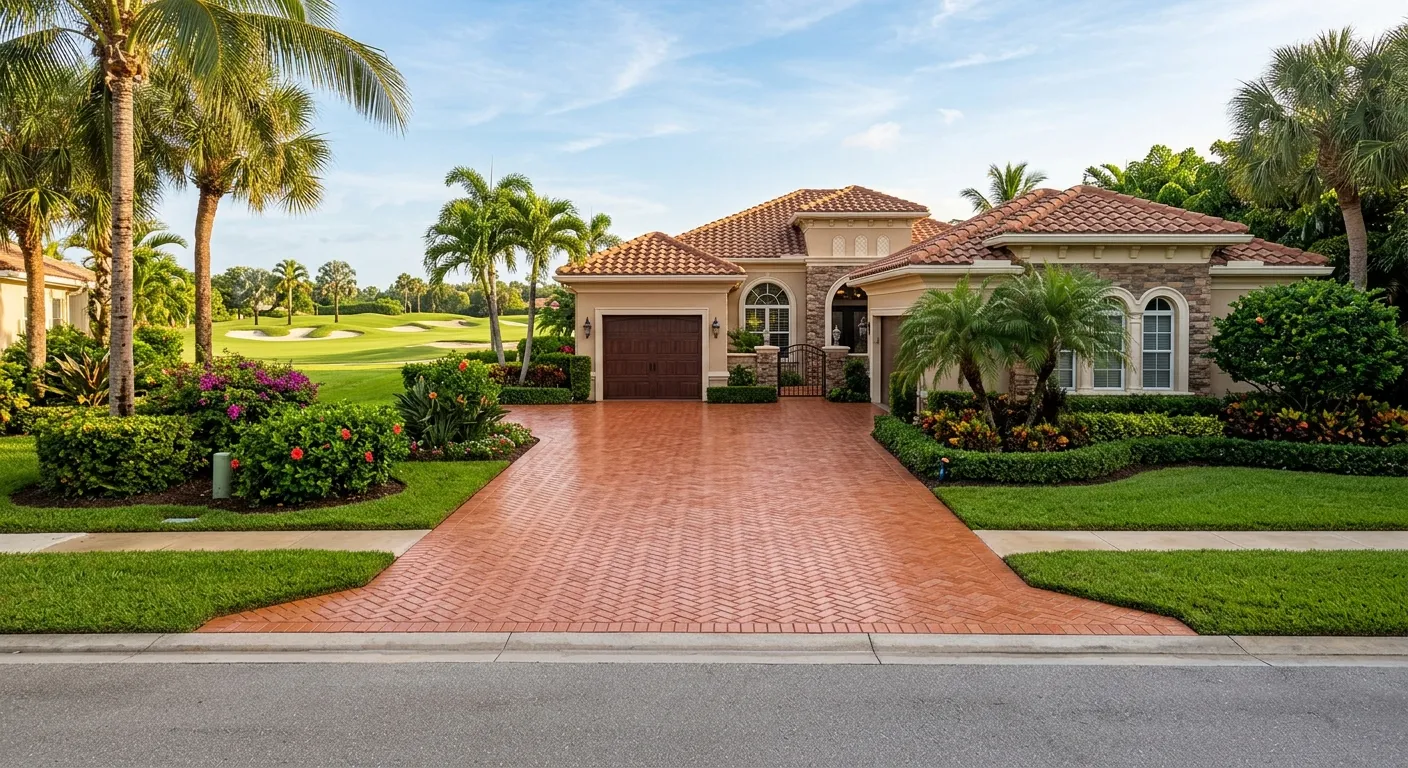
Our approach: 1. Pre-treat with cleaning solution, paying attention to joints 2. Surface clean at reduced pressure (typically 2,500-3,000 PSI) to protect joint integrity 3. Detail individual pavers and joints as needed 4. Re-sand joints with polymeric sand if eroded 5. Optional: apply or reapply sealer Frequency needed in South Florida: Every 6-12 months for cleaning, plus re-sanding every 1-2 years and re-sealing every 2-3 years. What to avoid: Using a fan tip at close range directly into joints. This removes joint sand faster than anything else and leads to rapid weed growth and paver shifting.Sealing: A Tale of Two Surfaces
Sealing Concrete
Concrete sealing is optional but beneficial in South Florida. A quality penetrating sealer helps resist staining and slows organic growth. However, it doesn't prevent it entirely — you'll still need regular cleaning.
- Cost: $0.50-1.50 per square foot
- Lifespan: 2-5 years depending on product and traffic
- Appearance: Ranges from invisible (penetrating sealers) to wet-look (topical sealers)
- Our take: Worth doing, especially for newer concrete. Penetrating sealers are lower maintenance than topical ones.
Sealing Pavers
Paver sealing is more common and arguably more important. Sealer stabilizes joint sand, enhances color, and creates a barrier against staining. In South Florida, it's practically a maintenance requirement for pavers that need to look their best.
- Cost: $1.00-2.50 per square foot
- Lifespan: 2-3 years in South Florida sun
- Appearance: Typically a wet-look or semi-gloss finish that deepens paver color
- Our take: Highly recommended, especially within the first year of installation. Budget for reapplication every 2-3 years.
The 10-Year Cost Comparison
Here's where homeowners really want hard numbers. Let's compare the total maintenance cost over 10 years for a typical 800-square-foot driveway in Palm Beach County.
Concrete Driveway — 10-Year Maintenance Costs
Paver Driveway — 10-Year Maintenance Costs
The numbers don't lie: pavers cost more to maintain. Typically 2-3 times more over a decade compared to concrete. That's not a reason to avoid them — pavers offer real advantages in aesthetics, flexibility, and property value. But you should budget for the ongoing maintenance.
Repair vs. Replacement: The Long Game
When Concrete Needs More Than Cleaning
Concrete has a finite lifespan, and in South Florida, that's typically 25-40 years depending on installation quality and soil conditions. When concrete starts failing, you'll see:
- Spreading cracks that cleaning can't address
- Sections that have sunk or heaved
- Surface spalling (flaking and crumbling)
- Extensive staining that's penetrated too deep to remove
When Pavers Need More Than Cleaning
Pavers rarely need full replacement. That's their superpower. Individual pavers can be pulled up and replaced, sections can be releveled, and the entire surface can be restored by:
- Lifting and relaying shifted sections
- Replacing damaged individual pavers
- Re-compacting and re-sanding the base
- Fresh sealer application
So Which Is Better?
Neither. Both. It depends on what you value.
Choose concrete if:- You want lower ongoing maintenance costs
- You prefer a cleaner, more modern aesthetic
- Budget is a primary concern (both installation and maintenance)
- You don't want to think about re-sanding and sealing schedules
- You value the aesthetic versatility and curb appeal premium
- You want a surface that flexes with Florida's shifting soil instead of cracking
- Long-term repairability matters more than short-term maintenance costs
- You're willing to invest in regular sealing and joint maintenance
We Clean Both — And We Know the Difference
We adjust our approach for every surface we clean. Concrete and pavers require different pressure, different techniques, and different chemical treatments. One-size-fits-all pressure washing is how driveways get damaged.
Whether your driveway is concrete, pavers, or a combination, get your free quote and let us build a maintenance plan that keeps it looking great for years — not just until the next rain.