One Roof Does Not Fit All
Drive through any neighborhood in Palm Beach Gardens, Jupiter, or West Palm Beach and you'll see three kinds of roofs dominating the skyline: concrete and clay tile, asphalt shingle, and standing seam metal. Each one handles South Florida's brutal climate differently. Each one gets dirty in its own way. And each one needs a very specific cleaning approach -- get it wrong, and you're looking at thousands of dollars in damage.
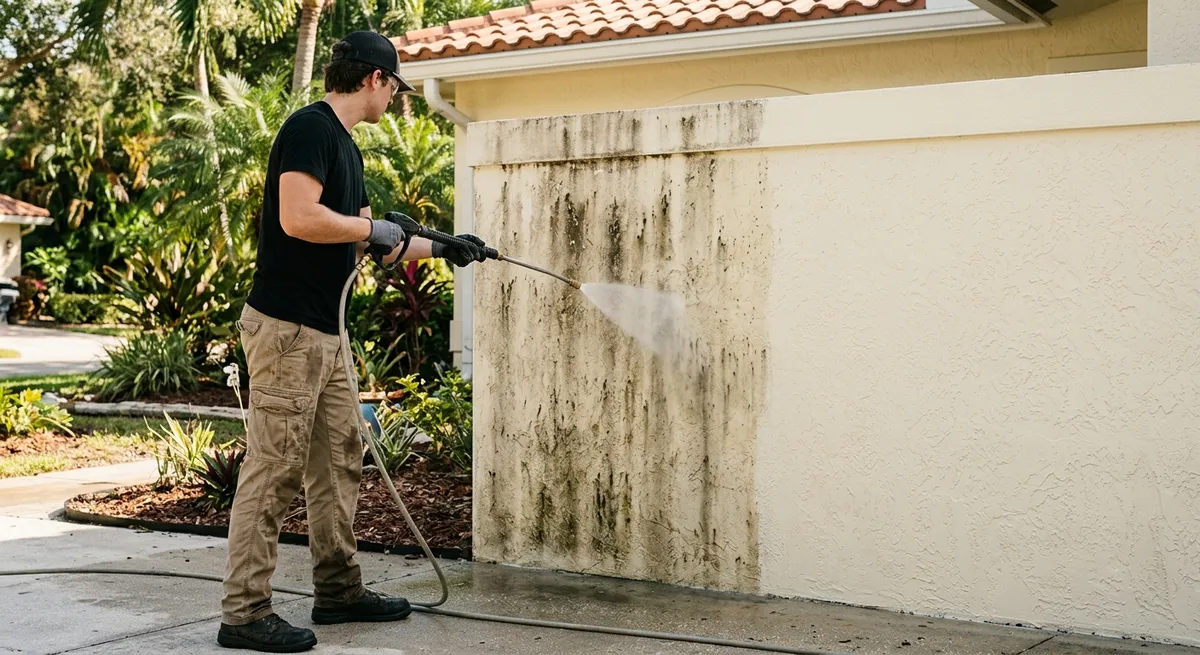
We've cleaned hundreds of roofs across Palm Beach County, and the number one mistake we see? Homeowners (or worse, unlicensed handymen) blasting every roof with high-pressure water like it's a driveway. Your roof is not your driveway. And treating it like one is one of the fastest ways to shorten its lifespan.
Let's break down the right cleaning method for each roof type, why it matters, and how to keep your specific roof looking great for years.
Why Pressure Washing Is Wrong for Almost Every Roof
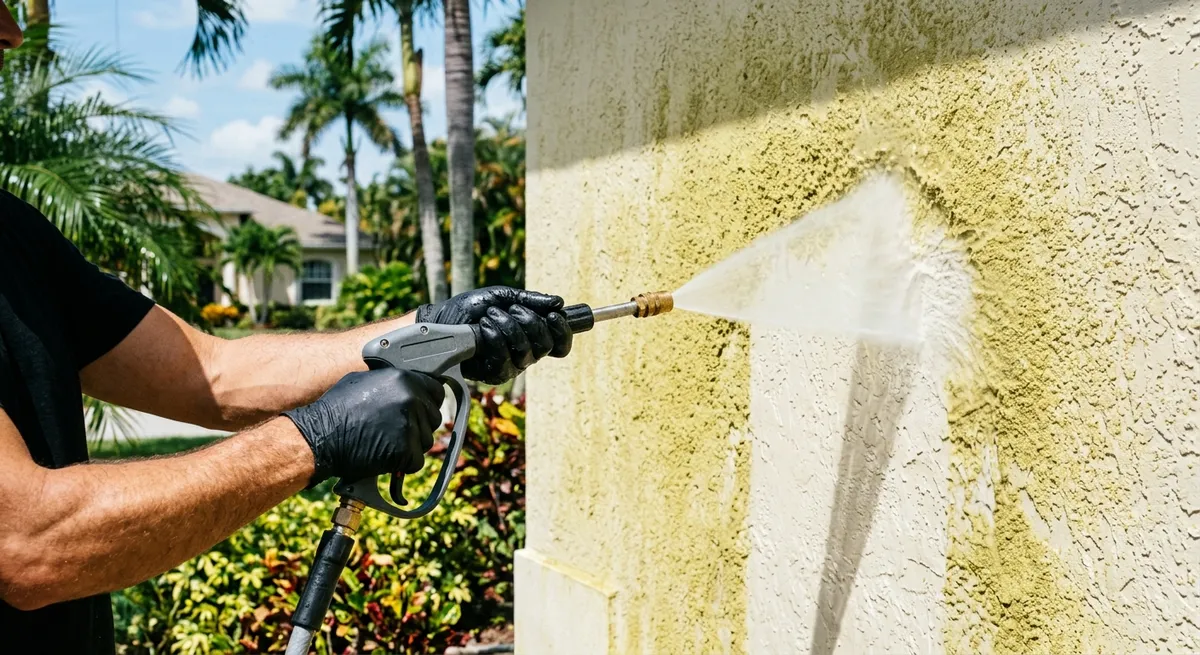
Before we get into individual roof types, let's address the elephant in the room: high-pressure washing will damage nearly every residential roof in South Florida.
Here's why:
- Tile roofs: High pressure chips, cracks, and dislodges tiles. It also strips the protective glaze off clay tiles and erodes the surface of concrete tiles.
- Shingle roofs: Pressure washing blasts away the granule coating that protects shingles from UV damage. Once those granules are gone, the shingle deteriorates rapidly.
- Metal roofs: While metal can handle more pressure than tile or shingle, high-pressure washing still damages protective coatings, scratches finishes, and can dent thinner panels.
Concrete and Clay Tile Roofs
The Most Common Roof in Palm Beach County
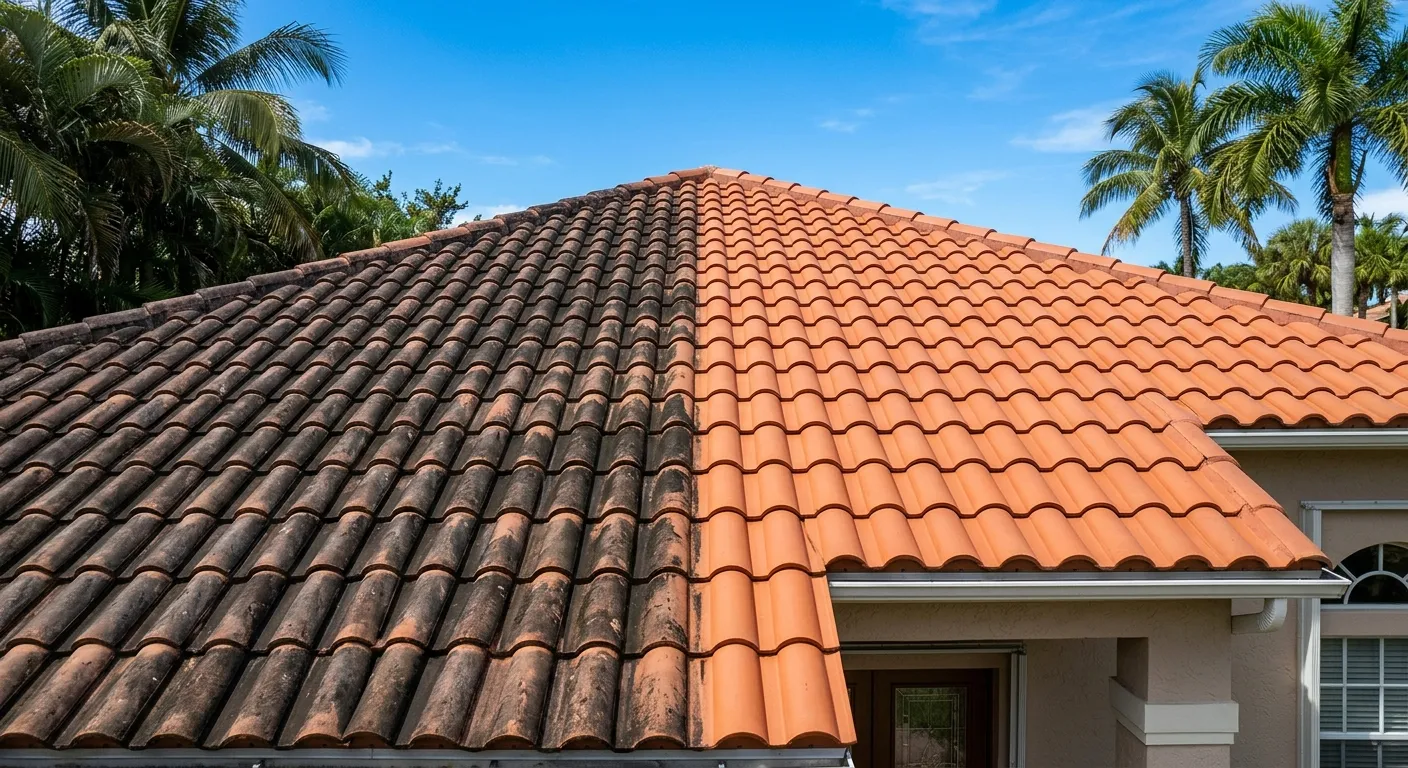
If you live in a Florida community built in the last 30 years, chances are you have a tile roof. They're everywhere -- and for good reason. Tile is durable, handles hurricane winds well when properly installed, and gives homes that classic South Florida look.
But tile roofs have a dirty secret: they're magnets for organic growth.
Why Tile Roofs Get So Dirty
Concrete and clay tiles are porous materials. Under a microscope, the surface is full of tiny pits and valleys where moisture collects. In a climate where humidity regularly hits 80-90%, those pores become perfect incubators for:
- Gloeocapsa Magma -- the cyanobacteria responsible for those ugly black streaks you see on roofs everywhere. This organism literally feeds on the limestone filler in roofing materials.
- Green algae -- thrives in shaded areas and north-facing roof slopes
- Lichen -- a stubborn combination of algae and fungus that anchors itself into the tile surface
- Moss -- less common in South Florida than up north, but it shows up in heavily shaded areas
The Right Way to Clean Tile Roofs
Soft washing is the only appropriate method for tile roofs. Here's what the process looks like:1. Pre-inspection -- We walk the roof (carefully) to check for cracked, broken, or loose tiles. Cleaning a roof with existing damage can make things worse. 2. Plant and landscape protection -- Cleaning solutions can harm plants, so we wet down and cover landscaping around the perimeter. 3. Application of cleaning solution -- We apply a sodium hypochlorite-based solution (essentially a professional-grade bleach mixture) with specialized surfactants that help it cling to the tile surface. 4. Dwell time -- The solution needs 15-20 minutes to kill organic growth down to the root system embedded in the tile pores. 5. Low-pressure rinse -- We rinse at pressures well below what would damage tile -- typically under 500 PSI, compared to the 2,000-3,000 PSI that a standard pressure washer delivers.
How Often Should You Clean a Tile Roof?
Most tile roofs in Palm Beach County need cleaning every 2-3 years. Properties with heavy tree coverage or north-facing roof planes may need it every 18-24 months. If you're in an HOA, check your covenants -- many require roof cleaning every 2-3 years regardless.
Cost Considerations
Tile roofs generally cost more to clean than shingle roofs because they require more care and take longer. For an average-sized home in Palm Beach Gardens (2,000-2,500 sq ft roof area), expect to pay between $400 and $700 for professional soft washing. That's a fraction of the $15,000-$30,000 you'd spend replacing a tile roof that deteriorated from neglect.
Asphalt Shingle Roofs
Still Common, Especially in Older Communities
While tile dominates newer construction, plenty of homes in Palm Beach County still have asphalt shingle roofs -- particularly in older neighborhoods throughout West Palm Beach, Lake Park, and parts of Jupiter. Shingle roofs are more affordable to install, but they're also more vulnerable to South Florida's climate.
Why Shingle Roofs Need Gentle Treatment
Asphalt shingles are coated with ceramic granules that serve two critical functions: they reflect UV radiation and they provide a waterproof barrier. These granules are the shingle's armor.
When you pressure wash a shingle roof, you strip away those granules. You might get a clean-looking roof for a few months, but you've just taken years off its lifespan. We've seen shingle roofs that needed full replacement within 2-3 years of being pressure washed because the granule loss was so severe.
The Right Way to Clean Shingle Roofs
The process is similar to tile, but with some important differences:
- Even lower pressure -- Shingles require the gentlest touch of any roof type. We're talking garden-hose-level pressure for rinsing.
- Adjusted chemical concentration -- Shingles don't need as strong a solution as tile because they're not as porous. Over-application can cause premature aging of the asphalt.
- Top-down rinsing only -- Water should always flow in the direction the shingles overlap. Spraying upward can lift shingle tabs and allow water intrusion.
- No walking on the roof when possible -- Foot traffic on shingle roofs causes granule loss, especially on hot days when the asphalt is soft. We use extension wands and work from ladders or the roof edge whenever practical.
How Often Should You Clean a Shingle Roof?
Shingle roofs tend to show Gloeocapsa Magma staining faster than tile because the granules provide an ideal food source. Plan on cleaning every 2-3 years, or sooner if you notice dark streaks spreading. Regular cleaning actually extends your shingle roof's life significantly by removing organisms that accelerate material breakdown.
Metal Roofs
Growing in Popularity Across South Florida
Metal roofs have been gaining market share in Palm Beach County for good reason -- they're incredibly durable, handle high winds exceptionally well, and reflect heat better than tile or shingle. But "low maintenance" doesn't mean "no maintenance."
How Metal Roofs Get Dirty
Metal roofs don't have the porosity problem of tile or shingle, so they resist Gloeocapsa Magma better than other roof types. But they're still susceptible to:
- Oxidation and chalking -- The paint or coating on metal panels breaks down over time, creating a chalky residue
- Salt air corrosion -- Homes near the coast in Jupiter, Palm Beach, and Singer Island see accelerated corrosion from salt spray
- Mildew and algae in shaded areas where moisture collects
- Rust staining at fastener points, seams, and anywhere the protective coating has been scratched
- Tree sap and pollen buildup -- especially during spring pollen season
The Right Way to Clean Metal Roofs
Metal roofs are the most forgiving of the three types, but you still need the right approach:
- Moderate pressure is okay -- Metal can handle slightly higher pressure than tile or shingle, but we still keep it well below maximum to avoid denting or damaging coatings. Typically 1,000-1,500 PSI with a wide spray pattern.
- pH-neutral or mildly alkaline cleaners -- Harsh chemicals can strip protective coatings and accelerate corrosion. We avoid strong bleach solutions on metal and opt for cleaners specifically formulated for painted metal surfaces.
- Rinse thoroughly -- Any cleaning solution left on metal will cause problems over time. Complete rinsing is critical.
- Inspect fasteners and seams -- Cleaning is a perfect time to identify potential leak points. We note any areas of concern during the cleaning process.
How Often Should You Clean a Metal Roof?
Metal roofs generally stay cleaner longer, so every 3-5 years is typical for most properties. Homes within a few miles of the ocean may need cleaning every 2-3 years due to salt air exposure.
Comparing the Three Roof Types
How to Choose a Roof Cleaning Company
Not every pressure washing company knows how to properly clean roofs. Here's what to look for:
- Ask specifically about soft washing -- If they show up with only a pressure washer and no chemical application system, find someone else.
- Verify insurance -- Roof cleaning involves working at height. Make sure they carry both liability insurance and workers' comp.
- Ask about their process for your roof type -- A good company will explain the specific approach for your roofing material without hesitation.
- Check for licensing -- In Palm Beach County, exterior cleaning contractors should be properly licensed.
- Look at before-and-after photos -- Specifically for your roof type. A company that does great work on tile may not have experience with metal.
Protect Your Investment
Your roof is one of the most expensive components of your home. In South Florida, a tile roof replacement runs $15,000-$30,000+, a shingle re-roof costs $8,000-$15,000, and a new metal roof can be $20,000-$40,000. Regular professional cleaning -- at a fraction of those costs -- keeps your roof looking great, extends its lifespan, and prevents problems before they start.
Whether you have tile, shingle, or metal, we know exactly how to clean it safely and effectively. Get your free quote today and see how affordable professional roof cleaning can be for your Palm Beach County home.