The First Decision After the Storm
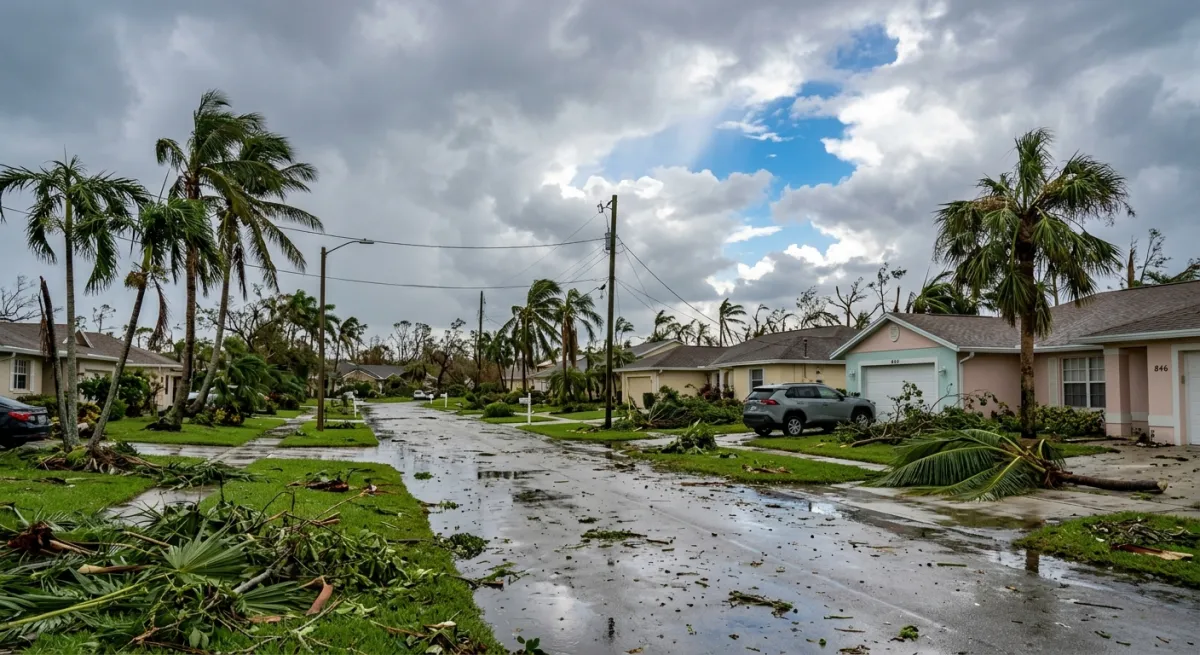
The wind has died down. The rain has stopped. You walk outside and see... a mess. Debris everywhere. Stains on your walls. Your driveway looks like a swamp. Maybe there's damage. Maybe it's just dirty. You're not sure.
What you do next matters more than most people realize.
After every major storm in Palm Beach County -- whether it's a full hurricane or a nasty tropical storm -- we get calls from homeowners who made one of two costly mistakes:
1. They cleaned up too fast and destroyed evidence they needed for an insurance claim 2. They waited too long to clean and ended up with secondary damage from mold and standing water
This guide will help you make the right call. I've been doing exterior cleaning and storm recovery work in Palm Beach Gardens, Jupiter, and West Palm Beach for years, and I've seen both mistakes play out dozens of times. Let's make sure you don't repeat them.
The Post-Storm Decision Tree
When you walk outside after a storm, your property will fall into one of three categories. Identifying which one you're dealing with is the critical first step.
Category 1: Cosmetic Mess (Just Clean It)
What it looks like:- Yard debris -- branches, leaves, palm fronds scattered everywhere
- Mud and dirt splatters on walls, driveway, and walkways
- Salt spray residue on windows, walls, and screens (common near the coast)
- Standing water on flat surfaces that's draining normally
- Staining from organic debris on concrete and pavers
- Overflowing gutters packed with leaves and twigs
- No structural damage to the roof, walls, windows, or screens
- No missing shingles, broken tiles, or dented flashing
- No water inside the house
- No fallen trees on structures
- No damage to pool enclosures, fences, or outbuildings
Category 2: Minor Damage + Mess (Clean, Document, Repair)
What it looks like:- Everything from Category 1, PLUS:
- A few missing or damaged shingles (but roof is still functional)
- Minor screen tears or small dents in the pool enclosure
- Damaged gutters or downspouts
- Cracked or chipped stucco from flying debris
- Small fence sections blown down
- Landscape damage (fallen branches, uprooted bushes)
1. Document first. Before you touch anything, take extensive photos and video. Walk the full perimeter. Get shots of every area of damage from multiple angles. Include wide shots that show the overall property and close-ups of specific damage.
2. Clean what you can without disturbing damaged areas. You can clear yard debris, wash mud off undamaged surfaces, and clean salt spray from windows. Just avoid cleaning around damaged areas until you've documented them thoroughly.
3. Make temporary repairs to prevent further damage. This is actually important for your insurance claim -- your policy requires you to mitigate further damage. Tarp a damaged roof section. Board up a broken window. These are called "emergency mitigation" measures.
4. Decide if you want to file a claim. For minor damage, weigh the repair cost against your deductible. In Florida, hurricane deductibles are typically 2-5% of your home's insured value. On a $500,000 policy, that's $10,000-$25,000. If your damage is below that threshold, you're better off handling repairs yourself.
Category 3: Significant Structural Damage (Call Insurance FIRST)
What it looks like:- Major roof damage -- large sections of missing shingles, exposed decking, holes
- Water intrusion into the home
- Fallen trees on the structure
- Collapsed or severely damaged pool enclosure
- Broken windows or doors from debris impact
- Foundation shifting or cracking
- Structural wall damage
1. Call your insurance company immediately. Report the claim. Get a claim number. 2. Document everything extensively before ANY cleanup. Photos, video, measurements, timestamps. 3. Do NOT start cleaning until your adjuster has inspected -- with one critical exception (see below). 4. Make only emergency mitigation repairs -- tarping, boarding, water extraction inside the home.
How Cleaning Too Soon Can Hurt Your Claim
This is where I've seen homeowners cost themselves thousands of dollars. Here's the scenario:
A storm blows through. You wake up, see a mess, and spend all day Saturday cleaning. You pressure wash the driveway, clear all the debris, wash the walls. By Sunday, your property looks great -- except for that damaged section of roof and the cracked stucco.
When the adjuster shows up two weeks later, they see a clean property with isolated damage. What they don't see is:
- The extent of debris impact that caused the damage
- Water staining patterns on walls that indicated wind-driven rain intrusion
- Salt spray damage on surfaces and fixtures
- The full scope of the mess that demonstrates storm intensity
- Debris that could have been evidence of what struck your home
How NOT Cleaning Soon Enough Causes Secondary Damage
Here's the flip side, and it's just as costly. After a storm, especially one that brings flooding or heavy rain intrusion, the clock starts ticking on secondary damage.
The 48-Hour Mold Window
In South Florida's climate, mold can begin growing on wet surfaces within 24-48 hours. That's not an exaggeration -- our heat and humidity create ideal conditions for rapid mold colonization.
If storm water has pooled inside your home, soaked into drywall, saturated carpet, or is standing on your pool deck for days, you're looking at:
- Mold growth that can spread rapidly through your home
- Structural damage from prolonged moisture exposure
- Health hazards from mold spores
- Dramatically increased remediation costs
What You CAN (and Should) Do Before the Adjuster Arrives
- Extract standing water from inside the home
- Run dehumidifiers and fans to dry wet areas
- Remove saturated carpet padding (document it first!)
- Tarp damaged roof sections to prevent further water intrusion
- Clear debris blocking drainage so water flows away from your foundation
- Clean up organic debris that's sitting in standing water against your home
- Don't pressure wash walls or surfaces with storm damage until documented
- Don't remove debris that shows impact damage patterns
- Don't repair structural damage beyond temporary mitigation
- Don't dispose of damaged materials before documenting them
How to Document Damage Properly
Good documentation can make or break an insurance claim. Here's how to do it right:
Photos
- Take hundreds. Storage is free. You can't over-document.
- Wide shots of each side of your home showing overall condition
- Medium shots of each damaged area in context
- Close-ups of specific damage points
- Include reference objects for scale (a ruler, your hand, a coin)
- Capture timestamps -- make sure your phone's date/time stamp is enabled
- Photograph debris before removing it, especially anything that caused damage
Video
- Walk the full perimeter narrating what you see
- Pan slowly -- don't rush through it
- Verbally note dates, times, and specific observations
- Record any sounds that indicate ongoing issues (dripping water, creaking structure)
Written Record
- Date and time of when you first assessed damage
- Weather conditions during and after the storm
- Detailed description of each damaged area
- Measurements if possible (length of roof damage, size of wall crack)
- Contact information for any contractors who do emergency repairs
- Receipts for any emergency supplies or mitigation work
Save Everything
- Back up photos and video to cloud storage immediately
- Keep all receipts for emergency supplies, tarps, generators, etc.
- Save contractor invoices for emergency repairs
- Keep a copy of your insurance policy accessible
- Document all communication with your insurance company
What Insurance Does and Doesn't Cover
Understanding your coverage helps you make better decisions about what to clean and what to claim.
Generally Covered
- Wind damage to roof, walls, windows, screens, fences
- Water damage from wind-driven rain entering through storm-created openings
- Debris impact damage (tree falls on your roof, debris breaks a window)
- Additional living expenses if your home is uninhabitable
- Emergency mitigation costs (tarps, board-ups, water extraction)
Generally NOT Covered
- Flood damage from rising water (requires separate flood insurance)
- Cosmetic damage that doesn't affect function (minor dents, surface scratches)
- Pre-existing damage that was present before the storm
- Landscaping beyond a limited amount (usually $500-$1,000)
- General cleaning and debris removal from your yard (that's on you)
- Gradual deterioration revealed by the storm (mold that was already there, rotted wood that was already failing)
The Gray Area
- Pool enclosure damage -- usually covered but deductibles apply
- Fence damage -- often has limited coverage
- Driveway and hardscape damage -- typically only if caused by direct impact
- Mold from storm water -- covered if you mitigated promptly, denied if you didn't
When Pressure Washing Helps vs. Hurts Your Claim
Let me be direct about this because it's what we do:
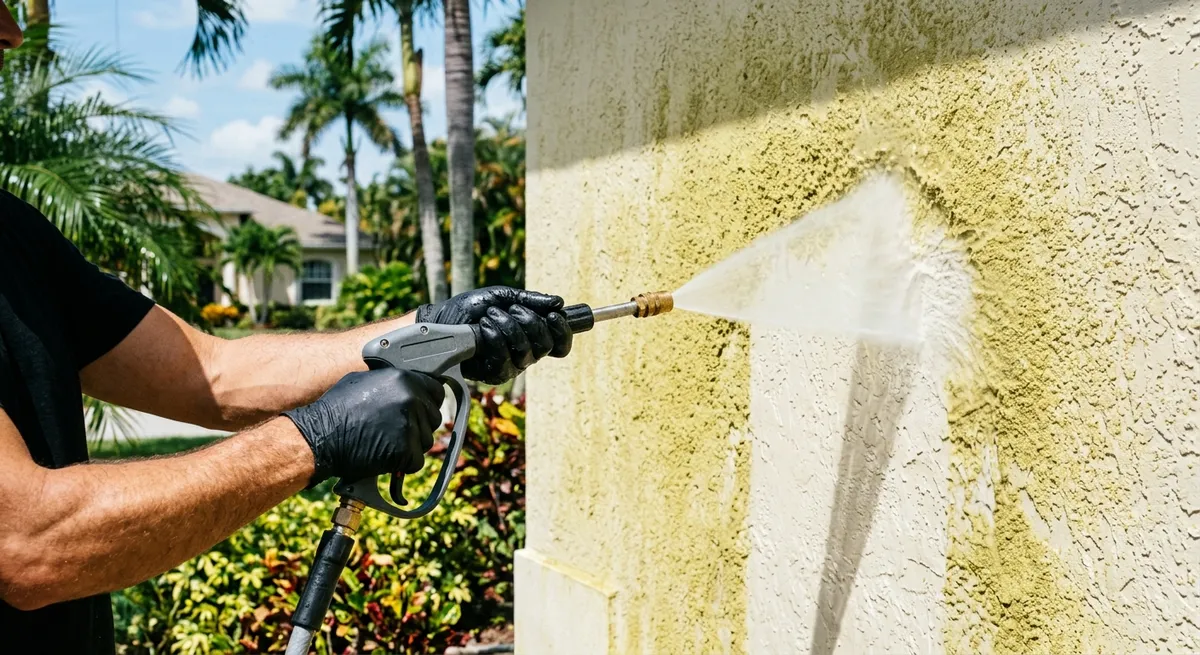
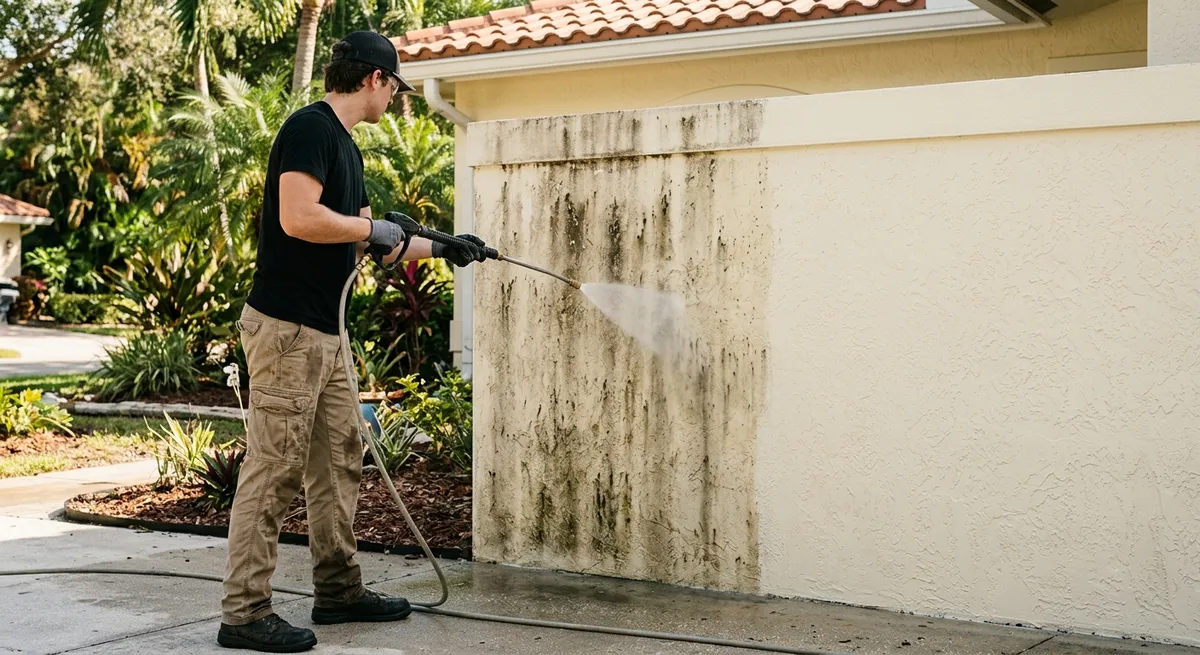
Pressure washing HELPS your claim when:- It's part of the cleanup after your adjuster has documented everything
- It removes storm debris that's causing ongoing damage (organic material rotting against walls)
- It addresses salt spray that's corroding fixtures and surfaces
- It's done after the claim is settled as part of restoration
- It's done before the adjuster sees the property
- It removes evidence of water intrusion patterns, debris impact, or storm intensity
- It makes damaged areas look better than they actually are
- It's done on areas where you should be claiming storm damage
Your Post-Storm Action Plan
Here's the step-by-step playbook for the next time a storm hits Palm Beach County:
1. Stay safe. Don't go outside until conditions are truly clear. Downed power lines, unstable trees, and standing water are real hazards.
2. Assess from the inside first. Look for water intrusion, structural issues, broken windows.
3. Walk the exterior and classify: Category 1, 2, or 3?
4. Document everything with photos, video, and written notes before doing anything else.
5. Make emergency mitigation repairs -- tarp, board up, extract water.
6. Decide: claim or clean? Based on damage severity and your deductible.
7. If claiming: Wait for the adjuster before major cleanup. Do only mitigation.
8. If not claiming: Clean promptly. Get organic debris off surfaces within 48 hours. Schedule pressure washing within a week.
9. Either way: Address standing water and mold risks immediately.
After the adjuster has come and gone and your claim is filed, that's when you call us. Get a free quote for post-storm exterior cleaning and restoration. Crouching Tiger Exterior Cleaning serves Palm Beach Gardens, Jupiter, West Palm Beach, and all of Palm Beach County. We've helped hundreds of homeowners get their properties back to normal after storms -- and we know exactly how to clean without complicating your insurance situation.